Tag Archives: culture

Halloween Around The World

Halloween Around The World

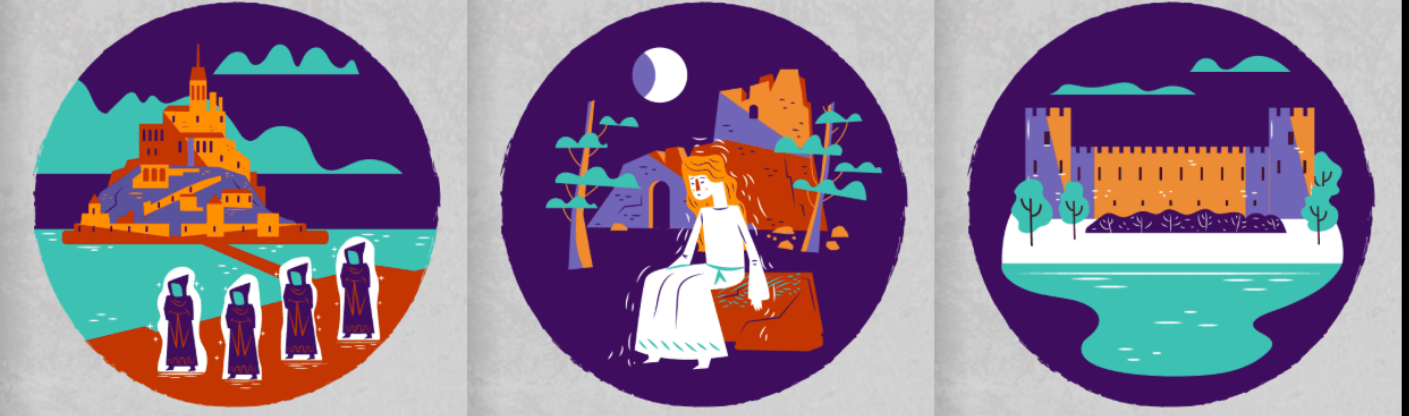
Marriage proposals in Italy, baking bread in the shape of babies in Ecuador, and burning expensive possessions to appease the souls of the dead in China. Across the globe there some strange but wonderful ways locals celebrate their own versions of Halloween. Thomas Cook has collated 50 of the outlandish laws, traditions and locations to create a Halloween map of the world full of need to know trivia you never knew existed.

Here are a few highlights from around the globe:

Halloween Haters

  • In Dublin, Georgia, USA your face must be fully visible and recognisable by law on Halloween
  • Vendragues, France it is illegal to wear clown costumes or makeup on this event if you are more than 12 years old
  • The country of Jordan made Halloween in its entirety illegal in 2014

Most haunted destinations

  • Multiple UFO, ghosts, orbs sightings and the abduction and reappearance a decade later of a young girl at Barranco de Badajoz in Spain make this the place to visit for believers in life beyond earth.
  • Visit the Valley of the Kings in Egypt, to become one of many who have spotted a Pharaoh wearing his golden collar, headdress, and riding a fiery chariot with black phantom horse.

Ghostly Traditions

  • The Romanian ‘Feast of St. Andrew’ involves eating garlic the night before and placing it near doors, windows and chimneys to ward off evil spirits.
  • In Germany, locals look to protect the visiting spirits drawn out during ‘All Souls Week’, by hiding all their knives so they won’t be injured.
  • Hati locals celebrate ‘Fed Gede’ alongside the visiting spirits, eating, drinking, warming their bones by the fire and dancing with them.

halloween

You can Map out all the countries and their traditions here: https://www.thomascook.com/halloween-around-the-world 

Luxury Around the World

Len Rutledge

Luxury and experiential travel are changing the travel industry and the way many people think about travel. While trips to see grandma will always occur, family trips today are often camping safaris through Africa or visits to remote lodges in Bhutan.

Today’s travellers are braver than ever and are prepared to travel well off the beaten track. They are looking for something unique and individual.  As new destinations emerge, traditional tourist hotspots and resorts have to rethink their approach in order to stay relevant.

I have just returned from Luxperience, an unmissable annual get-together for all those associated with the high-end travel industry. It was a meeting which exposed all the newest and best operators, and showed where this growing part of the industry is heading.

I have selected five products which show the level of luxury and diversity that is now available to world travellers. Any of them would be an experience of a lifetime for most people.

Deccan Odyssey

This is a luxury train in India comprising 21 luxuriously appointed coaches; 11 are to accommodate guests and the rest are used for different purposes such as dining, lounge, conference car and health spa. All the cabins of Deccan Odyssey are fully equipped with air-conditioning, internet connectivity, and personalized guest amenities that make sure that your journey is a comfortable and memorable one. There are two restaurant cars available which serve Indian, continental and oriental delicacies.

deccan

There are six itineraries which travel to a UNESCO World Heritage Site, an excellent vineyard, palatial residences, sun-kissed beaches, magical cities, and tranquil backwaters. All is done with the luxury and pomp that only India can muster. Truly, this is the journey of a lifetime.

Over the Top

This New Zealand helicopter company based in Queenstown provides more than just a helicopter ride. You can visit alpine glaciers and remote lakes, for hiking, boating, extreme golfing, winery visits, heliskiing or fly fishing. For guests wanting an interaction with some distinctive New Zealand characters, you can fly with eco-guides, chefs, artists – genuine New Zealanders who delight in making your stay a once in a lifetime experience.

over-the-top-golf-tee

One activity that is gaining in popularity is Over the Top Golf. This provides access to New Zealand’s most picturesque golf hole. Nestled at 4500 feet in the New Zealand alps this par 3 hole overlooking Queenstown has four tee boxes so you can attempt your hole in one. Players have to fly in, drive, chip and putt out on the top.

The Racha

This deluxe island hideaway in Thailand is set on a pristine beach on Racha Island 18 km south of Phuket. The resort features 85 luxurious villas and strives to be recognized as a leader in responsible and environmentally sustainable tourism. The island is known for its natural beauty and for its excellent corals and marine life. It is also a wonderful place for relaxation and for doing nothing.

lighthouse-pool

Many rooms have a large living area and a spacious private terrace. Each villa is superbly designed and features a luxurious bathroom and a rain-shower outside. The Earth Cafe is a contemporary chic international café serving Western and Thai food in air-conditioned comfort or on the terrace. Sunset Beach is a casual restaurant serving local specialties and snacks for lunch and fresh barbequed seafood and steaks for dinner right next to the beach. Firegrill is a fine dining restaurant offering Mediterranean cuisine.

R.M. Williams Tour

R.M.Williams was an Australian hero who did much to put the Australian Outback on the map. His famous boots became a symbol of toughness and style which continues to this day. The Tailor, in conjunction with R.M.Williams, has designed the ultimate tribute to RM Williams. In RM’s Footsteps is a 4-day journey which traces his personal history, telling the story of how he created the famous leather boots now sold around the world.

This amazing trip offers guests a rare opportunity to explore the legend of RM Williams by visiting several magnificent Outback destinations, such as the Flinders Ranges and Lake Eyre, enjoying traditional country hospitality and eating delicious regional cuisine. Guests travel in ultimate luxury aboard a Swiss-built Pilatus PC12 aircraft.

nilpena-station-with-the-flinders-ranges-behind

The trip begins in Adelaide with a private tour of the RM Williams workshop, factory, and museum, plus a chance to be fitted with your own boots, clothing and other bush apparel. You will receive a complimentary pair of Craftsman Boots. Another highlight is a visit to the historic Nilpena Station, a tour of the nearby red desert dunes, and a rare visit to the heritage listed Ediacara fossils made famous by the likes of Sir David Attenborough.

The Strand Cruise

On a languid journey along the Ayeyarwady River, the new luxurious Strand Cruise reveals the core of Burma in exceptional comfort. Cruise itineraries include 4 nights from Bagan to Mandalay and 3 nights from Mandalay to Bagan. While cruising you can clear your mind with a rejuvenating massage, or relax by the swimming pool. Enjoy the magnificent sunset from the upper deck while the sommelier delights you with a wide variety of wines. At dinner, the Chef will take you on a journey through refined cuisine.

slide-strand-cruise-b

Pampering and relaxation are the goals of the spa. You can heighten the experience with a massage in either an individual room or share the experience in our double room. The foot reflexology station will leave you ready to take on a new day of exploration and discoveries. The fitness room comes complete with treadmills, weights, and other gym equipment; everything needed for an invigorating workout.

Excursions allow you to explore the royal cities of Mingun, Amarapura, and Ava by horse-drawn cart; take in landmarks such as the U Bein bridge; and marvel at the enduring beauty of the country’s innumerable temples and monasteries.

Further information:

Deccan Odyssey: http://www.deccan-odyssey-india.com/

Over the Top: http://www.flynz.co.nz/

The Racha: http://www.theracha.com/new/index.htm

R.M.Williams Tour: http://www.thetailor.com.au/rmwilliams/

The Strand Cruise: http://www.thestrandcruise.com/

www.LenRutledge.com

Around the World in 42 Hand Gestures [Infographic]

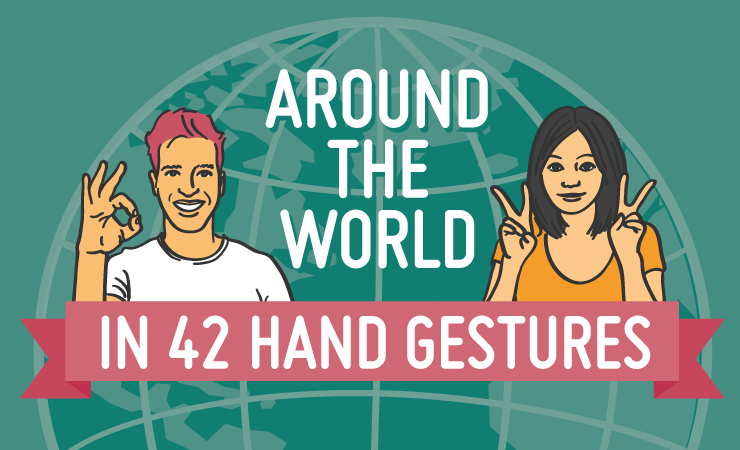
How’s your Nepali? Not too hot? Well, never mind – spoken languages makeup but a fraction of the way we communicate, and some minds just weren’t built to absorb them. If you find that you’re fortunate enough to spend a lot of time travelling, you’ll discover that listening and observing is half the battle when it comes to being involved with the world around you. Whatever forgettable phrases they may print in the guidebooks are rarely comparable to the way the locals of any given area communicate with each other.

Hand gestures are a great way into a local culture, especially if words aren’t your strong point. To take that Nepalese example, you’ll get a lot further greeting locals with a palms-together gesture than a mumbled ‘namastē’ and a vague wave. You’ll also discover that saying ‘no’ – or being told it – involves a swiveling wrist, rather than a shaking head. Likewise, the Japanese have a specific gesture – arms crossed diagonally across the chest with hands open – to indicate that something is just not allowed.

Italy, though, is arguably the most famously gesture-oriented destination, and you can get a long way with no words at all – as long as you’re confident in the nuances between the hand movements. Running your finger into your cheek is a good start for tourists – it’s a way to show you appreciate the food. Other gestures – the notorious chin swipe (“I don’t give a damn”), for example – tend to be less positive, but that’s all part of the package of getting into a meaningful conversation with your new friends.

For more tips on how to engage with other cultures without memorizing the phrasebook, check out this handy new infographic, with some of the most helpful/friendly/no-nonsense hand gestures that those on the inside use as second nature.


Around the world in X hand DV1


Source

How to spend great moments in Belgrade

The capital of Serbia is becoming a major hit among European tourists. It’s a city with hundreds of years of history, impressive architecture, and, as a focal point of life in Serbia, has an impressive art and nightlife scene. It’s interesting to see how the cultural spheres of the West and the East clash in Belgrade, making the city a unique amalgam of both. In Belgrade, there’s plenty to enjoy.

Belgrade fortress and Victor monument at night

Belgrade fortress and Victor monument at sunset

Find a festival you like and visit it

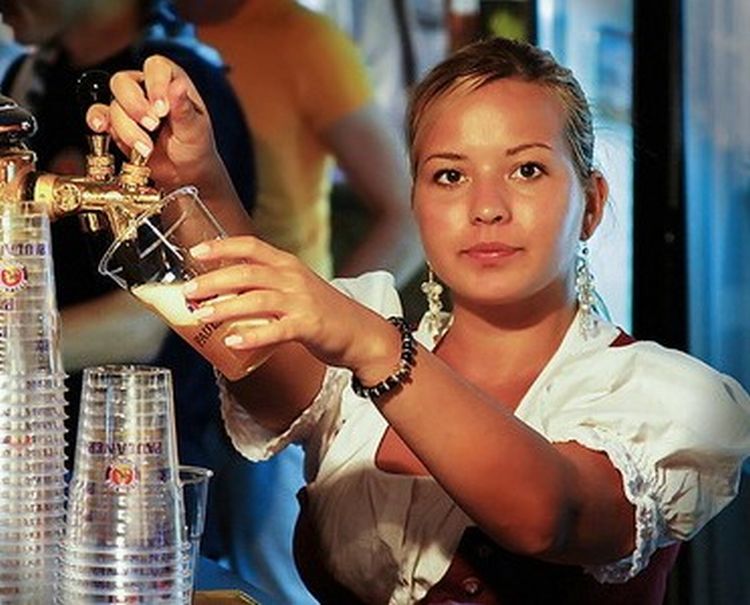
There are over a hundred festivals held in Belgrade in an average year! The theme? Whatever you like – music, fashion, food & drink, art, theater, film. The most popular festivals are the Belgrade Summer Festival and the Beer Festival: the latter is one of the largest festivals in the region, with half a million visitors each year. It lasts five days, there is no entry fee, and visitors can enjoy various kinds of beer, concerts of many domestic and foreign stars.

belgrade-beer-fest

Beautiful hostesses at Belgrade Beer Festival

Explore the Temple of St. Sava

One of the symbols of the city is located near its center; it’s actually hard to miss, seeing its more than 70 meters tall. Built out of white marble, the Temple can fit in more than ten thousand people. It’s one of the largest orthodox churches in the world, looming over the city with its massive, 12 meters tall white granite dome. Considered by many to be the most impressive building in Serbia, it’s a monument to Serbian culture, history, and religion which has shaped the local way of life for centuries.

St-Sava-temple

Temple of St. Sava at Vracar plateau

Shop at Dorcol

Care for some shopping? Dorcol is the part of the city where all the brand and trendy stores of Belgrade are located, and some of the finest restaurants as well. Take a walk through its streets, enjoy your shopping, and perhaps grab some lunch afterward.

Visit the Savamala

One of the oldest parts of Belgrade is located on the right bank of the Sava. What’s so special about it? It’s the heart of Belgrade contemporary and alternative art scene, and there are a few cool night clubs as well. Lots of Belgrade-based artists and designers frequent the Savamala, its cultural centers, galleries, and ateliers. Start your visit by exploring the KC Grad, an old warehouse now turned into an exciting art gallery/coffee shop/library.

Vasil-Hadzimanov-Bend-KC-Grad

Jazz concert in KC Grad

Enjoy the street art

There are graffiti or various installations on every corner. The local contemporary art scene has a great reputation throughout Europe, the main reason for it being the awesome Savamala.

street-art-belgrade

Street art in Savamala

Experience the Belgrade nightlife

Belgrade has become one of Europe’s most prestigious clubbing destinations, as its nightlife scene is pretty unique: most of the clubs are actually located on large boats or rafts on the Danube and Sava rivers. Playing a wide variety of music – from obscure techno subgenres to the popular local pop folk music, these rafts attract thousands every night, especially in the summer when the weather is nice. A usual night out in Belgrade means you’ll hop through a couple of clubs and feel the vibe of the Belgrade youth. And trust us, you’ll be back for more.

Belgrade-splav

One of raft clubs on Sava river

A city like Belgrade has dozens of hotels, so finding a suitable accommodation should not be a problem. Although the tourist influx is high during the entire year, you should have no problem with booking your room. Of course, there are plenty of low-cost hostels as well, and you can even check out a few couch-surfing websites and try your luck that way: the people of Belgrade are very friendly and lots of them, especially the younger population, will gladly accept you.

With such a diverse and rich offer, plenty of landmarks and entertainment options, and great locals, Belgrade is truly the hottest European destination in 2016.

There is Much to See in Oslo

Norway’s capital is a compact city with much to see. There are some wonderful museums, large parks, great restaurants and interesting nightlife. Here are some suggestions on things to see.

Main street

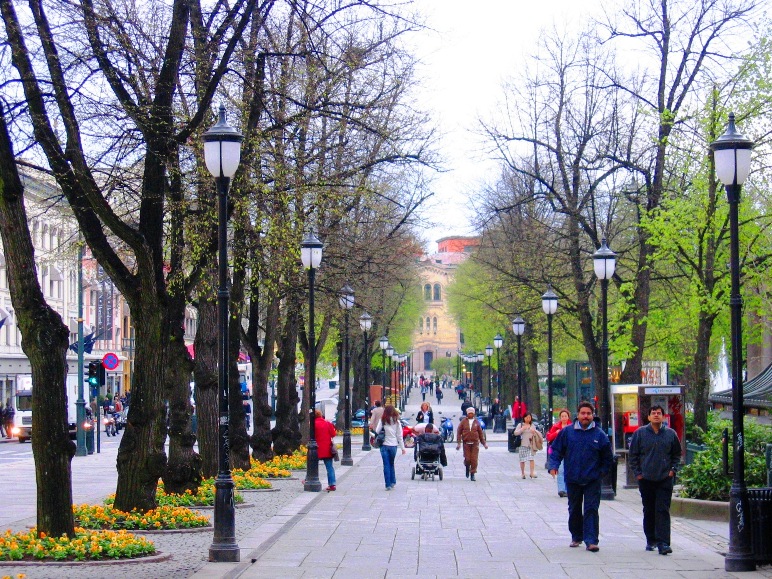
When we walk down the main street of Oslo, we feel at ease. There is no mad traffic, the airy streets and pleasant squares have a comfortable feel, and restaurants and cafes spill out onto the footpaths welcoming us to stay. It would be hard to find a significant capital city with a more good-natured feel.

Main street

The city centre has remained surprisingly compact and the main thoroughfare – Karl Johans gate – is a good reference point as it starts at the main railway station and ends at the royal palace. It is the location for the city’s parades, and the site of a seasonal ice-skating rink. The street is bustling with restaurants and stores that make for excellent people watching and window-shopping.

Royal Palace

The Royal Palace stands without walls, and reflects Norwegian openness and general safety. It is built in Neo-Classical style with a facade of stuccoed brick. The building has two wings and is three storeys high. The building was commissioned by Karl XIV Johan in the early 19th century but he died before it was completed. A statue of the king on horseback is in the open space in front of the palace.

Royal Palace

This is where the daily work of the monarchy is conducted and where the King and Queen live. It is where the King presides over the Council of State, grants audiences and holds official dinners. Foreign heads of state who visit Oslo generally stay at the Palace and most of the members of the Royal Court have their workplace here.

Folk Museum

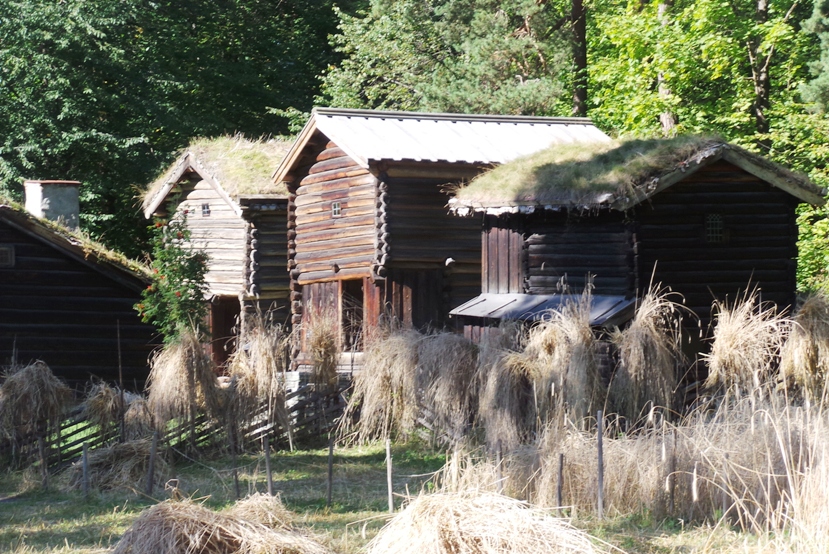
The Norwegian Folk Museum combines indoor displays with a collection of 160 reassembled buildings from around the country making it Europe’s oldest and largest open-air museum. The oldest two buildings are the shingle-covered Gol stave church and a house from Rauland, both from the thirteenth century.

U

In summer, costumed guides roam the site demonstrating traditional skills such as spinning, carving, dancing and horn blowing and this adds considerably to its appeal. An unexpected feature is an apartment building with exhibits and interiors representing different time periods during the past 130 years. Both the buildings and the indoor exhibits which cover furniture, clothing, tapestries, rose-painting, carving, farming implements and the Sámi population are interesting.

Viking Ship Museum

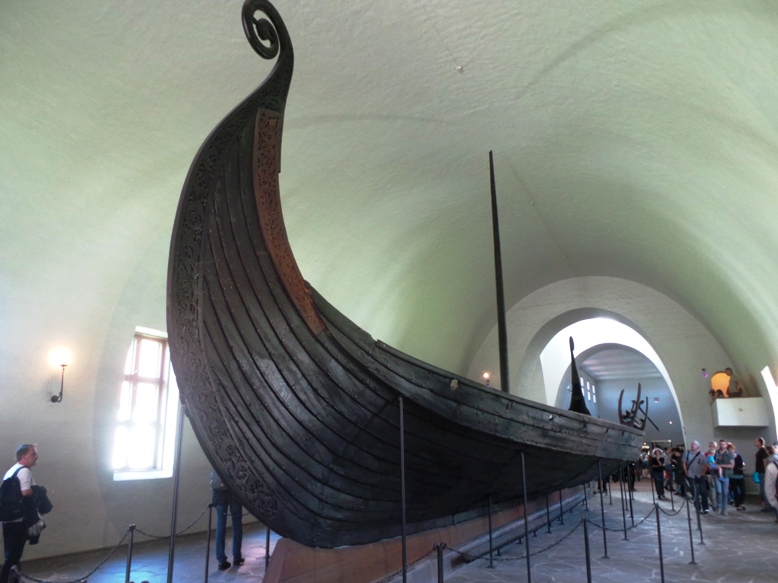
The Viking Ship Museum is a five-minute walk away. Here a trio of 9th-century Viking ships are on display in a specially constructed building which has viewing platforms to let you see into the ships. They are the best-preserved Viking ships in the world.

Two of the ships – the Oseberg ship and Gokstad ship -are in remarkably good condition and there is also a display of the treasures that were buried with them. As burial ships, they were equipped with unique treasures such as wagons, horses and textiles. Few examples exist elsewhere as they are seldom preserved from the Viking age.

Viking Ship Museum (2)

The graves also contained jewellery, weapons, tools and household goods. I now see the Vikings in a new light – sure there was rape and plunder but there was also domestic sophistication. The museum was constructed over a long period starting in 1913 and it was not finally completed until 1957. It is the work of Amstein Arneberg a highly renowned Norwegian architect who also designed the Oslo City Hall.

Fram Museum

The Fram Museum displays the vessel that took explorer Roald Amundsen to within striking distance of both the South and North Poles. Fram is claimed to be the strongest vessel in the world, and the surface vessel that has been the farthest both to the north and south of the globe. It was launched in 1892. My wife and I clamour all over the boat and see the cramped living quarters that the crew endured.

Fram (1)

These explorers were undoubtedly strong men and the conditions they experienced were tough. I certainly would not have volunteered. Three galleries run along the museum’s walls displaying items taken on the voyages and detailing the route and conditions encountered by the intrepid explorers. There is also a representative selection of stuffed animals from the polar region which may interest children.

Sculpture Park

Oslo’s most popular attraction – Vigeland Sculpture Park – is the world’s largest sculpture park made by a single artist and is open to visitors all year round. There are more than 200 sculptures in bronze, granite and wrought iron.

The sculpture park is within a large green area called Frogner Park. Fifty eight of the park’s sculptures, including the popular Angry Boy are arranged along what is called The Bridge, the main connection between the Main Gate and the Fountain.

Sculpture Park (2)

The Fountain is one of the Park’s showpieces and is adorned with 60 statues portraying children and skeletons amid giant trees. The park’s most popular attraction is The Monolith which is situated at the highest point. This towers upwards and is composed of 121 human figures climbing towards the sky. I find the Park has enormous appeal and I urge everyone to visit whether you are into art or not.

Nobel Peace Centre

In Oslo’s old railway station is the Noble Peace Centre which celebrates and publicizes the Noble Peace Prize. The building’s ground floor features a series of displays about conflict and peace while upstairs there is a display on the Nobel family and the ‘Nobel Fiels’ where all past holders of the peace prize have a light bulb on a flimsy stalk in a striking display.

U

Wine Capitals of the World

True wine lovers and aficionados know what the world has to offer. Countries such as Spain, France, California, Australia, Argentina and Chile are just some of the largest wine producers and exporters in the world. These areas have the perfect grape-growing climate and long traditions in winemaking, with billions of liters produced each year. Other countries, unlike these traditional produces, are able to provide only small supplies of domestic wines, not enough to quench the world’s thirst. If you find yourself in a local retailer’s wine cellar, or travelling abroad, these are the wine capitals that have given, and continue to give the best wines, consistent in quality and flavor.

wine capitals of the world

Spain

Bilbao, located in the province of Biscay (autonomous community of the Basque Country), is the tenth largest municipality in Spain. Founded in the year 1300, Bilbao is a well-known industrial and cultural center and tourist destination, famous for its natural resources, geography, cooking and wine. Rioja is the famous wine region in Spain, located about 100 km south of Bilbao. It is divided into three major regions – Rioja Alta, Rioja Alavesa and Rioja Baja. About 250 million liters of wine are produced annually in Rioja (of which 85% are red (tinto), while the rest are white (blanco) and rosé (rosado). “The land of wines” has over 57 thousand hectares of cultivated land, producing a variety of delicate wines. Spain has over 250 wine regions, with Rioja and Priorat that produce wine of most lauded quality.

wine capitals around the world

Australia

The land of Aborigines, rich in rainforests, deserts, beautiful coral reefs, beaches and national parts, is the fourth largest exporter of wine in the world. Governor Phillip brought the first vine cuttings from the Cape of Good Hope to the colony of New South Wales in 1788. Thirty five years later, Australian wine was exported for the first time. Today, over a billion liters of wine is made in 6 major wine regions of Australia each year. New South Wales, Queensland, South Australia, Tasmania, Victoria and Western Australia are areas with an astonishing array of diverse climates and about 130 different grape varieties, allowing winemakers to produce well-reviewed Australian wines with unique and distinct flavors.

California

The sunny California is regarded as a top tourist destination, culturally diverse, with great nature preserves, relaxing resorts, shopping places, best cuisine, and the Sunset Strip. Napa Valley (Napa County, northern California) is one of the best American viticultural Areas (wine grape-growing region) in the North Coast wine region. Central Coast, South Coast and Central Valley are areas consisted of 12 most notable wine regions. The first commercial winery in California was opened in 1859 by John Patchett. California is a top wine and food destination in the US, with a wide range of world class wines offered for the enjoyment of your palate.

wine capitals of the world

France

French wine has a worldwide reputation. About 8 million bottles are produced each year, all throughout France. There are 17 wine regions, with Bordeaux being the largest one, with the longest history in wine exporting. The city of Bordeaux mesmerizes with its beautiful architecture (cathedrals, gothic and baroque churches, museums), parks, squares, gardens, seaside resorts, restaurants and shopping centers. The wine is categorized into 6 main families with 60 different appellations. Consistent in quality, tasting Bordeaux wines is a must for every wine aficionado out there.

The New Asian Cuisine Hub: Must-Visit Restaurants in Brisbane

Brisbane has become the epicenter of modern and creative Asian cuisine. Incidentally, Brisbane’s Asian restaurants are also some of the best restaurants in Brisbane. For your road trips in Australia, these restaurants are a must-visit. 

FantAsia

FantAsia

FantAsia Brisbane offers Asian fast food. By using traditional cooking methods and local, seasonal produce, FantAsia delivers fresh and authentic Asian flavors without the price and wait of typical Asian cuisine restaurants. 

The main attraction at FantAsia is the Tokyo Beef entree, which complements the lemongrass and ginger tea. 

Sake 

Sake Restaurant and Bar focuses on contemporary Japanese cuisine with hints of California and European flavors. The restaurant offers private dining rooms as well as communal banquet dining area. 

Sake’s signature dishes include steamed prawn dumplings and ‘glacier 51’ tooth-fish lettuce cups.

Asian-Szechuan Bang Bang Cuisine

Inspired by the traditional cuisine of the Sichuan Province, Asian-Szechuan has brought Southwest China flavors to Brisbane. Cooking methods that date back 2,000 years add to the customary tang.

Black fungus and tofu skin salad with garlic and chili oil is offered as an entrée. The less adventurous can opt for a classic dish like Sichuan beef hot pot.

Golden Barbeque

Focusing on classic Chinese BBQ, Golden Barbeque offers large portions and authentic flavors. This hidden gem offers a mom and pop environment with economic prices. Check out their staple dish of BBQ duck.

Garden Restaurant

Taigum Gardens

Taigum Gardens has a vast array of Chinese cuisine options inspired by multiple Chinese delicacies. Large portions and high-quality meats can be expected from this quint restaurant, which is geared to adults. Must-try dishes include the crispy honey beef, the traditional roast duck, and the mango ice cream. 

Happy Boy 

Located on Mein St., this hidden gem focuses on Chinese cuisine with hints of French and Italian inspiration. Happy Boy offers a small, charming space in a converted warehouse. Recommendations include the dried fried green beans, salt and pepper prawns and pork belly sliders. 

Bird’s Nest Yakitori & Bar

Bird’s Nest brings traditional Japanese Yakitori to Brisbane. Using solely fresh, free-range meats and organic produce, Bird’s Nest offers multiple gluten-free and vegetarian options. They specialize in skewers with beef, chicken, veggies, tofu and/or pork belly. 

Paddington Curry House

Specializing in Indian and Nepalese cuisine, Paddington Curry House provides complementary rice with every curry order. Staples include paneer tikka, an Indian cheese marinated in tandoori spices then grilled to perfection, and traditional chicken malai tikka. Their goat curry is a staple for every curry fanatic.

table-791167_1280

Citron Restaurant

For anyone who enjoys modern twists to their Asian cuisine will fall in love with Citron. Owned and operated by Robert Foley, previously of Piccolo Restaurant, and notable chef Mark Newman. Citron is the only restaurant in town where eaters can find green tea salt calamari with ginger chili dipping sauce.

Fat Noodle Restaurant

Fat Noodle was created by famed chef Luke Nguyen, and includes a mix of Vietnamese, Chinese, Thai and Malay dishes. Nguyen’s signature dish is Fat Pho Noodles, which consists of a 20-hour beef broth, bean sprouts, fresh Thai basil, fresh chili and rice noodles. 

Historic Istanbul

Istanbul has been a ‘world city’ for millenniums and there is no better place to start than where it all began. Historians tell us that there was a Mycenaean settlement here from around the 13th century BC then Byzas the Megarian founded a Greek settlement here in the 7th century BC and this led to the name Byzantium. The town became an important centre of trade over the next thousand years and in the 4th century AD, Constantine chose it as the site for the new capital of the Roman Empire. Thus Constantinople was born.

Constantinople grew to become a great city, protected by water on three sides and by a great wall on the other. Grand buildings were built and the city remained safe until the beginning of the 13th century when the Christian crusaders sacked and destroyed much of it. The Byzantines finally regained control but the city fell to an Ottoman siege in 1453. The name Istanbul was used in Turkish alongside the original Constantinople, during the period of Ottoman rule. This period saw a rebuilding of the city with new palaces and many mosques and these are today some of the great attractions in the Old City.

Hagia Sophia

This is a magnificent building completed in 537. This was the greatest Christian church in the world until 1453, when it was converted into a mosque. In 1935 it became a museum. It is a place that everyone ‘must visit’ when in Istanbul as it is probably the city’s greatest historic site. It is the interior with its huge dome that visitors find so magnificent. The dome is supported by 40 massive ribs which are held by hidden columns. The effect is stunning and no rival was attempted anywhere in the world for the next thousand years.

Chapter 2 Hagia Sophia

Most of the millions of gold mosaic tiles which covered the church’s interior have recently been restored and the result is something quite spectacular. There are several Islamic touches from the buildings time as a mosque. Most noticeable are the large 19th-century medallions inscribed with gilt Arabic letters with the names of Allah, Mohammed, Ali and Abu Bakr.

Blue Mosque

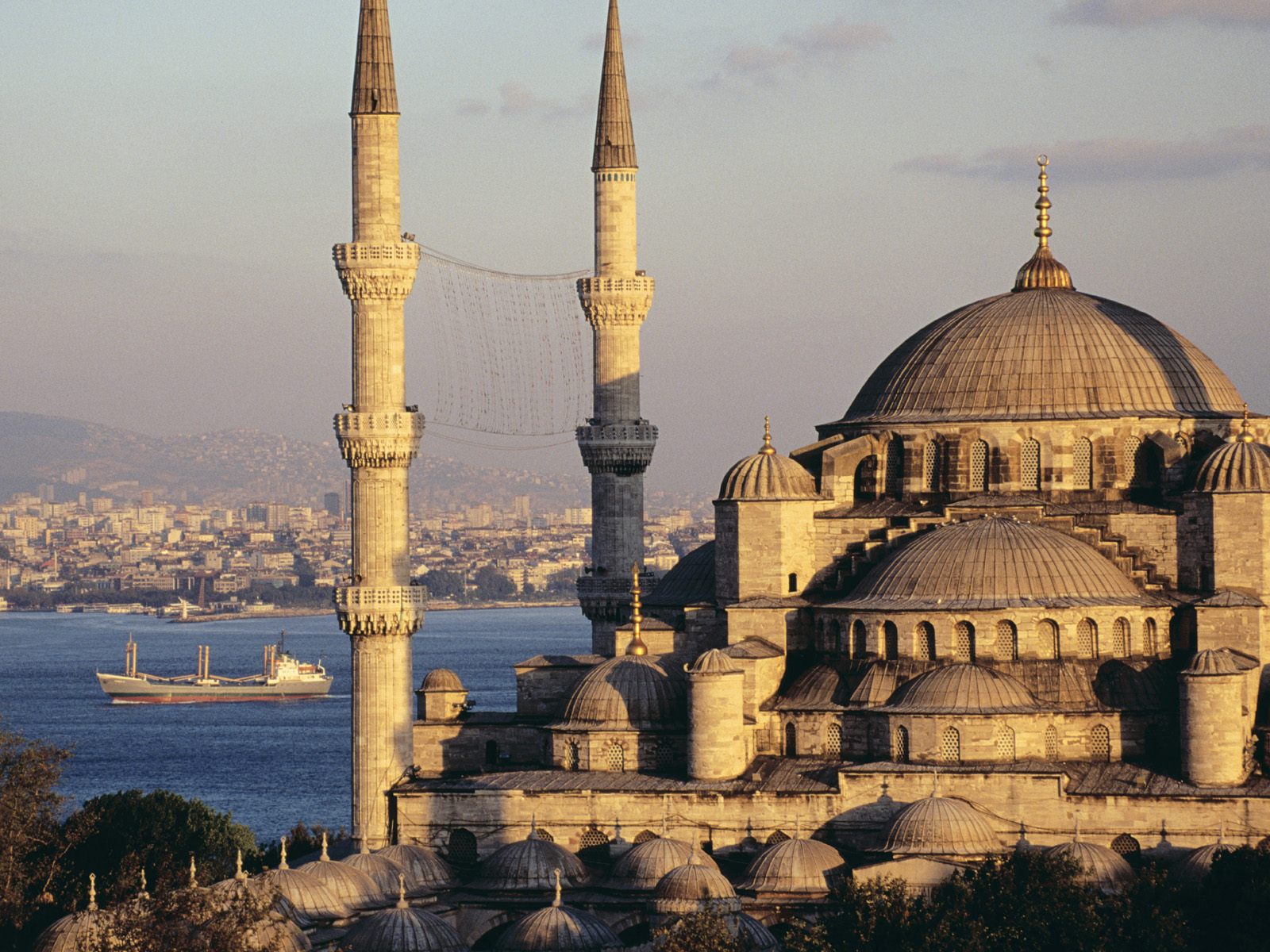
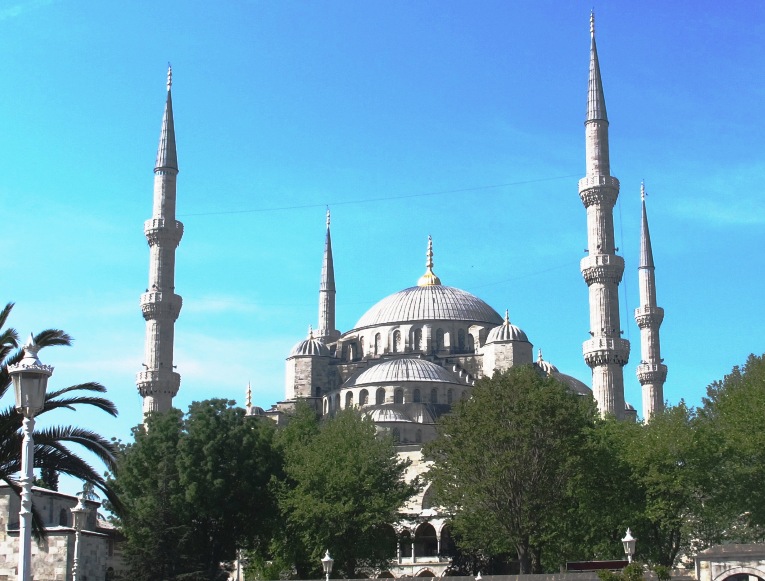
The Sultan Ahmet Camii was built in the 17th century by Sultan Ahmet I and he planned to build something that would surpass the Hagia Sophia. With the instantly recognised exterior and its six minarets he has achieved that but the interior falls far short. The domes billow upward as we enter into the huge courtyard which is the same size as the mosque itself and is surrounded by a portico with thirty small domes. From here the full grandeur of the exterior is revealed.

Chapter 1 Blue Mosque

The interior space is huge but somewhat dark and the four huge pillars which support the dome seem oversized and almost overpowering. The mosque derives its popular name from the twenty thousand or so blue Iznik tiles that adorn its upper interior but many areas are difficult to see properly. The lower walls and arches are covered with arabesque stencilling.

Basilica Cistern

This 1500 year old underground water reservoir is a wonderful escape from the outside heat and we linger here. It was first used to store water for the palace and surrounding buildings but apparently hasn’t been used for this purpose for the past 1000 years. Now the structure has been restored and opened as a unique attraction.

p23

The cistern is huge and the roof is supported by 336 columns arranged in rows. We had been told about two columns supported on upside-down Medusa heads and we find them at the far left-hand corner of the reservoir at the end of one of the raised wooden walkways. There is still a small amount of water in the reservoir and there are carp swimming around. The lighting in nightclub colours throughout the reservoir is very attractive and we end our visit in the candlelit café, where soft lighting and classical music contributes to the overall atmosphere of the place.

Topkapi Palace

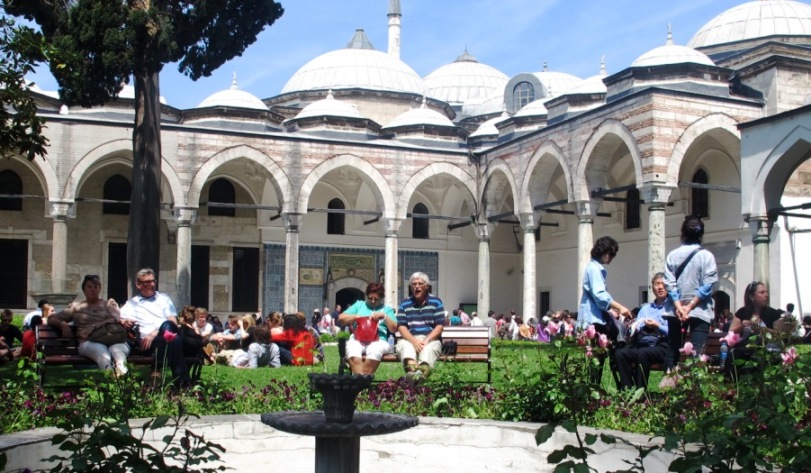
This was the home of the sultan from the 15th to the 19th centuries. The complex is huge and you can’t see it all in less than half a day. The palace is a series of pavilions built around four courtyards. The Imperial Gate behind the Hagia Sophia leads to the first courtyard. This is open to everyone and it is here that we buy tickets for other areas. This courtyard houses the Byzantine Aya Irini, a former Eastern Orthodox church, and an entrance to the Imperial Mint.

Chapter 2 Topkapi Palace

Middle Gate leads to the Second Court where there are some important buildings such as the Palace kitchens, Imperial Council Chamber and Inner Treasury. All these have displays or things worth seeing. This court also provides access to the Harem which some say is the highlight of their palace visit. The sultan was allowed four wives and as many concubines as he could support and you can see a small section of their quarters including some of the dormitories, a bedchamber with a large indoor swimming pool, a charming small hamam, library and a dining room.

Grand Bazaar

The famous Grand Bazaar at first appears chaotic but actually there is some order to it. This has been the heart of the Old City for centuries and you must visit even if you don’t want to shop. There are over 4000 shops, 3000 different traders, several kilometres of covered lanes, and mosques, banks, restaurants and workshops. Construction started in 1456 and repairs, expansion, and reconstruction have continued to the present day.

Chapter 2 Grand Bazaar

There are many opinions about the Grand Bazaar but a visit can be very enjoyable. Some say it is a tourist trap while others swear that many locals shop here all the time. Probably both are correct. Spend some time looking at the array of goods, or searching out the little cafes that hideaway among the shops. The architecture, colour and the tea men who run around with small glasses of hot tea are fascinating.

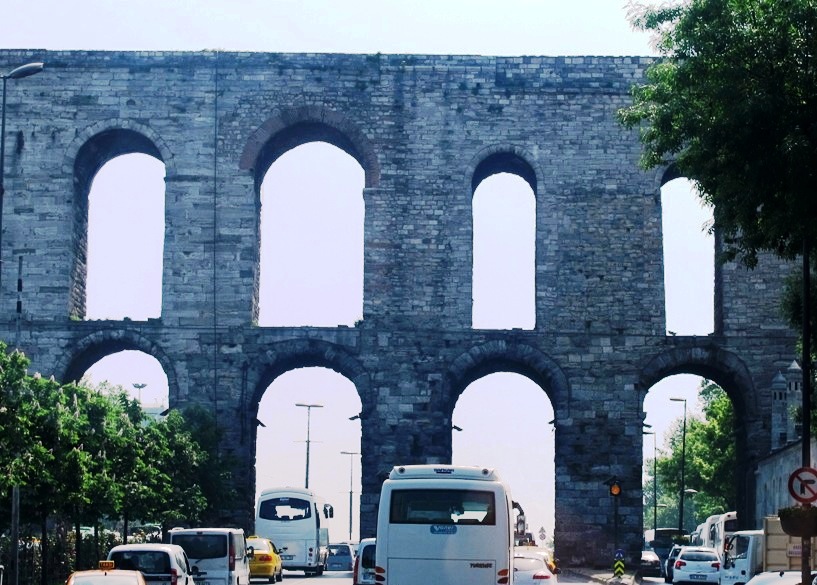
Valens Aqueduct

Chapter 2 Valens

Probably nothing says that Istanbul was once a Roman city better than this. Only a small section of the original now remains but it is still an impressive sight. This was part of the major water supply system for Constantinople which at one time formed a 250 km network of water supply canals and aqueducts. The surviving section is just under a kilometre long as it crosses the small valley between Istanbul University and the Fatih Mosque. The most impressive view is where the wide Atatürk Bulvarı road passes under its arches but we are fascinated by the remains further to the east where it is incorporated into some old buildings.

Len Rutledge is the author of Experience Istanbul available as e-book from amazon at http://www.amazon.com/dp/B00IR1X5K6

Inspiring Inle Lake

Words: Len Rutledge   Pictures: Phensri Rutledge

Everyone visiting Inle Lake in Myanmar’s hilly north-east has an image in their mind of an Intha fisherman rowing with one leg at the stern of a flat-bottomed canoe, past a backdrop of mist-shrouded mountains. Fortunately most leave having seen their dream. With its stilted villages built over the water, ancient stupa complexes and a backdrop of green hills, Inle is the top attraction of Shan State and it has become one of Myanmar’s most visited tourist areas. There are flights from Yangon, Mandalay and Bagan to little Heho airport which at times seems overwhelmed by the volume of travellers.

Nyaung Shwe

This is the largest town near the lake but many visitors prefer to stay at one of the small hotels, guest houses or resorts around the lake. Even if you do this, don’t overlook the town. The busy Mingalar Market is in the northern part of the town and this sells a range of goods, mainly in the morning.

Inlay Lake893

A little way outside the town, is the teakwood Shwe Yawnghwe Monastery. The monastery has an ordination hall with unique oval windows and this has become a tourist attraction because of the opportunity to photograph young monks standing behind these.

Getting Around

Getting around

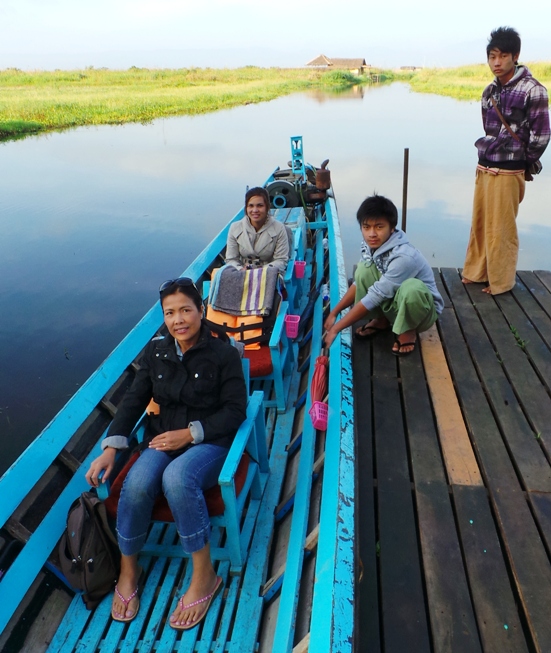
To reach most of the lakeside accommodation you need to transfer to a long-tail boat in Nyaung Shwe for a ride first down a wide canal, and then across Inle Lake itself. You will be pleased to find that the high-powered boats for tourists have padded seats, umbrellas and life jackets. The locals are not so lucky and we saw many boats that seemed well overloaded.

Floating gardens

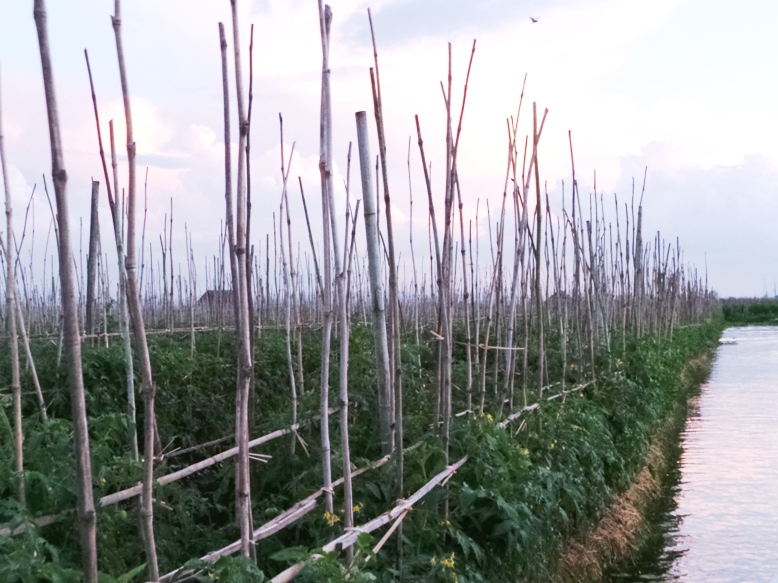
These are created by collecting weeds from the surface and lashing them together to form metre-thick floating strips. These are then anchored to the bed of the lake with bamboo poles, and heaped with mud scooped from the bottom. This means that they can be used regardless of fluctuating water levels. Crops – including cauliflower, tomatoes, cucumbers, cabbage, peas, beans and aubergine – are grown year-round.

Floating gardens

We’d seen some of the small wooden boats so piled up with weeds from the lake that they were sitting barely above the water and we’d seen groups of people in their boats working together to collect these weeds and now we knew why.

Phaung Daw Oo Pagoda

Phaung-Daw-Oo-Pagoda

The pagoda has been constructed in the traditional and elaborate Myanmar style of architecture even though it is over the water. At the centre of the monastery building is a golden stupa topped with an ornamental umbrella-shape. The interior walls of the temple are decorated with murals depicting Buddhist stories. In the central shrine in the main hall there are five small lumpy gold objects that were once recognised as Buddhas. Devotees have been placing so much gold leaf on them for so long, that the original forms are no longer recognizable.

One-leg rowers

One-leg rowers

The smooth lake, the blue sky, the small wooden boats with their huge basket nets, the rowers standing tall, leg and oar moving as one, make for a thrilling encounter. The rowers are men who stand in the stern of their boats with one leg wrapped around a single oar moving it steadily back and forth in an easy rhythmic practiced motion. Theories as to why this method of rowing evolved range from it providing both hands free for handling the fishing nets, to needing to stand to be able to see the reeds and weeds in the water ahead.

Local markets

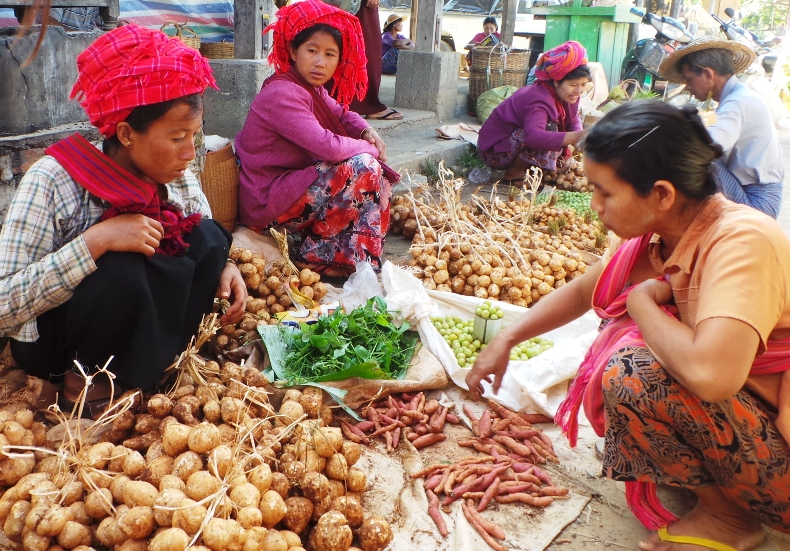
The markets in the Inle Lake area move each day from one of five locations to the next, ranging from Nyaung Shwe at the north end of the lake to Nam Pan towards the south end. Farmers come from all around to sell their produce, traders come to buy in bulk, and families come to do their regular household shopping. It is colourful and there is a strong sense of community but it rapidly gets crowded – mainly with tourists.

Market

One of the interesting aspects of the market is seeing women of the Pa-O ethnic group, the second most numerous tribe in the region. These women wear dark plain coloured skirts (lungyis) with long sleeveless shirts, cropped long-sleeved black jacketsand distinctive brightly coloured turbans.

Nga Hpe Chaung monastery

Nga Hpe Chaung monastery

It was built in the 1850’s on teak columns in the middle of the lake. It is a handsome building housing many beautiful Buddhist artifacts, and quite a few monks. Awhile back the head abbot and some of the monks trained several cats to jump through hoops, so it became known as the ‘jumping cat’ monastery to foreign backpackers. The trained cats are no more so you will just have to put up with the idyllic setting, its collection of old Buddhas from around Myanmar, and its peace and tranquillity.

In Dein

A narrow canal wound its way from the lake, initially through reed beds but later through dense jungle until finally the village emerged around a bend. It was a perfect rural scene with water buffaloes wallowing while women from the local village washed clothes nearby.

In Dein

We alighted at a small jetty and were immediately besieged by the locals who peddle their bamboo hats, “Welcome to Inle” T-shirts and Shan-style bags from little stalls. The highlight in town is a breathtaking complex of 1,094 16th century stupas, the main In Dein pagoda and the surrounding ruins which cover the dome of a hill. You reach here up a long roof-covered passage where there are hundreds of vendors. The top provides a sweeping view of the lake and surrounding farmlands.

Len Rutledge is the author of Experience Myanmar available as an e-book at http://www.amazon.com/dp/B00HPQHC5I