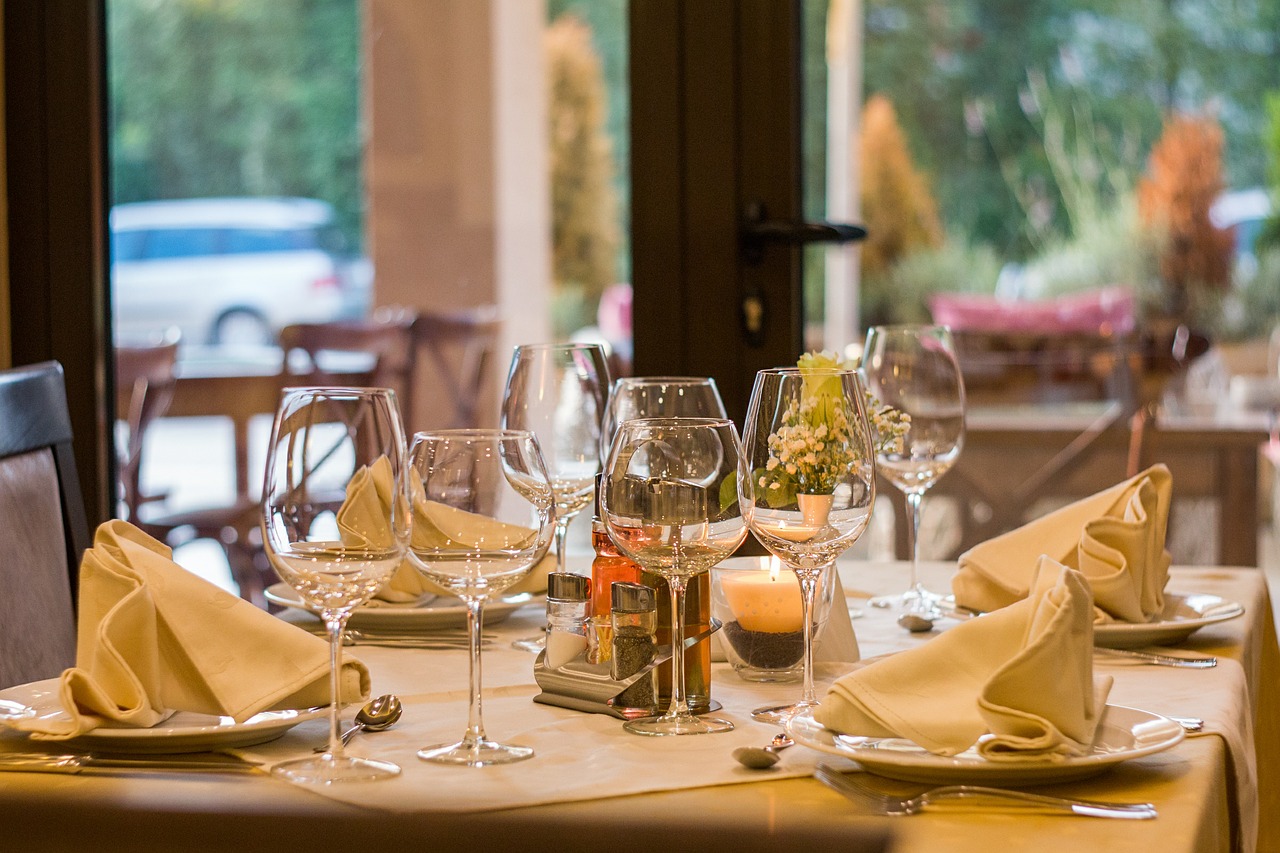
Brisbane has become the epicenter of modern and creative Asian cuisine. Incidentally, Brisbane’s Asian restaurants are also some of the best restaurants in Brisbane. For your road trips in Australia, these restaurants are a must-visit.
FantAsia
FantAsia Brisbane offers Asian fast food. By using traditional cooking methods and local, seasonal produce, FantAsia delivers fresh and authentic Asian flavors without the price and wait of typical Asian cuisine restaurants.
The main attraction at FantAsia is the Tokyo Beef entree, which complements the lemongrass and ginger tea.
Sake
Sake Restaurant and Bar focuses on contemporary Japanese cuisine with hints of California and European flavors. The restaurant offers private dining rooms as well as communal banquet dining area.
Sake’s signature dishes include steamed prawn dumplings and ‘glacier 51’ tooth-fish lettuce cups.
Asian-Szechuan Bang Bang Cuisine
Inspired by the traditional cuisine of the Sichuan Province, Asian-Szechuan has brought Southwest China flavors to Brisbane. Cooking methods that date back 2,000 years add to the customary tang.
Black fungus and tofu skin salad with garlic and chili oil is offered as an entrée. The less adventurous can opt for a classic dish like Sichuan beef hot pot.
Golden Barbeque
Focusing on classic Chinese BBQ, Golden Barbeque offers large portions and authentic flavors. This hidden gem offers a mom and pop environment with economic prices. Check out their staple dish of BBQ duck.
Taigum Gardens
Taigum Gardens has a vast array of Chinese cuisine options inspired by multiple Chinese delicacies. Large portions and high-quality meats can be expected from this quint restaurant, which is geared to adults. Must-try dishes include the crispy honey beef, the traditional roast duck, and the mango ice cream.
Happy Boy
Located on Mein St., this hidden gem focuses on Chinese cuisine with hints of French and Italian inspiration. Happy Boy offers a small, charming space in a converted warehouse. Recommendations include the dried fried green beans, salt and pepper prawns and pork belly sliders.
Bird’s Nest Yakitori & Bar
Bird’s Nest brings traditional Japanese Yakitori to Brisbane. Using solely fresh, free-range meats and organic produce, Bird’s Nest offers multiple gluten-free and vegetarian options. They specialize in skewers with beef, chicken, veggies, tofu and/or pork belly.
Paddington Curry House
Specializing in Indian and Nepalese cuisine, Paddington Curry House provides complementary rice with every curry order. Staples include paneer tikka, an Indian cheese marinated in tandoori spices then grilled to perfection, and traditional chicken malai tikka. Their goat curry is a staple for every curry fanatic.
Citron Restaurant
For anyone who enjoys modern twists to their Asian cuisine will fall in love with Citron. Owned and operated by Robert Foley, previously of Piccolo Restaurant, and notable chef Mark Newman. Citron is the only restaurant in town where eaters can find green tea salt calamari with ginger chili dipping sauce.
Fat Noodle Restaurant
Fat Noodle was created by famed chef Luke Nguyen, and includes a mix of Vietnamese, Chinese, Thai and Malay dishes. Nguyen’s signature dish is Fat Pho Noodles, which consists of a 20-hour beef broth, bean sprouts, fresh Thai basil, fresh chili and rice noodles.
Sarah Benjamin is one of the two winners of the first season of Food Hero. Her obsession with food was also supported by her family since young age. She began to develop her passion in cooking Asian specific foods and started her own cooking blog and shared great cooking experience and food styling. Her spirit and unique character comes to culinary and traveling passion.
Here, Sarah shares her passion for food, food blog, discusses Must Try:Asia, and offers advice on how to create a new recipe. Read on:
Would you please tell us why you’re interested in Asian food?
“Growing up in Singapore, I was exposed to such a diverse range of flavors, especially Asian flavors of all kinds. I really love how Asian food has such great balance of flavors and cooking styles – for example, a bowl of soupy noodles with something crispy and fried on the side. Or a bowl of plain steamed rice topped with punchy, spicy curry.”
You’re a great food stylist! Could you share how you developed this skill?
“Thank you so much! To be very honest, when I first started my food blog, www.kitchenhoarder.com, my photos were really nothing to look at. However, I’m a perfectionist, so I worked very hard at it, really studying other food stylists and photographers’ work and practicing. I think the most important thing is identifying your personal style and sticking with it.”
You studied social and political sciences in university, do you have any plans in furthering your career related to these fields of study?
“I absolutely loved studying sociology and politics, and it really taught me about the world around us. I currently get to utilize those parts of my education in my consulting work, but I really hope to blend my love for food and love for society and culture together in the future, as I think it’s really important to understand the people who cook food before you can truly understand the food itself.”
What is your favourite Asian food?
“This is such a difficult question because I love so many foods! But my real comfort food has got to be Hainanese chicken rice. I love how such an unassuming looking dish can be so full of flavour.”
Do you think there is any correlation between food and culture?
“I think there’s a really important relationship between food and culture. Food only comes out of the society it exists in, so I really think you need to understand a culture before you can understand its food. Conversely, food can tell us a lot about a culture as well. For example, Japanese food is so meticulously made, and such attention is paid to its presentation and the processes of cooking. This immediately tells us about how people in Japan like to live their lives. That’s one of the biggest reasons I love food – it helps us understand the world.”
How many TV shows have you hosted? And how are food programs different to other programs?
“My first show for the Asian Food Channel, Must Try: Asia, aired at the end of 2014. Since then, I’ve been working on digital content, creating short video recipes that anyone can follow with my web series Simply Special. I’m also currently filming my next show that will air later this year! I think food programs are such a perfect balance of entertainment and education, in that you can actually learn how to cook new things or about new places, but it’s still lots of fun.”
Interview with Sarah Benjamin
I see that you also post about food on your own blog. How important would you say keeping on your own blog is for your career in the food industry?
“My blog started out simply as an outlet for me to record recipes and thoughts about food. I never thought other people would be interested in it, but as it began to take off, I was really encouraged to experiment more in the kitchen and come up with my own recipes. On a personal level, having the blog has really spurred me to improve my cooking and achieve more in the kitchen. I think blogs and websites are great reading for anyone interested in food, and it really helps build a community of food lovers and food experts.”
What are some interesting differences between food and fashion?
“I really love fashion, but I do think that food is a lot more instinctual than fashion. I think that everyone immediately knows what they like to eat and what they dislike, so although you might be interested in food trends, you are guided by a very basic taste instinct. Fashion is shaped more by trends and the opinions of experts and designers.”
In your opinion, which Asian food is most difficult to cook?
“I think every dish has its challenges, but some dishes are just designed to be cooked in a restaurant. For example, with traditional Chinese food, you really need a powerful flame to fire your wok. Without that intense heat, you just can’t recreate the ‘wok hei’ or ‘spirit of the wok’ in your cooking.”
What are some common components/flavours between Indonesia, Malaysia and Singapore cuisine in your opinion?
“To an outsider, the food and flavors of Singapore, Malaysia and Indonesia may seem really similar, but there is so much diversity in the food of this region. I think what ties it together is a love for balanced flavors even while using a wide range of spices. Cooks in this region always make sure to balance the elements of spice, sweetness, saltiness and sourness, as well as tempering it with coconut or coconut milk.”
When did you realise your love for cooking?
“When I was 5 or 6 years old, I cooked a 3 course meal for my father’s birthday. I remember making a carrot and ginger soup as a starter. Although it now seems like such a simple dish, my family was really impressed with it. I’ve never forgotten the satisfaction I get when people enjoy the food I’ve prepared, and that was the first one I realized I loved to cook.”
What are some of the initial steps you take when in the process of creating a new recipe?
“I am constantly thinking of new ideas for recipes, and always on the lookout for inspiration. A flash of inspiration can strike at any time, so I make sure to write down all my ideas. Then when I have time, I’ll try out the recipe and refine it further until I’m happy with it. But to me, a notebook is one of the most important tools of my kitchen.”
Sarah Benjamin
Who is your favourite mentor/chef that influenced you?
“Someone who really inspires me is Yotam Ottolenghi, a London-based chef. I love how his food is so clearly guided by his middle eastern heritage, yet he isn’t afraid to experiment and improve on his dishes using modern techniques. I hope to bring the same sense of heritage to my cooking, but with the same open-minded attitude to innovation.”
Do you have any interest in attempting to cook European cuisine?
“I actually learnt to cook European cuisine first, and only developed my Asian cooking skills when I was studying overseas and had no access to good Asian food. I’m a very adventurous cook, and I love trying new things in the kitchen, so I would never confine myself to one cuisine over another. It’s all fun for me!”
Do you have any plans to open your own restaurant?
“I would love to open my own restaurant, and I’ve had serious visions of places I would be so proud to call my own. However, I’m currently focusing on this wonderful adventure of hosting that I’m on. I always want to do the best I can, no matter what I do, and there’s so much I want to achieve, but who knows what will happen in the future?”
Could you share with us what you intend to further achieve in the culinary world? Besides cooking, what are your other hobbies?
“I would love to write cookbooks, and host more shows. Most importantly, I would love to share my passion for cooking with people and inspire them to cook and have fun in the kitchen. Besides cooking, I love to write, photograph and play the cello. I also love to travel, and hope to do alot more of it.”
Please share some advice for others who are interested in being a chef?
“I think the most important part of learning to cook is learning to eat. What I mean is that developing your own palate is the first step to being a great cook. When you become a discerning eater, you can distinguish between subtle differences in flavour and texture, which will really help you develop your cooking techniques and style. Also, always remember to have fun when eating and cooking! Never take food too seriously, and always retain a sense of adventure.”
Must Try! Asia
Food Hero winner Sarah Benjamin and the ever-innovative Chef Malcolm Goh travel across Asia’s most popular capitals and tuck into the city’s signature dishes in Must Try! Asia. Whether it’s Singapore’s famous Chicken Rice or Bangkok’s tasty stir-fried rice noodle, this adventurous duo will show you how creative you can go in re-creating these iconic dishes in your kitchen! Only on the Asian Food Channel.
Currently, being a chef is not just about cooking, creating recipes and running a restaurant or kitchen. A successful chef with good look can become ‘celebrity chef,’ just like in the case of Chef James Martin. While Chef Martin spent years learning about catering, savory cooking and pastry making, he is also well known in England and even in the world through his various TV shows since 1996.
Background
Born in 1972 in Yorkshire, England, Martin was originally a farmer kid who enjoyed cooking with his mother. He continued his interest in coking via a professional study in Scarborough Technical College, were he studied catering and had training at several famous restaurants, including Hostellerie De Plaisance in France.
With such impressive background, Martin was able to find his first job before age 20 as staff at Maison Troisgros, also in France. He then returned to England and worked at several famous restaurants there such as One Ninety Queen’s Gat, The Square and Harvey’s, before becoming pastry chef at Chewton Glen Hotel.
First TV Debut
Chef Martin first became TV celebrity in 1996 when he appeared in James Martin: Yorkshire’s Finest, in which he explored the culinary richness of his hometown. However, his name then started to soar when he appeared inBBC 2 cooking program, called Ready Steady Cook. Interestingly, at one point during his appearance in that program, he also gained world record as the fastest carrot chopper in the world, when he peeled and chopped 515 grams (almost a quarter pound) of carrots in 60 seconds.
Further Celebrity Debut
Chef Martin appeared in BBF Food show Stately Supers as well as reality show in Channel 4, where he and the host visited home cooks at their own houses for comfort food cooking challenge. Then, he got his first presenter gig in BBC1 in a weekend show called Saturday Kitchen. By this time, his name soared among BBC viewers as one of their celebrity chefs.
After Saturday Kitchen, Martin appeared in various shows such as Can You Cook It?, The Great British Village Show, James Martin’s Christmas Feast and Eating with the Enemy. One of his most successful programs was Operation Hospital Food, where he improved menu quality at Scarborough General Hospital. This show was highly appreciated by viewers, and becoming one of Chef Martin’s most successful shows.
TV Appearances in 2013
Chef Martin apparently has not lost his celebrity charm. This 2013, he appeared at several shows. Between February and March, Chef Martin explored United States and sampled various cakes and snacks before reviewing them in United Cakes of America. He was also involved in judging panel in June show, The Roux Scholarship, together with Angela Hartnett and Raymond Blanc.
His most recent appearance was in June, when he appeared in The Great British Budget Menu and showed various nutritious, delicious recipes with cheap ingredients. Besides all his TV appearances, Chef Martin is also a successful restaurant owner with two restaurants; The Leeds Kitchen at Alea Casino (closed due to the closing of the casino) and the latest one in The Talbot Hotel in North Yorkshire.
Best Travel Guides to Destinations Around the World