Category Archives: Cultural and Historical Heritage

The Colours of Chiang Rai – Black, White and Blue

The colours of Chiang Rai – Black, white and blue

Words: Len Rutledge  Images: Phensri Rutledge

Until recently, when you mentioned Northern Thailand most people thought of Chiang Mai. But now another place is also drawing attention. Chiang Rai, Thailand’s most northerly city, is firmly on the tourism route and for very good reasons.

Our recent visit showed that Chiang Rai City has an abundance of tourism attractions, headlined by three amazing architectural marvels. These can be summarised as the black, white and blue. The surrounding province contains some of Thailand’s most dramatic mountain scenery so a week in this area is not really enough.

The Black

The Baandam Museum (Black House) will astound you. Renowned Thai artist Thawan Duchanee spent more than fifty years building this somewhat controversial museum of folk art. It isn’t just one structure but a collection of around 40 buildings of varying shapes and sizes dotted around a peaceful garden. Each one is different and most are worth visiting.

Chiang Rai

Thawan was an incredibly talented recluse who lived in one of the houses on the site until his death in 2014. Now the whole complex has been taken over by the government. Black, gold and red were the three signature colours of the master painter. These striking contrasts permeate the collection of houses, sculptures, animal skins, bones and relics.

Located about 12 km north of Chiang Rai City, you will need at least 1 hour to look around. This is a very popular spot, so if you want to beat the crowds its best to go either early morning or an hour before the museum closes. Try the mini-pineapples while you are there and you will agree that they are the sweetest in the world.

The White

Wat Rong Khun or the White Temple was designed by national artist and native of Chiang Rai, Chalermchai Kositpipat. The entire complex is an enthralling fusion of religious sanctuary, museum and art gallery. It has evolved into the top attraction for first-time visitors to Chiang Rai and the complex is packed in the mornings with tourists who commute from Chiang Mai for the day.

It’s not really just a temple, despite the monks; it’s more of a wildly expensive and expansive art exhibition. Visitors are surprised to find curiously irreverent imagery on the exterior — as well as Hello Kitty, Michael Jackson and Spiderman on the inside. Some find this imagery kitschy and its sacrilege to others.

Chiang Rai

The emergence of the Predator from the ground is interesting and many hands reaching up as you traverse through the lifecycle of life, death and rebirth is a strange experience. But none of this should distract from what is probably the most artistic of Thailand’s temples.

Work on the temple will probably never really be finished, with present projects scheduled for many years but this on-going work does not distract a visitor. There is an art gallery, shop and café amongst the other structures in the compound.

The best time to visit is near dawn or dusk to miss the tour groups. The temple is 12 km south of Chiang Rai City. Foreigners are charged Baht 100 (about US$4) to enter.

The Blue

Wat Rong Suea Ten, commonly known as the ‘Blue Temple’, opened in 2016. An artist who studied under white temple artist, Chalermchai Kositpipat, completed the exterior and interior designs.

Chiang Rai

What’s instantly attractive about the Blue Temple is just how vibrant the colours are. The deep blue building decorated with golden detail is simply stunning to look at. Unlike the White Temple, you’re allowed to take photos inside the Blue Temple. You won’t find any pop-culture references inside this one as the interior has a more classic design. At the centre of the room sits a white Buddha lit up with bright blue lights.

The temple has quickly caught the imagination of visitors who flock to its courtyard to take photos and worship. Entrance is free. A popular activity is to buy and eat the blue ice cream available from a vendor on-site.

The tall

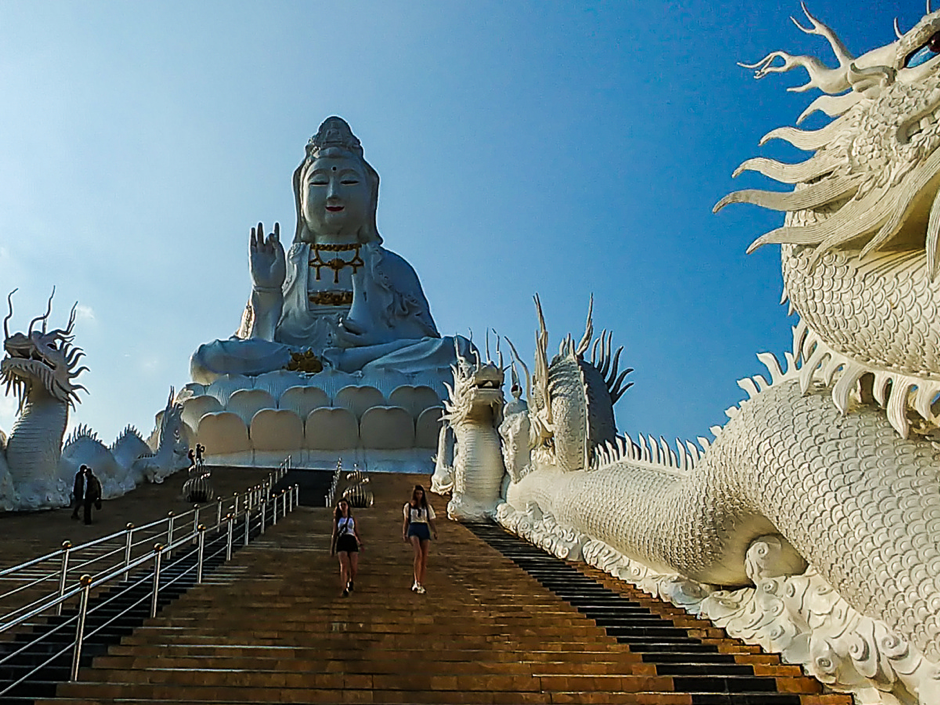
Wat Huay Pla Kung which is a new entry on Chiang Rai’s growing list of unusual temples combines gold and white. There is a giant white statue of the Bodhisattva Guan (Goddess of Mercy) within which you ride to the top in an elevator, a white temple decorated with Lanna-Chinese art, and a 9-storied gold pagoda.
Chiang Rai

The monk here has supposed healing powers and the mainly Thai Chinese who come to the temple to be healed have donated large amounts of money to build the Chinese statue. It is a giant landmark which dominates the local area.

Getting to Chiang Rai

There are many daily flights from Bangkok on several airlines which take about an hour and 15 minutes. If coming from Chiang Mai, the road trip takes about three and a half hours. The city has a wide variety of accommodation suitable for all tastes and budgets.

Len Rutledge is the author of Experience Thailand 2020 available as an e-book or paperback from amazon.com

https://www.LenRutledge.com

https://www.youtube.com/channel/UCX5HUmGP1lR2aoscn3O8P2Q

6 Under-the-Radar Hidden Gems of Japan

6 Under-the-Radar Hidden Gems of Japan

Most visitors to Japan, straight out go to cities like Tokyo, Kyoto or Osaka, all of which are considered prime tourist hotspots. Locations like Himeji Castle, Tokyo Imperial Palace and, of course, Mount Fuji are usually at the very top of the list. However, why restrict yourself to these common tourist destinations when you can get so much more out of your tour. With that in mind and without further ado, here are top six under-the-radar hidden gems of Japan.

Otagi Nenbutsu-ji

History lovers are bound to visit Otagi Nenbutsu-ji, which is a smaller, lesser known relative of the Chinese Terracotta Army. Why? Well because the temple is surrounded with 1200 small Buddhist statues, each completely unique. One way to look at this is to call it the ancient garden gnome decoration plan taken to the extreme.

Umimirai Library

For any book nerd out there, a visit to the Umimirai Library in the city of Kanazawa should be a most definite must. This giant library is also an architectural wonder, which would, on its own, make it worthy of a visit. The very purpose of this place is to encourage you to stay and read in the library, instead of just borrowing a book to read back in your hotel room. In other words, this can customize your reading experience, making it much more unique.

Nozawa Onsen

Skiing and snowboarding fans have to acknowledge the fact that Japan is home to one of the oldest ski resorts, famous Nozawa Onsen. The hot springs beneath this place were discovered as early as 8th century. One of the most unique things about the place is the steam that can’t be contained by the thin surface layer, which makes it visible in all the streets, giving the place an even more mystical look to it. Some Japan snow packages offer everything from flight and accommodation in Nozawa to lift passes and guides, which makes them particularly appealing.

Zao Fox Village

If you ever wanted to have a pet fox, in Zao Fox Village you can come as close to this as possible without putting your life in danger. Here, you can get a privilege of mingling with (almost) domesticated Japanese red foxes, which you can even pet and feed. You can get appropriate snacks there, on spot for as little as $1.20. Keep in mind, however, that you still shouldn’t feed them by hand.

Kumano Kodo trail

For people who are interested in Shinto-Buddhism hybrid of Shugendo, Kumano Kodo trail is one of the first places they should visit. While this place is neglected since the Meiji Restoration, in the past it was one of the most important pilgrimage trails in the whole of Japan. The entire trip can be taken in a couple of days, and it is really an ultimate hiking experience.

Island of Yakushima

Those who want to see what Japan looked like before the civilization and urbanization reached its shores, should definitely visit the island of Yakushima. Its cedar forests amongst the most beautiful in the world and the western shore of the island is a home to some of the most beautiful waterfalls there are. All in all, it’s an incredible place definitely worth paying a visit to.

In conclusion

The main reason for writing this article in the first place was to remind everyone just how much fun can straying off course actually be. The best part comes from the cognition of how easy it would be to miss out on all of this and encourage you to customize tours you take in the future, as well.

North Ireland coast

North Ireland coast

Words: Len Rutledge  Images: Phensri Rutledge

Stunning coastline, windswept cliffs, spectacular scenery and fabulous unspoiled beaches are the promise on one of the world’s great road journeys. Unfortunately, all we can see at the moment is fog.

My wife and I are on the Causeway Coastal Route in Northern Ireland with high expectations but so far the results have been disappointing. We have crawled out of Belfast and are now peering through the gloom at Carrickfergus’s well-preserved 12th century Norman Castle.

The road heads north and the weather improves. It’s now inland to the charming village of Glenarm then on through flower-filled Broughshane where Saint Patrick is said to have tended livestock in the 5th century.

Bright sunshine appears on approaching Ballycastle. Our spirits have soared and so too has the scenery. We stop at the Carrick-a-Rede Rope Bridge which traverses a 30-metre deep canyon. I am immediately intimidated, however, despite my fears I make it across, as have salmon fishermen for 350 years.North Ireland coast

We are surprised to discover that the bridge is more than a kilometre from the car park but the walk along the cliff-top path is exhilarating with stunning views across to Rathlin Island. Spring has brought wildflowers and a profusion of bird life.

Rangers control access to the bridge and we are told that sometimes there are considerable delays for the thousands of visitors who want the challenge of the crossing.

It is now on to Northern Ireland’s top natural attraction, the Giant’s Causeway. Apart from the amazing layered basalt columns plunging into the ocean, there are famous legends and colourful folklore associated with the causeway.

The six-sided basalt columns have been formed when molten lava filled a river valley 60 million years ago, then cooled and cracked. The site is now owned by the National Trust there is an excellent Visitor’s Centre.

The area around the causeway is attractive. Grasslands, heath, cliffs, marshes, the rocky shore and the sea provide homes for a wide variety of plants and animals. We see purple orchid flowers, vivid yellow gorse, colourful stonechats, petrels and peregrine falcons.

The tourism development manager tells us how the causeway is made up of three promontories with one curving gently out to sea towards Scotland. She also points out strange rock formations known as the camel, the organ and the harp.

The historic 1830s Causeway Hotel is serving food but we cannot resist a visit to the Old Bushmills Distillery, Ireland’s oldest whiskey distillery which was granted a licence in 1608. Luckily there are guided tours, a gift shop and a cafe.

A few kilometres, further along, is Dunluce Castle, said to be the most romantic and picturesque in Ireland. The ruined castle has clung onto its dramatic hilltop location since the 14th century. We pay the admission charge then wander around by ourselves fantasising about events long past.

Nearby Portrush has been a fun destination for generations of people and its beaches, hotels, amusements and stimulating nightlife are still here. We stop at the Royal Portrush Golf Club which is home to 2010 U.S. Open winner Graeme McDowell and 2011 British Open Champion Darren Clarke.

The club founded in 1888 is one of Ireland’s premier tournament venues and has dramatic physical features that provide a formidable challenge to all players.

Mountsandel Wood is a venue of a different kind. This is the earliest known settlement of man in Ireland dating back nearly 10,000 years. There are an earthen fort and a forest walk.

Next is Downhill Demesne, a stunning landscaped park with sheltered gardens and cliff walks. Close to the edge of a sheer drop stands Mussendon Temple, an 18th century folly based on the Roman temple at Tivoli, Italy.

We drive on to Londonderry, Northern Ireland’s second city but our thoughts are still on the special place we have just visited. As they say here, “When God made time, he made plenty of it!” we have seen it in a day but we could equally have taken a week.

IF YOU GO.

The Irish Tourist Board can provide good information on Ireland and Northern Ireland. https://www.discoverireland.ie/

Detailed information on the region is available from www.causewaycoastandglens.com

For details on the Giant’s Causeway and Carrick-a-Rede attractions contact www.nationaltrust.org.uk

For Dunluce Castle information contact https://www.glenarmcastle.com/dunluce-castle


www.LenRutledge.com

Len Rutledge is the author of Experience Ireland 2018 available at https://amazon.com/dp/B078GJW7JK

Halloween Around The World

Halloween Around The World

Marriage proposals in Italy, baking bread in the shape of babies in Ecuador, and burning expensive possessions to appease the souls of the dead in China. Across the globe there some strange but wonderful ways locals celebrate their own versions of Halloween. Thomas Cook has collated 50 of the outlandish laws, traditions and locations to create a Halloween map of the world full of need to know trivia you never knew existed.

Here are a few highlights from around the globe:

Halloween Haters

  • In Dublin, Georgia, USA your face must be fully visible and recognisable by law on Halloween
  • Vendragues, France it is illegal to wear clown costumes or makeup on this event if you are more than 12 years old
  • The country of Jordan made Halloween in its entirety illegal in 2014

Most haunted destinations

  • Multiple UFO, ghosts, orbs sightings and the abduction and reappearance a decade later of a young girl at Barranco de Badajoz in Spain make this the place to visit for believers in life beyond earth.
  • Visit the Valley of the Kings in Egypt, to become one of many who have spotted a Pharaoh wearing his golden collar, headdress, and riding a fiery chariot with black phantom horse.

Ghostly Traditions

  • The Romanian ‘Feast of St. Andrew’ involves eating garlic the night before and placing it near doors, windows and chimneys to ward off evil spirits.
  • In Germany, locals look to protect the visiting spirits drawn out during ‘All Souls Week’, by hiding all their knives so they won’t be injured.
  • Hati locals celebrate ‘Fed Gede’ alongside the visiting spirits, eating, drinking, warming their bones by the fire and dancing with them.

halloween

You can Map out all the countries and their traditions here: https://www.thomascook.com/halloween-around-the-world 

Around the World in 42 Hand Gestures [Infographic]

How’s your Nepali? Not too hot? Well, never mind – spoken languages makeup but a fraction of the way we communicate, and some minds just weren’t built to absorb them. If you find that you’re fortunate enough to spend a lot of time travelling, you’ll discover that listening and observing is half the battle when it comes to being involved with the world around you. Whatever forgettable phrases they may print in the guidebooks are rarely comparable to the way the locals of any given area communicate with each other.

Hand gestures are a great way into a local culture, especially if words aren’t your strong point. To take that Nepalese example, you’ll get a lot further greeting locals with a palms-together gesture than a mumbled ‘namastē’ and a vague wave. You’ll also discover that saying ‘no’ – or being told it – involves a swiveling wrist, rather than a shaking head. Likewise, the Japanese have a specific gesture – arms crossed diagonally across the chest with hands open – to indicate that something is just not allowed.

Italy, though, is arguably the most famously gesture-oriented destination, and you can get a long way with no words at all – as long as you’re confident in the nuances between the hand movements. Running your finger into your cheek is a good start for tourists – it’s a way to show you appreciate the food. Other gestures – the notorious chin swipe (“I don’t give a damn”), for example – tend to be less positive, but that’s all part of the package of getting into a meaningful conversation with your new friends.

For more tips on how to engage with other cultures without memorizing the phrasebook, check out this handy new infographic, with some of the most helpful/friendly/no-nonsense hand gestures that those on the inside use as second nature.


Around the world in X hand DV1


Source

Exploring Central Sofia

Words: Len Rutledge.   

Photographs: Phensri Rutledge.

A spectacular cathedral, Roman ruins, restored markets and delightful gardens are just a few of the joys of central Sofia, Bulgaria’s interesting capital. My wife and I arrived knowing little about the city and we discovered a place which we really enjoyed. Sofia’s main sights are nearly all located within a short walking distance of each other. After some sightseeing, dining and relaxing we left vowing that we would return to explore further before long.

Tsar Osvoboditel Monument.

This monument portrays the Russian Tsar Alexander II on horseback. It was erected in gratitude for the liberation of Bulgaria in 1878 from Ottoman rule. The 14-metre high statue is by the Italian sculptor Arnaldo Zucci. Around the pedestal are statues of Russian and Bulgarian fighters. In the spring the small garden around it is covered with flowers. The monument was restored in 2012 to its original condition.

National Assembly Building.

Across the road is this grand Neo-Renaissance style white structure from 1885 which houses the parliament. It is depicted on the Bulgarian 20 leva banknote. In 1997 the building was stormed and damaged, leading to the eventual downfall of the then ruling Socialist party. The words on the facade translate to something like “United we are strong” while on the roof are a row of Grecian-style urns. The interior has been refurbished several times but its original appearance has been basically preserved.

Alexander Nevski Cathedral.

This is without a doubt the most spectacular building in Sofia. The Neo-Byzantine style building is said to hold 8000 people. There are five aisles and three altars, some lovely stained glass windows, Venetian mosaics and dramatic murals. It is one of the largest Eastern Orthodox cathedrals in the world. It was started in 1882 but was not finished until 1912. The crypt below the cathedral is part of the National Art Gallery and there is art from the 4th to the 19th centuries. The focus is primarily on icon painting.

Cathedral Saint Alexandar Nevski

St Sofia.

It is just a hundred metres or so to another important church. This is the oldest Eastern Orthodox church in Sofia and the contrast in style between it and the cathedral could not be starker. The simple red brick church dates back to the 5th century and it gave its name to the present day capital back in the 14th century. During the Ottoman period, it was turned into a mosque but it was restored as a church after the liberation. Just outside the church burns the Eternal Flame of the Unknown Soldier where we watched a dignified military tribute taking place.

St. Sofia church

Russian Church.

Tsar Osvoboditel Blvd., known locally as the ‘Yellow Brick Road, is where you find this small and beautifully ornate Russian Church with its five golden onion domes. It was apparently built for a Russian diplomat who was afraid to worship in Bulgarian churches. While the outside is lovely, the interior, which is currently under repair, is quite dark. You can see the box where people place notes and wishes hoping for a miracle.

National Art Gallery.

This former Royal Palace has been partial renovated in recent times. It houses the national Art Gallery and the Ethnographic Museum. On entering the building you will see the impressive staircase that leads to the rococo-decorated rooms. The gallery space is very limited but there are some nice works on display. We hear that a brand new museum of art is being built. After viewing the art, go to the cafe at the back of the building which serves good tea and coffee in the peaceful garden with old trees.

Ivan Varov National Theatre.

Cross the road and walk through the park to the neoclassical theatre building which opened in 1907. It is imposing from the front with its large pediment supported on six white marble columns. Behind this, rise twin towers crowned with sculptures of the goddess, Nike. On a nice day, the area outside has stylish street cafes and when we visited there was an orchestra playing. The theatre has three stages with the main one able to seat 750 people. The building has been damaged by fire and bombs over the years but a restoration project a few years ago has returned it to excellent condition.

Archaeological Museum.

A little further west along the yellow brick road is this museum, the oldest in Bulgaria. It has been in this location inside the old Bujuk Mosque since 1899. The mosque itself dates back to the 15th century. The highlights include the Valchitran gold treasure from the 14th century BC, pre-historical monuments, many icons and the more recent Thracian gold discoveries. Quite a few of the exhibits have English descriptions, but the Thracian gold room has excellent and extensive English explanations.

Outside the Archaeological Museum

St. George Rotunda.

Cross the road and enter the courtyard of the Presidency building. The 4th century round red brick church sits amongst the excavations of an ancient Roman town called Serdica. This is Sofia’s oldest preserved building and it is open to the public. The highlight is the three layers of frescoes under the dome, the earliest dating back to the 10th century. These were painted over during the Ottoman period when the building was used as a mosque.

St. George Rotunda

www.LenRutledge.com

6 Ways Travelling Will Make You A Better Entrepreneur [Infographic]

Before you go to study, or when your studies are behind you and a promising career beckons, the decision to dedicate a serious wedge of time and money to travelling the world can seem counter-intuitive. Many of us entertain the idea of seeing new places for a while before consigning the idea to a drawer marked “I’ll Do It Once I’m Stable” – but in fact, business leaders and thought gurus refute this attitude, pointing out that travel early on in your personal development will equip a rising entrepreneur with all sorts of enviable skills and experiences. Books and exams are, after all, just one small subsection of a complete education.

Travel’s primary benefitting factor is the independence that it fosters. Removed from the security of everyday life, a traveler is forced to think, decide and act for themselves in situations where they would usually default to a cultural convention, habit, – or mum and dad. Not only will you develop serious levels of self-confidence by negotiating day-to-day with strangers from unfamiliar cultures, but the communication skills that you will be forced to learn will prove incredibly helpful in the business world. Learning languages has even been shown to increase the size of the brain – suggesting there’s power there that will go untapped if you never venture beyond your safety zone.

In fact, 95% of students who travelled abroad said that they developed a more sophisticated way of looking at the world, and 89% claim that travelling enabled them to deal with the very uncertainty that the ‘travel question’ poses – and which is a necessary challenge of any entrepreneurial activity. Similarly, 94% of business leaders see a competitive advantage in those that have travelled, suggesting that regardless of the nature of your experiences, travel on your CV sends positive vibes to potential employers. Check out this ace new infographic for even more reasons why travel may be the best investment a young entrepreneur can make.

6-ways-that-travelling-the-world-can-make-you-a-better-entrepreneur-V1


Source

Explore the UK: A Weekend Trip to London

Explore the UK: A Weekend Trip to London

Whether it’s an adventure break, a venture into the enormous outdoors or an exotic food and drink experience, weekend getaways help you relax, unwind and explore. A break to London can surely do you good. Break away from the daily mundane of life with our selection of weekend trips to London. If you are spending 2 days in London, our itinerary will be a great help for you. Here is how you can make most of your weekend trip to London.

Day 1

Start your day eating English breakfast and head to see the true heart of the London City – Trafalgar Square, which is the largest square in London, where all significant cultural events take place.

Trafalgar Square
Trafalgar Square

Then explore other popular tourist attractions such as London Eye-Take a ride at the largest Ferris wheel and enjoy the impressive views of the city from the top.

London Eye
London Eye

Now head to see the famous Big Ben major London landmark Clock Tower with 4 clock faces.

Big Ben
Big Ben

Your next destination will be the royal Buckingham Palace– The royal residence of British Monarch, in this majestic palace, the must-see attraction is watching the grand Changing the Guard ceremony.

Buckingham Palace
Buckingham Palace

All attractions are must-visit as it will offer you insights into the rich historical, cultural and royal past of London.

You can finish your day, visiting in one of the great museums. Head to British Museum World’s oldest museum, this huge Museum’s collection comprises mummies, the Rosetta Stone, the Lewis Chessmen and the Sutton Hoo Ship Burial, among others.

British Museum
British Museum

If you are left with some time, visit National Gallery– Holding a collection of over 2,600 pieces and amazing classic art forms.

After exploring such iconic monuments, museums and palaces, relax and unwind at one of the popular restaurants for dinner. Dine at Arabica Bar and kitchen to try cuisines in new flavour and combination  and get pampered by the attentive staff.

For a short term stay, you can choose from some of the popular neighbourhoods in London like Camden, Islington, Shoreditch, Chelsea and Westminster. If you are looking for an accommodation in budget, book a holiday rental serviced apartment which is best for short term stay in London. These apartments are located in all the popular neighbourhoods, offering you a great alternative to  a hotel room.  Take rest and unwind yourself so that you can start your second day trip with similar enthusiasm.

Day 2

On the second day of your trip head to the Windsor Castle that opens between 9:30AM–5:30PM. The castle is a royal residence at Windsor, popular for its long alliance with the British royal family and for its grand architecture.

Windsor Castle
Windsor Castle

Next, you can enjoy a walk in the Greenwich Park in the lap of nature. Now explore the landmarks in the centre like the Tower Bridge and St. Paul’s Cathedral.

Finish your day by going on a shopping spree at Oxford Street. Europe’s busiest shopping street, here you can  find 300 shops selling everything from mix of  high-street fashion and brands, including Topshop, Gap, River Island and endless popular department stores.

Oxford Street
Oxford Street

After spending a long day exploring London’s iconic landmarks and shopping your heart out, it’s time to relax and enjoy dinner. With al fresco dining at St Christopher’s Place and cocktails in Apres, you can soak up in the ambiance and it’s worth spending a bit of extra time in this area. Go back home with some exclusive memories of London weekend!

Popular New York Neighbourhoods for the Young and Energetic

Popular New York Neighbourhoods for the Young and Energetic

Mecca for the young, single and energetic, New York City offers a lot packed into one space. The opportunities to learn and explore are unlimited in New York City. The New York neighbourhoods in the boroughs are transforming into spaces that are more suitable for young families than party goers.

As a matter of fact, Upper Manhattan has eradicated most of the potential places for fun. The bars here have become brunch spots and clubs have become yoga studios.

Murray Hill

New York Neighbourhoods

A relatively lesser known neighbourhood in Manhattan, Murray Hill is a safe and secure place. A lot of single men and women live here. The area is also popular for its nightlife. There are numerous cafes and countless places to party in this neighbourhood. There are charming small parks with lush greens to chill. Murray Hill definitely has plenty to explore despite of its small size.

East Village

New York Neighbourhoods

A neighbourhood in the New York City borough of Manhattan, East Village is surrounded by Gramercy Park, Stuyvesant Town, the Lower East Side and east by the East River. East Village clings to the traditional worn out the charm. New developments spring up here every other day and there are still and old buildings. Young guys appreciate these.

There are many art galleries as well as museums to preserve the history of East Village. The area is admired by youngsters. The neighbourhood is an ideal place for nightlife and cheap eats.

Tribeca

New York Neighbourhoods

Tribeca is a neighbourhood in the lower Manhattan. Some thirty years ago, Tribeca was the alternative to SoHo. When people started moving to this part of the town, warehouses became lofts and empty storefronts got filled with boutiques and cafes. Tribeca became more popular than SoHo in some time.

The neighbourhood hosts some acclaimed cultural events including its annual film festival. Also, there are several restaurants and shopping opportunities thereby making it a famous neighbourhood amongst youth.

Dumbo

New York Neighbourhoods

The neighbourhood Dumbo has fallen victim to the ever-increasing prices of the city but this neighbourhood stays exciting and attractive. Dumbo (short for Down Under the Manhattan Bridge Overpass). The neighbourhood is bounded by Brooklyn Bridge Park to the north, the Brooklyn Bridge to the west, Brooklyn Heights to the south and Vinegar Hill to the east.

Dumbo is the place where startups hungry for commercial space are setting up their headquarters in the neighbourhood and offering job opportunities for the young and energetic.

These New York neighbourhoods are also home to numerous New York serviced apartments designed as per the specific requirements of the youngsters.

Trogir: The Hidden Gem of Croatia

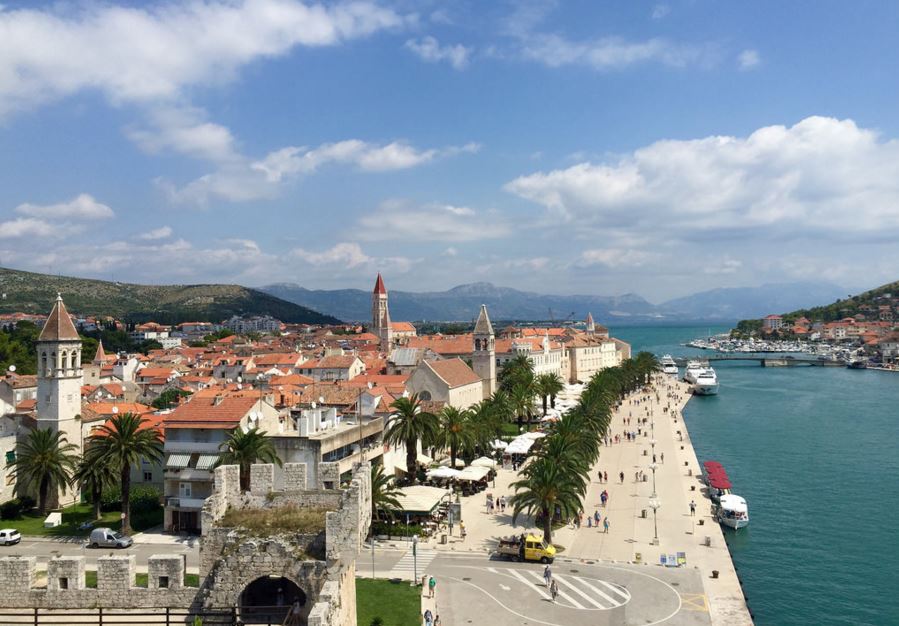
Trogir is a harbor town in Split-Dalmatian County, Croatia. The town is also a World Heritage Site since the year 1997. As of the year 2011, the official population of this town stood at 10,818 people. The town lies 27 kilometers west of the county’s main administrative city, Split.

History and Culture

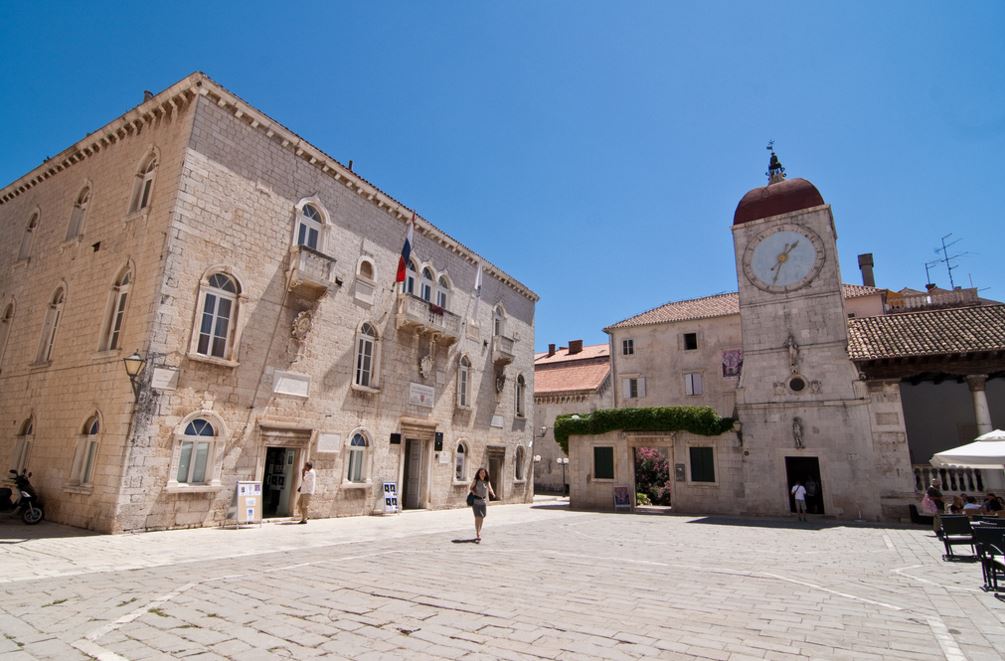
This city has a checkered history. It was founded by the Greeks in 3 BC and evolved as a major port. From the tenth century towards the nineteenth century, Trogir was greatly influenced by the Italian city-states of Genoa and Venice enjoying both commercial and cultural ties with both cities. It was not until the year 1797 that these Italian ties were severed on account of the conquest of Europe by the Hapsburg Empire. The city was reckoned as a unit of the Hapsburg Empire until the end of World War One.

historical building trogir

After 1918, this city linked up with the states of Croats, Serbs and Slovenes to form the Kingdom of Yugoslavia. Later conquests by Italy during the Second World War, annexed this town to be a district of Dalmatia, Italy. After Marshall Tito’s army occupation from 1944, it was recognized as a territory of Yugoslavia and from 1991 as part of Croatia.

The city has a rich culture with an abundance of Renaissance works and architecture. Its most iconic building is the Church of St.Lawrence that embodies the influence of the Romanesque period in Croatia. In the same vein, it is in Trogir that some major work of Roman literature-Dinner of Trimalchio was discovered in this ancient town.

Accommodation and Getting around

Trogir has an excess of more than 20,000 beds stretched out over hotels, private villas, and apartments. Reservations and contact with private home owners are the modes of securing your accommodation whilst in this haven. One can shuttle by a regular bus service that serves this town or elects to lease a car or a taxi. The public transport system in this metropolis is excellent.

trogir croatiaa

Local food and wine

The local cuisine is oriented to seafood: mussels, shrimp, and roast fish. There are also meat specialties like sour marinated beef, beef cooked in sauce(tomato), ham, sheep cheese, salty sardines, roasted lamb, and sauteed greens and potatoes complete this rich motif of the local cuisine. To top up all this is the rich wine which is a product of the rich Dalmatian soil. The wine is produced by both individual families and private enterprises and follows traditions that are strictly passed on from one subsequent generation to the next.

local food wine

Things to do in Trogir

To fully appreciate the riches on offer in this ancient city, try out the following activities:
* Visit the Duke’s palace;
* Visit the Cathedral that has the works of Master Radovan, one of Croatia’s greatest artists;
* Go visit the city core that has ten churches and marvelous architectural sites that mark major epochs in architectural history
* Rent a boat or yacht from a Croatia charter and visit the nearby islands like Ciovo, Solta and Drvenik Veli.

These are some of the sights and sounds that you can expect to feast your eyes on when you visit this historic city, enjoy!

sailing trogir