All posts by Marilyn Vinch

Marilyn is a freelance writer and a digital nomad currently based in London, England. She enjoys reading (and writing!) about being a digital nomad, expat life, travel and work/life balance.

The World’s 12 Most Amazing Train Journeys [Infographic]

The world’s 12 most amazing train journeys

The idea of spending all day on a train may not sound like a holiday to most commuters, but upgrading to First Class isn’t all about wider seats and free newspapers: a truly first-rate rail trip can be among the greatest adventures in the world. With a bit of forethought, your mode of transportation needn’t be just a means to get to some yawn-worthy resort. Embracing the “it ain’t where you’re going, it’s how you get there” idea means opening up to the luxury of a smooth ride through astonishing landscapes and cultures. How better to experience a place than by combining the conviviality of the rail carriage with sheer mileage through open country?

Of course, the level of ‘luxury’ implied in each of the world’s most renowned rail trips depends somewhat on the location. The famous Orient Express from London to Venice, for example, offers vintage cabins, steward service, and afternoon tea. Beats the morning commute, right? Things might be a little more crowded on Japan’s Tōkaidō Shinkansen line from Tokyo to Kyoto: it’s ferried a record-setting 5.3 billion passengers during its 52-year existence. It’s worth a little hustle and bustle for a high-speed trip to the ideal viewing point of iconic Mount Fuji, though.

Whichever continent you find yourself on, rail engineers have been hard at work creating ever more ambitious and awe-inspiring ways to cut through nature and offer first class glimpses of Earth’s awesome, endless landscapes. A new infographic from Pettitts identifies twelve of the most luxurious rail trips available, enabling you to recline and enjoy your holiday without too much wear on the old shoe leather. Whether it’s wild salmon for dinner on the Rocky Mountaineer from Vancouver, or the Harry Potter charm of Scotland’s Jacobite route across the Highlands, you’ll be glad you opted for an upgrade from the tin-can experience of budget airlines and overpriced taxis this summer.

train

From Dusk Till Dawn in The City That Never Sleeps [Infographic]

If you’ve never visited the United States, or not had a chance to make it to the cultural capital, you’ve likely dreamt of the day (and night) you can visit New York City. Perhaps the most iconic destination in the western world, countless cinematic representations of the Big Apple have raised its gritty day-to-day lifestyle to a glamorous status. For not only are the buildings and monuments widely celebrated, but the very experience of being in the definitive metropolis makes it a bucket list essential for any eager traveler.

To fully take advantage of that sense of lifestyle, though, you really need to dedicate at least one full night of your trip to staying awake and enjoying the non-stop nightlife, vampire-style. It can begin as the sun sets, with a ticket to the live recording of Seth Meyers’ famous Late Night show. Afterwards, you can fill your shopping bags (or browse for free!) at late night market, the Brooklyn Bazaar. They’ll lay on karaoke, DJs and games to boot!

Once you’re warmed up, you can put those vocal cords to good effect at the live movie experience of The Rocky Horror Show, which will see you through the midnight hour in Manhattan. A drink at Jay-Z’s 40/40 club will soothe your throat and recharge you in time for some all-night bowling at Whitestone Lanes.

If you’re starting to flag by now, take it easy with a bit of pampering at Koreatown’s Juvenex Spa. You’ll be out in time to see the sun rise over the Statue of Liberty – you can find the perfect view on a free ferry to Staten Island from Manhattan’s Whitehall Street Station. What an epic way to finish your first all-nighter in Gotham!

For all the details and more ideas on how to fill those small hours between dusk and dawn, check out Expedia’s new infographic. You can’t say you’ve done in New York until you’ve pulled an all-nighter!

new york

9 Weird British Expressions Illustrated

9 Weird British Expressions Illustrated

One of the beautiful things about travelling is the opportunity to be submerged in another culture’s language. If you’re familiar with a bit of Spanish or French, it is rewarding to battle your way through the occasional shop transaction without just using the international language of ‘louder English’. In bars and on public transport, it can be fun to figure out at least the subject that people are talking about – it doesn’t feel intrusive when you don’t have a clue what they’re actually saying about it.

In more far-flung places with languages that rarely cross the borders, it can be liberating to hear verbal sounds and emphases you’ve never heard before. You really get an idea of how strange and wonderful the very concept of language is when you literally can’t understand a word. And communication becomes about something deeper than words – and hopefully more patient!

But make your way to Great Britain, and it’s a whole new experience again. Of course, we’re all familiar with London accents and at least a smattering of sanitized southern slang that travels around the world smuggled in British film and music. Travel a little further afield, though, and something strange happens. If you can figure out the words that they’re saying in Glasgow, Keighley or Formby, you’ll recognize most of them as familiar English. But the sentences that they are found in seem to be part of a strange code that only people from certain parts of certain counties can understand!

“You’re all bum and parsley,” “you’re peckin’ me ‘ead,” “that’s the badger!” – what on earth are these tea-swilling lunatics talking about? Well, you can turn up prepared to deal with all manner of strange utterances by first taking a peek at this infographic from Sykes Cottages. Britain is going to be a ye olde linguistic adventure like no other – so here’s a guide to some of the odd expressions you’ll hear uttered on those fair isles.

a-guide-to-weird-british-expressions

How To Shake Hands Around The World [Infographic]

The handshake: a universal greeting of peace and fraternity, right? Well, yes and no.

While widely believed to have evolved as a gesture to show that the greeter bears no weapons, and used in countries on every continent, the precise format of the handshake in different cultural contexts can be a matter of grave importance. Everything from strength of grip to the order in which you greet your hosts can give subtle hints about where you’re from, can potentially cause offence – or can display both affection and respect for your counterpart’s culture.

In nations as diverse as Canada, Mexico and Morocco, for example, a man should wait for a woman to offer her hand before extending his own, to ensure it is appropriate – while in Thailand, you shouldn’t shake a woman’s hand at all. In Australia, women should likewise make the first move – but as a woman, you shouldn’t try to shake hands with another woman.

In South Korea, a gentle handshake is preferred (one out of five on the firmness scale!) and it is important to greet a group in order of age, starting with the eldest. Supporting your right wrist with your left hand while shaking shows respect. If it sounds a lot to remember, it will soon become second nature, and you’ll recognize that such detailed customs raise one’s awareness of the beauty and fragility of our togetherness to a special level.

In France, the handshake is considered too formal when meeting family and close friends, while over the border the Swiss will shake hands with anyone but reserve the use of first names for their nearest and dearest. A simple train ride across Europe can become fraught with social complexities! But to get a better idea of what is appropriate and where, do check out this infographic before you go – it’s indispensable when overseas and keen to make a good first impression.

a-global-guide-to-handshakes

What Country Best Fits Your Manners? [Infographic]

If you’re a big tipper, you could be big in South Africa. If you’re generous with your hugs, you’ll likely be embraced by the people of Brazil and Spain. But if you wear your Sunday best to business meetings, you’re going to look out of place in Ireland. Across the world, the gestures and behaviors that make up our day-to-day life vary in subtle but important ways that can help us to accustom ourselves to the areas we visit, and on occasion even prevent us getting in trouble. Conversely, if you’re sick of the tardiness of your compatriots or want to visit somewhere that you’ll actually be given some personal space for a change, it’s comforting to know there are certain areas that we might be able to fit in with our own personal preferences.

Of course, it’s not a failsafe approach, and often the same kind of behavior may mean different things or have a different heritage in different countries. Did you know, for example, that far from a gesture of solidarity, tipping in America dates back to the country’s post-Civil War bourgeoisie, who travelled to Europe and picked up the custom like a souvenir to impress and belittle their less well-off compatriots? Or that in Singapore, tipping really means something – that it’s rare, but used when the service really demands applause?

Below is a roadmap for regional manners: this flowchart from Expedia will help you find the place that you’ll fit in best. Whether it’s eating with your right hand only in Indonesia or politely leaving gifts unopened until the party’s over in Colombia, you’ll be surprised how many of our basic manners are considered alien by those from other places. It’s a great opportunity to come together and celebrate the wild and varied differences that make us human.

what-country-fits-your-manners


How the World Serves Eggs [Infographic]

Eggs are pretty weird when you think about them too hard. But they are also delicious, convenient, and highly versatile – as is demonstrated by the regional variations on show around the world. If you’re planning to travel, and want to know what the egg world has in store for you, or if you just want to add a bit of exoticism to your weekend brunch, you can do a lot worse than making a trip to the supermarket with a list of ingredients for some of our international neighbours’ signature yolk n’ albumen dishes.

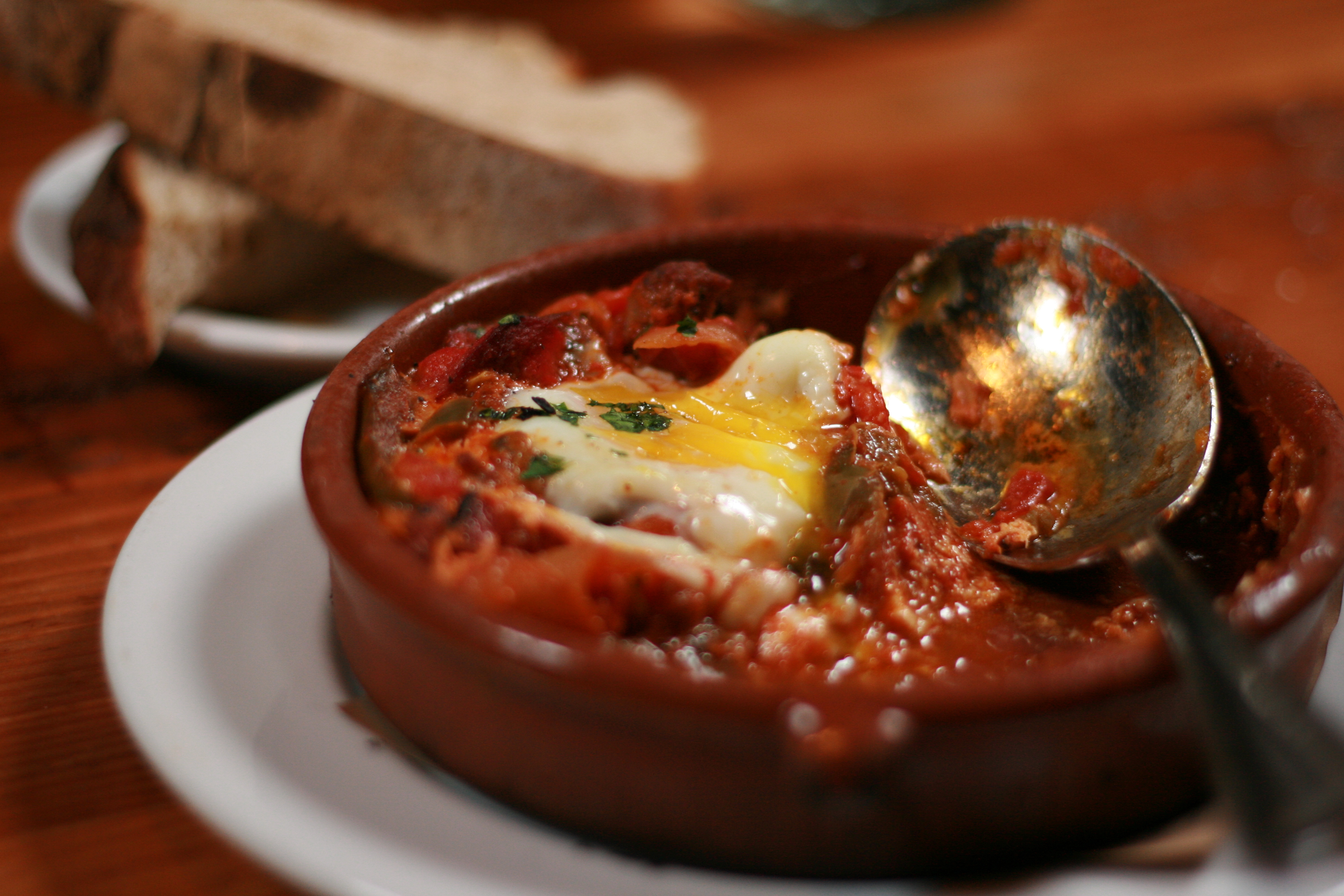
The North African ‘shakshuka’, for example is a real humdinger. Fried and garnished with spices and salty feta, red peppers and tomato give it that extra kick. This one could well be considered a kill-or-cure hangover remedy. The Chinese have a more mellow alternative: egg flower soup is a comforting treat, with peas and mushrooms adding body to the chicken-based broth. Soy and rice wine ensure the Asian spin still delivers with every mouthful.

The Scotch Egg, which stretches way beyond Scotland to the whole of the British Isles, is something of a reliable classic. A boiled egg is wrapped in meat and breadcrumbs, making for a substantial picnic side-dish with no nonsense. Contrast this with the Philippines, where their notorious ‘balut’ consists of a boiled, fertilized duck egg eaten straight from the shell, and you’ll start to believe there’s little you can’t learn about the world through the consumption of regional egg specialities.

After all that savoury weirdness, though, you’ll want to sweeten your palette – and there’s no need to hold back on the egg mission now. French meringue is a crunchy dessert that hits you right in the sweet tooth, and is made from just the egg white and sugar. Combine it with cream and fruit, though, and it becomes a complex of flavour and texture that feels quite Gallic, and quite decadent.

If you’re still not overdosed on eggs, check out the infographic below that explores some of the other weird and wonderful ways that different cultures deal with the small oval ones. Always buy free range, but other than that – perhaps don’t think too hard about where they come from.

how-the-world-serves-eggs

Image sources: Featured image / Infographic

Around the World in 15 National Spirits [Infographic]

Around the world in 15 National Spirits

When we think of ‘culture’ we all too often use it as a synonym for music, film and the fine arts, but a true look into a nation’s soul requires contemplation of everything the people cultivate – from language and gestures to food and drink. Of course, you won’t learn everything there is to know about a country by sitting at home with a bottle of tequila and a sombrero, but enlightening yourself on the drinking preferences of far-flung places can provide a little window on the world and make exotic destinations feel closer to home.

Even better, if you’re making plans to visit one region or another, is to brush up on the way things are done so that you’ll feel confident drinking in local homes and bars – and the people will welcome your respectful interest in their way of life. Downing that tequila with lemon and salt, for example, will quickly mark you out as a tourist. Sipping and savouring it from a brandy glass will aid your enjoyment of the drink, as well as letting your Mexican hosts know you didn’t just fly in with a stag party.

In England, you’re unlikely to offend with the way you drink your gin and tonic, but its genteel image of aristocratic grace can be misleading. Even your new English friends may be surprised to learn of gin’s grim history as a low-quality drink of the masses in the 18th century, which was even used by unscrupulous bosses to supplement the meagre wages they paid. Thankfully, the recipe and the culture are a little more refined today.

Costa Rica’s delicious guaro has a similarly shady past – it was illegal until 1851, but still popularly produced by moonshiners and enjoyed all the more, perhaps, as a forbidden fruit. In Hungary, the legality of producing their famous pálinka at home remains contentious to this day.

For further insights into the drinking preferences and histories of our global neighbours, be sure to check out this new infographic exploring the national spirits of twenty desirable destinations around the world.

Around-the-World-in-X-National-Liquors-DV2


Source

Around the World in 42 Hand Gestures [Infographic]

How’s your Nepali? Not too hot? Well, never mind – spoken languages makeup but a fraction of the way we communicate, and some minds just weren’t built to absorb them. If you find that you’re fortunate enough to spend a lot of time travelling, you’ll discover that listening and observing is half the battle when it comes to being involved with the world around you. Whatever forgettable phrases they may print in the guidebooks are rarely comparable to the way the locals of any given area communicate with each other.

Hand gestures are a great way into a local culture, especially if words aren’t your strong point. To take that Nepalese example, you’ll get a lot further greeting locals with a palms-together gesture than a mumbled ‘namastē’ and a vague wave. You’ll also discover that saying ‘no’ – or being told it – involves a swiveling wrist, rather than a shaking head. Likewise, the Japanese have a specific gesture – arms crossed diagonally across the chest with hands open – to indicate that something is just not allowed.

Italy, though, is arguably the most famously gesture-oriented destination, and you can get a long way with no words at all – as long as you’re confident in the nuances between the hand movements. Running your finger into your cheek is a good start for tourists – it’s a way to show you appreciate the food. Other gestures – the notorious chin swipe (“I don’t give a damn”), for example – tend to be less positive, but that’s all part of the package of getting into a meaningful conversation with your new friends.

For more tips on how to engage with other cultures without memorizing the phrasebook, check out this handy new infographic, with some of the most helpful/friendly/no-nonsense hand gestures that those on the inside use as second nature.


Around the world in X hand DV1


Source

11 TV & Film Coffee Shops You Can Visit For Real [Infographic]

Wherever you travel around the world, no matter how far or how exotic, from time to time you need to check back in with the basics: a cup of coffee, some WiFi, perhaps even a slice of pie. This needn’t be a mundane moment in your otherwise thrilling trip, however, as many of the most desirable cities are host to iconic coffee shops that you’ll recognize from perhaps your favourite TV shows and movies. These quiet moments when you catch your breath in the middle of an adventurous day can form at least a classic Instagram moment – and at best, a memorable pilgrimage to the regular haunt of your big screen heroes.

Paris, for example, is home to Café des 2 Moulins, Amélie’s workplace in the movie that bears her name, and one of the loveliest and most iconic of all cafés from the big screen and beyond. So desirable is this destination, the owners had to change the chairs outside the café when fans kept repeatedly stealing them. Of course, another perk to coffee here is the French cuisine: you’ll want to grab something sweet to go with it, just to stay in character.

You’ll likewise find quality among the reflected glamour at Regency Café in Pimlico, London. Early Daniel Craig vehicle ‘Layer Cake’ may not be the most memorable of mockney crime capers, but you can at least be assured that Regency boasts the title of London’s 5th best restaurant. Its authentic décor will complete the London experience, so be sure to head to South West London when you’re in need of a British cuppa.

Whether it’s big movie moments you crave, or the reassuring regularity of your favourite TV show’s regular coffee shop, there’s a place for you. Check out this new infographic for a rundown of some of the most famous screen coffee shops and where to find them.

X-film-and-tv-coffee-shops-you-can-visit-for-real-DV4


Infographic by: https://www.darwinescapes.co.uk/2016/07/11-film-tv-coffee-shops-can-visit-real/


10 Etiquette Rules for Flying Economy Class [Infographic]

10 Etiquette Rules for Flying Economy Class

They say there’s something special about flying first class, but most of us mere mortals would rather save the extra cash for our destination and put up with the struggle of economy class instead. A couple of hours of meaningless struggle are usually well compensated by the number of fancy dinners, beachside cocktails and museum entries that the difference will cover. But with planes filling up, tempers rising, and butts getting bigger (scientific fact!) the more refined 21st-century economy class traveler may be starting to feel the squeeze. The truth is, it’s a temporary community up there and if we want it to be bearable – enjoyable, even – we each have a responsibility to check our own behavior on board.

In fact, spreading good cheer among your esteemed co-passengers begins at the security gate, where there’s little that will crank up the rage of more seasoned travellers than watching you fumble with gadgets, coins and paperclips from the depths of your pockets when you should be well through the scanner. Think about how you pack so you can quickly empty your metallic objects into the tray and be on your way.

Throughout the arduous queuing process, be sure not to push, shove or rush. Folk has a funny need to beat others to each post of the boarding process, though most of the panic has little basis in reality. Stowing your hand luggage directly above your seat is really not as important as acknowledging and respecting the guy you were about to shove out of the way to do so. For extra points, place the luggage long-ways (not horizontally) in the locker to make more efficient use of the space.

Like any community, the secret to a successful plane ride is empathy. Acknowledging the needs and preferences of others, making kind gestures and addressing air stewards with gratitude are all ways to spread good will without compromising your own comfort. For further tips on how to do so, do check out this new guide to economy class etiquette – and may you, and those around you, have a good flight!

10-etiquette-rules-DV2

Source