Category Archives: Infographic

Skiing, surfing and safari parks: Could you have your dream holiday at home?

Insta-worthy dream holiday without having to pack your bags!

Holidays are one of the best ways to tick off those outstanding items on your bucket list. The holiday provides us with the opportunity to do those ‘once in a lifetime’ things that we dream about in our day-to-day, a chance to live those exhilarating experiences and collect those unforgettable memories.

But what if you didn’t have to wait for a big, expensive holiday to a far-flung destination to do all the things on your list? What if you could do those same incredible activities in the UK or Ireland?

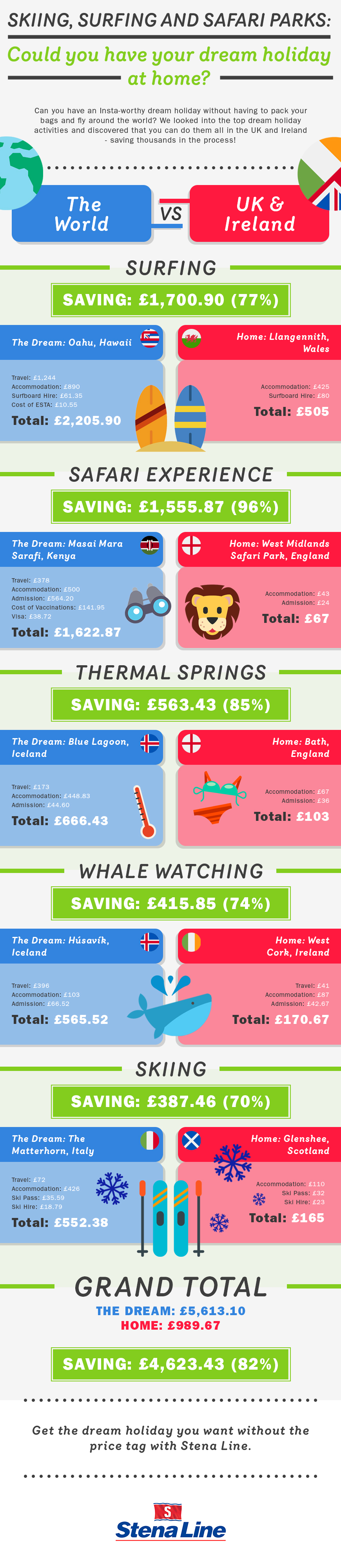
Stena Line asked the UK public what they would most want to do on their dream holiday. Here are the top 5:

  1. Surfing
  2. Safari experience
  3. Thermal springs
  4. Whale watching
  5. Skiing

So, how can you have an Insta-worthy dream holiday without having to pack your bags and fly around the world?

1. Surfing

Surfing has (excuse the pun) really made a splash with holidaymakers over the last decade or so. It’s grown from an ancient practice in Polynesia to a rebellious sub-culture in California and now it can be found all over the world.

Surfing is a perfect holiday activity because it combines a little bit of learning — perfect to keep the brain stimulated when it might otherwise switch off — with a fun physical challenge and plenty of time in the sun.

The dream: Hawaii, USA

Though Californian surf culture made the practice famous in contemporary society, the best surfing can still be found where it all started. Hawaii is known for its profound surf culture and world-class waves. Its white beaches and sub-tropical climate make it a surfer’s dream.

Getting there, however, is not a laid-back experience. From the UK, it takes at least 17 hours to get to Hawaii, not including transfer time, which can quickly stack up to nearly an entire day of flying. And the flights, as you might expect, aren’t cheap. We found that return flights were £1,244 per person.

Once you’ve landed, you could technically surf for free (no one owns the ocean, after all), but it’s unlikely that you’ll haul a surfboard halfway around the world with you.

Instead, you’ll probably want to hire your gear when you’re there. If you go for, let’s say, five days (you’ve gone all that way, after all!), you can hire a beginner board for a week for $80 (£61.35). Five nights in a good mid-range hotel in Honolulu will set you back £890.

Oh, and don’t forget: Hawaii is part of the USA, which means you’ll need to purchase a $14 (£10.55) ESTA to get through customs.

Altogether, that clocks in at £2,205.90.

Close to home: Llangennith, Wales

Over the last decade or so, there’s been a marked rise in the number of people going ‘cold water’ surfing in North America and Europe.

One of the best places for that? Wales — specifically, Llangennith, a long beach where surfers can get stuck in to the Gower, a reef renowned for its waves. The Gower has been called the heartland of Welsh surfing, offering waves for surfers of all abilities, whether you’re after those mellow troughs or those gnarly thirty-footers.

Some of the best surfers in the UK refine their craft in the waves off the shores of Llangennith, so it’s definitely one for your bucket list.

Unlike Hawaii, you won’t need to worry about getting flights to Llangennith if you’re in the UK. Surf gear is a little more expensive than Hawaii — about £80 to buy a beginner board and wetsuit — but you won’t need to pay for a visa or an ESTA to get there.

Because it’s only a short journey, you could probably visit Llangennith for a couple of days before heading back, but for the sake of being fair, let’s say that you’re staying for five days. Accommodation in Llangennith is around £85 per room for a mid-range hotel so your hotel costs for the week would come in at about £425.

The sum total takes you to just £505.00.

Saving: £1,700.90 (77%)

2. Safari experience

Getting out onto the plains of Africa is the dream of many a wildlife enthusiast, which is why a safari is at the top of many people’s bucket lists. They’re often the only opportunity that people have to see some of the world’s most incredible animals out in the wild, up close, from gigantic elephants and hippos to lion prides and ferocious crocodiles.

The dream: Maasai Mara, Kenya

No continent does a safari quite like Africa — its stretching plains and varied wildlife makes it a haven for animal-lovers. One of the best-known safaris in Africa is the Maasai Mara National Reserve in Kenya. Maasai Mara shares a common border with the Serengeti and is famous for its plentiful populations of lions, leopards, cheetahs, zebras and wildebeest.

The problem is that going on a safari in Maasai Mara is an all-in experience; planning a day trip out onto the plains isn’t easy to do. The shortest safari package we could find was a 3-day outing that started at $746 (£564.20) per person. Assuming you would stay an absolute minimum of 2 nights, that puts accommodation at £500 per room if you want to stay near Maasai Mara. Cheaper rooms are available in Narok, the nearest town, but it’s a three-hour drive away.

Getting to Kenya in the first place is fairly pricey. Return tickets are about £378 per person, but you’ll also need to factor in getting a visa for entry for $51 (£38.72) and the shots you’ll need for typhoid and yellow fever (£141.95). That puts the entire trip at £1,622.87 per person, excluding food and airport transfers.

Close to home: Birmingham, England

You’d be mistaken in believing that you have to leave the UK and Ireland to enjoy an engrossing safari experience. The West Midland Safari Park — located just half an hour or so outside of Birmingham — offers one of Europe’s best wildlife experiences. Lions? Check. Zebras? Check. Elephants and rhinos and cheetahs and pretty much everything else you’d spot on the Serengeti plains? All check. And you can see them all in one day!

Admission, as you might expect, is much cheaper than booking an African experience. Day passes start from £24 per person, though you can book a VIP package if you want something more immersive. Accommodation in Birmingham is agreeable, too, with mid-range hotels starting at about £43 per room. And since it’s in the UK, you won’t need to pay anything for flights, visas or vaccines, which puts the total at just £67.

Saving: £1,555.87 (96%)
holiday

3. Thermal springs

Everyone loves a good spa day, but there’s something magical about the restorative powers of the earth itself. Though thermal spas have been around for millennia (they were a particularly big hit with the Romans), they’ve recently had a rapid increase in popularity. Genuine thermal spas are a rarity, which is why they’re sought after by holidaymakers who are looking for unique experiences.

The dream: Blue Lagoon, Iceland

The tourism statistics for Iceland’s Blue Lagoon have benefitted massively from the Instagram generation. It’s one of the most beautiful places in the world, sporting an azure blue volcanic lake that contrasts sharply with the stark igneous landscape that surrounds it. For that reason, it’s become a top destination for modern travellers to go to.

It isn’t cheap, though. Iceland is notoriously pricey — in fact, it’s cited by many as the most expensive tourist destination in the world, due to high import costs and taxation on food and alcohol. The Blue Lagoon is ISK 6,990 (£44.60) for just one hour in the pool, and that’s if you book in advance. If you want to stay over, the on-site hotel is your only real option, as the spa is in the middle of nowhere. A stay at the Silica Hotel starts at ISK 70,400 (£448.83) per night. Add the flights on top of that — £173 return from the UK — and your total comes to £666.43.

Close to home: Bath, England

Bath is, in the minds of many, the original thermal spa town. It’s even named after the Roman baths. That’s because of the plentiful geothermal springs underground that allowed Roman settlers to create hot bathhouses, some of which still stand today.

You can actually enjoy a dip in a genuine geothermal spa when you visit Bath by going to the Thermae Spa. Admission to the New Royal Bath is £36 on weekdays, for which you’ll get a two-hour spa session and access to the open-air rooftop pool and the Minerva Bath, the largest of the thermal baths. Accommodation in Bath is about £67 per night, and without flights to worry about, your total comes to just £103.

Saving: £563.43 (85%)

4. Whale watching

Whales are incredible creatures. With the largest of them measuring almost 30 metres long, it’s understanding that the vast majority of them don’t fit in an aquarium or sea life centre. You have to go out into the wild to see them for real — and spotting them is one of the top things that we want to do on holiday.

The dream: Húsavík, Iceland

One of the best spots to see whales in the world is off the northeast coast of Iceland. The coastal town of Húsavík has become a hotspot for budding whale-spotters, and as such, there are several companies that run world-class whale-watching tours out of Skjálfandi Bay on traditional oak boats.

As mentioned earlier, though, Iceland is expensive. The three hours you spend on the water will cost you 10,500 ISK (£66.52) per person, and a night spent in Húsavík will cost you around £100 per room — and that’s at the low end of the spectrum. Return flights to Akureyri — the nearest airport to Húsavík — are about £396 from the UK.

That means that even without food costs and airport transfers — which can be two or three times what you may spend in the UK — you’ll be spending £565.52 to do a day of whale watching in Iceland.

Close to home: Cork, Ireland

Did you know that the Irish government declared the coastal waters of Ireland a whale and dolphin sanctuary during the early 1990s? Ireland’s policies on the preservation of sea life have turned it into one of Europe’s top spots for seeing Minke, Fin, Baleen and even Humpback whales in their natural habitat.

You can go whale watching from West Cork for just €50 (£42.67) per person for 4 hours out on the water. Accommodation in Cork is around £87 per night for a mid-range hotel, and getting to Cork from the UK is easy — you can hop aboard a ferry from just £41 per person for an overnight stay, which gives you as much as 36 hours in Ireland.

Altogether, you’ll be spending just £170.67.

Saving: £415.85 (74%)

5. Skiing

Skiing has a sort of vintage charm about it — maybe that’s because its popularity grew rapidly in the 50s and 60s when metal skis made it easy, even fun, for amateurs to ski as well as pros. Since then, it’s become a top holiday recreation, complete with cosy lodges and alpine tipples.

The dream: Cervinia, Italy

What skiing hotspot can compete with the world-famous Matterhorn? It’s instantly recognisable by its pyramid shape and its looming presence in the Alps, crossing the borders of both Italy and Switzerland. One of the best ski resorts at the base of the Matterhorn is Cervinia, Italy, where you can take a lift up to some of the best parts of the mountain and ski to your heart’s desire.

Flights to Cervinia are very reasonable from the UK, with return flights coming in at only about £72 off-peak. A day-pass to the Cervinia resort is €43 (£35.59), with ski hire coming it at £18.87 per day if you book online. However, accommodation is pretty pricey, probably because of how remote the hotels are. For two nights, you’ll be looking at about £426 per room.

For argument sake, let’s say you just want to ski for one full day — that takes your total to £552.46.

At home: Glenshee, Scotland

Bet you didn’t know there were ski resorts in the UK! In fact, Glenshee Ski Resort in Scotland sees a great deal of snowfall throughout the year, and with a few gentler slopes than Cervinia, it’s ideal for beginners and intermediates.

Admission to the ski resort is a little cheaper than Cervinia, with a 1-day lift pass coming in at £32 (although if you just want to hit the beginner slopes, you can get to them for just £20 a day). Ski hire is £23 a day for skis, boots and poles.

The biggest saving you’ll make is on accommodation. You can stay at a mid-range hotel in Ballater — about half an hour’s drive from Glenshee — for about £55 a night, so £110 if we’re going to match the two nights you’d spend in Cervinia.

That puts your total at just £165.

Saving: £387.46 (70%)

The Dream: £5613.18

Home: £947.67

Saving: £4,665.51

83%

A dream holiday from home

If you have plenty of money — and time, too — you might be willing to travel the world to complete your holiday bucket list. For the rest of us, though, the good news is that all the activities we dream about for our perfect holiday are right on our doorstep here in the UK and Ireland.

Here’s to a staycation that exceeds all expectations!

How to Say Avocado on Toast Around the World

It’s safe to say the world has been struck by avocado fever. Over the past five years, there has been a 405% increase in the number of online searches for ‘avocado on toast’ around the world.

If you’re wondering how to order the nations favourite dish ‘Avocado on toast’ look no further, Canvas Holidays compiled the ultimate guide to ordering it in 27 different languages as well as 5 fictional dialects.

Dorthaki (Game of Thrones)  – “Fichat anna havon zhavvorsa sovi” 

Elvish – (Lord of the Rings)“Amin irma avocado coimas

If you’re heading to Portugal, simply ask for “Desejo uma torrada com abacate por favor” 

As well as these languages, we’ve compared prices around some of the major cities in Europe.

With many of us now getting ready to book our 2018 holidays, we thought it would be useful to show you how to order your beloved ‘Avocado on Toast’ in every language in the EU… and a few others like Dothraki and Klingon in case you plan on travelling farther afield…

Infographic provided by https://www.canvasholidays.co.uk/blog/2018/02/01/ordering-avocado-on-toast-around-europe

The Bizarre & Amusing Translations of Place Names Around The World [Infographic]

The Bizarre & Amusing Translations of Place Names Around The World

It’s fair to say that we don’t always put a lot of thought into the names of places we visit. In fact, unless they are in the English language, we just take them as read.

This point is widely proven across the USA and the UK, where we all enjoy poking fun at some of the truly ridiculously named villages, towns and cities across both nations.

Ridiculous Place Names

Just take a look at this very enjoyable article from The Telegraph which lists 10 of the silliest place names in Britain.

As you can see, history often plays a big role in naming certain places. Because of this, the original meaning becomes lost and ends up becoming something much more humorous!

The sheer volume of strangely named places is perfectly illustrated in this post from Thought Catalog which lists 52 across the United States, including the likes of Accident, Maryland and Coupon, Pennsylvania.

Clearly, there is no shortage of odd place names in the English language, However, if this is what one language has to offer, how many ridiculous ones exist in all of the other languages?

Well, thanks to a new infographic from clarendonlondon.com, it turns out there’s plenty of them.

The Bizarre & Amusing Translations Of Place Names Around The World

They have gone about translating some of the strangest names into English, with quite frankly hilarious results.

It’s called ‘The Bizarre & Amusing Translations Of Place Names Around The World ‘ and you can take a look below.

This infographic covers a number of continents. However, the conclusion it clearly comes to is that there are a wealth of silly named places in Europe.

Germany is seemingly a wonderful example with a wealth of giggle-inducing place names. The infographic includes Feuchtwangen, which translates as “wet cheeks” and Kotzen, which translates as “vomit”.

place names

How To Order A Pizza/Beer/Taxi/Coffee in 15 Different Languages

No matter where you head for your next holiday, you can be sure there will be no issues communicating with locals.

This is because a lot of countries around the world speak English. In fact, according to Wikipedia, English is the third largest language by number of native speakers in the world. If you take into account non-native speakers, it becomes the second largest.

This is obviously very helpful, especially if you’re travelling to countries very different to where you call home. However, it of course, means that you are very unlikely to make the effort to learn another language.

This lack of effort on the part of British and North American tourists is often interpreted as being rude in certain countries.

The assumption that locals will know English is a reasonable one. However, the expectation is something which understandably can seem rude to those who are already making an effort.

A great example can be seen in this article from the Telegraph. It explains why much of the British Expat community in Spain tends not to bother learning Spanish.

How To Order A Pizza/Beer/Taxi/Coffee in 15 Different Languages

It’s for this reason that before we head off on our next holiday, we should at least learn a few important things.

A great place to start is with common phrases you’re likely to use whilst away. You can find a number of great examples in a new infographic from silverdoorapartments.com.

It’s called ‘How To Order A Beer/Pizza/Taxi/Coffee In 15 Different Languages Around The World’. You can take a look for yourself below this post.

As infographics go, this one really does what it says on the tin. It covers languages from a number of popular destinations including Spanish, Italian and French. On top of this, it offers some for the more adventurous traveller, including Japanese and Russian.

21 Things You Didn’t Know About London [Infographic]

21 things you didn’t know about London

In recent years, the popularity of London city break has gone from strength to strength. It seems that millennials are doing away with the week beach break and instead favouring three days in one of the world’s great metropolises.

As you can see from this post from UK travel association ABTA, statistics now show that they are in fact as popular as beach holidays.

It’s really not hard to see why either. With more cheaper flights than ever and budget accommodation via Airbnb and other services, city breaks can prove to cost very little.

In fact, for the amount of money it takes to book one beach holiday, you could quite easily enjoy two city breaks.

When it comes to selecting a city break, there’s certainly a few everyone must visit. One of these is, of course, London.

London is bar far one of the most popular tourist cities on the planet. In fact, the Evening Standard reported earlier this year that a record 19 million tourist visited the English capital last year.

It’s pretty easy to see why too. London is both a city with a wealth of history and also bucket loads of contemporary attractions.

Just take a look at this post from Planet Ware, which lists a number of world famous attractions.

If you’re planning on visiting this marvelous city, it would be beneficial to learn a little about it first.

And thanks to a new infographic from Central London Apartments, you can do just that!

It’s called ‘21 Things You Didn’t Know About London’ and you can see it for yourself below.

It covers some truly fascinating things relating to contemporary London and also its rich history.

For example, do you know how many people use the London Underground each year? Or why the Palace of Westminster is positioned on the River Thames? You can find the answers and plenty more fascinating things by reading the infographic.

london

UK, US & European Instagram Festival Map

Imagine yourself, right now, stood at a music festival of your choice, all of your pals around you, your favourite band playing your favourite song.

Imagined it? What are you likely to do to capture this moment? Of course, it’s going to be taking a photo and uploading it to Instagram, because that’s half the fun of spending a weekend in a field, right?

Accessorize have researched into the most Instagram worthy festivals in the UK, US and Europe and plotted them on a wanderlust-worthy interactive map.

From the wonderful land of the free (USA) to the UK across to Europe – there are some pretty cool festivals to be attending.

The top ten are as follows for the US:

instagram

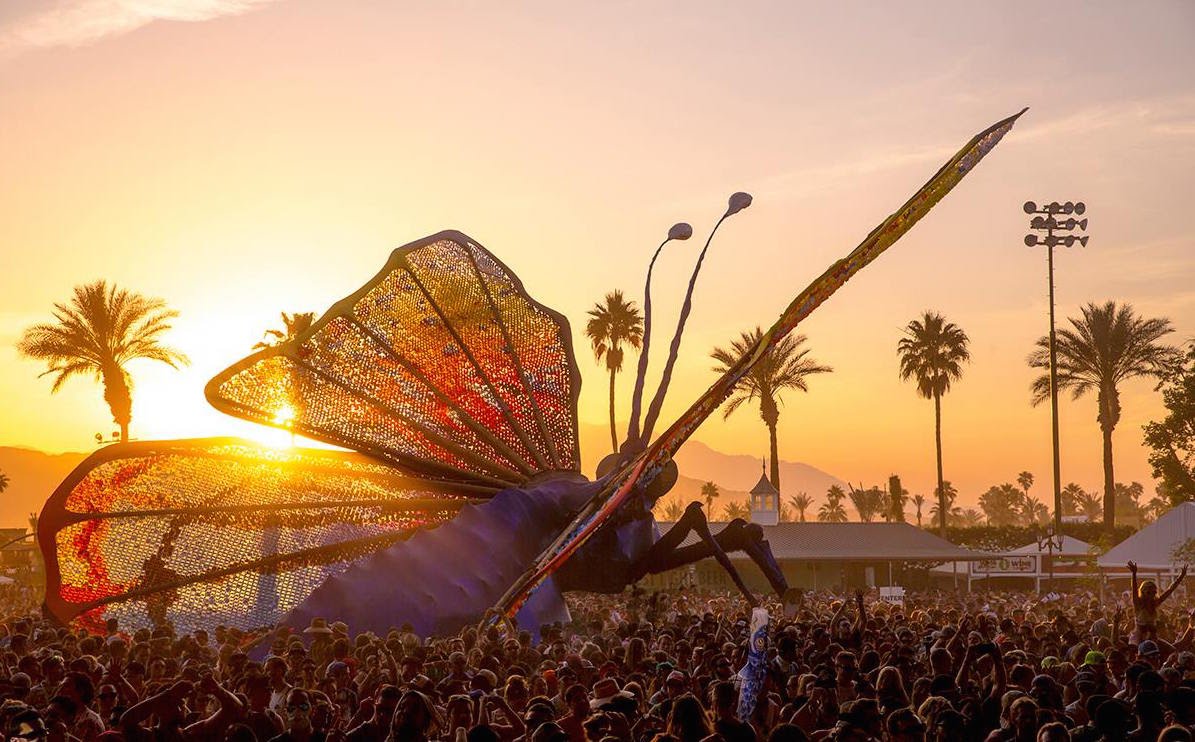
Coachella, of course, could not be any less than number 1 – the biggest A-Lister festival set in in the Colorado dessert, California. Whether you’re looking to pile in with friends or lounge in the lap of luxury, Coachella has lodging options for every festival goer.

The festival offers more delicious food than you could eat in a weekend, with over 100 choices serving everything from wood-fired pizza and handcrafted burgers to authentic street food and fresh-from-the-wok noodles.

instagram

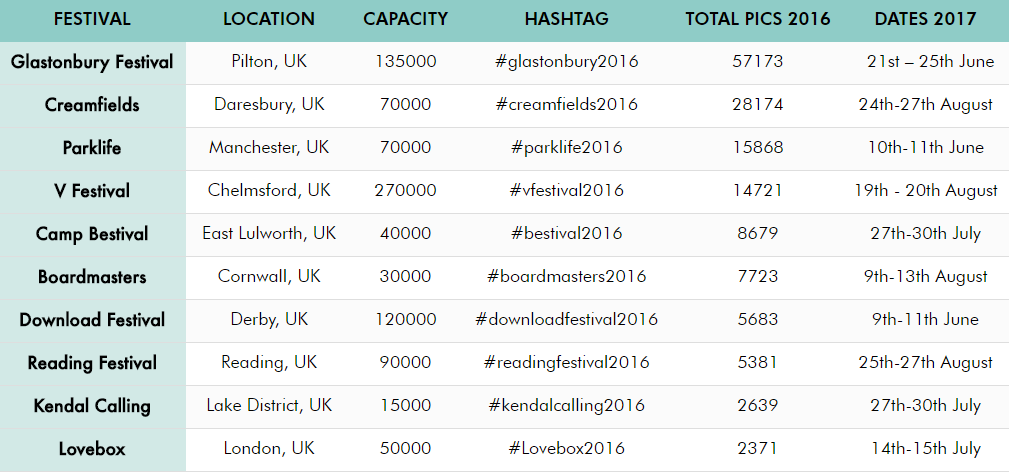
It was without doubt that Glastonbury gained the throne within the UK festivals, of course – set in Somerset on Worthy Farm in Pilton, Glastonbury has been going for 47 years and started out with a capacity of 1,500 which has increasingly grown to over 135,000.

With the Great British countryside at your feet, I’d recommend signing up for your tickets for 2018.

instagram

Ohh wonderful Europe, how many festivals there are!

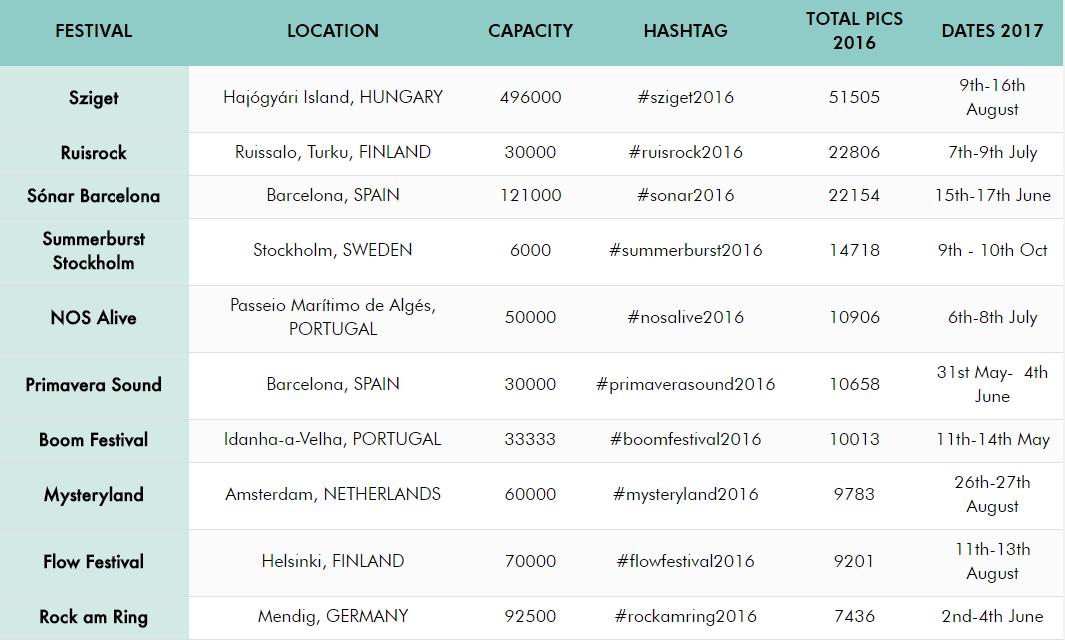
Sziget, based in, Hungary takes the festival crown for Europe – with a capacity of over 496,000 that attended the 2016 24th edition of the festival.

Sziget takes place on a beautiful island on the Danube every August and brings together people from all over the world, as well as musical (mainly) and other acts and events. It’s a fantastic multicultural experience, and a lot of people take advantage of it every year.

Check out the interactive map courtesy of Accessorize, and explore the rest of the UK, US and European festivals.

15 of The World’s Oldest Buildings and Where You Can Find Them [Infographic]

15 of The World’s Oldest Buildings and Where You Can Find Them

Travelling abroad gives us a chance to experience authentic cultures which can’t be enjoyed anywhere else.

Drinking Guinness in Dublin, eating pizza in Rome or watching a jazz band in New Orleans are great examples.

Authentic cultural experiences are often tied to history. For example, while you can take a trip on a punt or rowing boat all around the world, there’s something extra special about taking a gondola around the waters of Venice.

Venice, along with 99 other unique experiences makes up a great list from Wanderlust. If you want some inspiration for authentic trips, this is a good place to start.

Historic Sightseeing

Sightseeing is certainly a big part of enjoying authentic cultural experiences. For example, to really soak up all that Egypt has to offer, you really must visit the Pyramids.

One of the reasons visiting buildings such as these is so fascinating is because of how long they have existed.

These days, we often see Townes blocks bulldozed after standing less than half a century. However, there are some stunning structures which still exist thousands of years after their construction.

15 Of The World’s Oldest Buildings And Where You Can Find Them

If history and sightseeing are one of the biggest reasons you travel the world, you’re in luck. ŴThis is because a new infographic from Globehunters presents a number of must-see historic buildings from, around the world.

It’s called ‘15 Of The World’s Oldest Buildings And Where You Can Find Them’ and you can take a look below.

This fascinating piece presents 15 must-see locations for any history-loving sightseer.

It contains places you certainly will have heard of and other you probably haven’t. For example, probably the most famous is the Coliseum in Rome.

This truly iconic structure is one of the oldest amphitheatres on the planet and really offers a glimpse of what life was like in ancient times.

There’s also the lesser-known oldest house still in existence. The Knap of Howar sits on the island of Orkney, just off the coast of Scotland and is thought to have stood since 3700 BC.

 Oldest Buildings

13 Of The World’s Oldest Living Things And Where To Find Them [Infographic]

13 Of The World’s Oldest Living Things And Where To Find Them

While humans now wander just about every corner of the planet, there is still something truly fascinating and mysterious about the natural world.

In fact, while we have extensively mapped Planet Earth, we still know staggering little about what lives on it.

In recent years, scientists have discussed what they consider to be the number of species which have been catalogued.

According to National Geographic, they believe only 15% of all species have been discovered, that’s right, 15%!

Even among that seemingly tiny 15%, it’s fair to say that the world is full of truly fascinating nature and wildlife.

Natural Wonders of the World

The excitement of seeing natural wonders is something which many of us travel in search of.

A number of things which feature on most bucket lists are the 7 Natural Wonders of the World. You can take a look at them in this list from World Atlas.

For animal lovers, there are a number of stunning creatures to see before you die. The most common tend to be The Big Five.

The Big Five are all from the continent of Africa and are the reason so many people go on Safari. They are the Lion, Elephant, Buffalo, Rhino and Leopard.

Obviously, there is slightly more urgency to see certain natural wonders than others. This is because some species are closer to extinction than others.

13 Of The World’s Oldest Living Things And Where To Find Them

There are also a number of individual creatures which have lived for an incredibly long time. Witnessing them before they shuffle off this mortal coil is certainly something many travellers try to achieve.

You can find the most interesting of them in a new infographic by Globehunters. It’s called ‘13 Of The World’s Oldest Living Things And Where To Find Them’ and you can take a look below.

It covers everything from the world’s oldest living Black Rhino to the oldest standing tree in Europe!

Oldest Living Things

An A-Z Of European Country Name Origins [Infographic]

An A-Z Of European Country Name Origins

No matter whether you live in Europe or outside of it, there’s no denying what an utterly fantastic holiday destination it is.

One of the biggest reasons for choosing any part of Europe is for its fascinating and rich history.

Europe’s Many Landmarks

The list of fantastic cities and landmarks is almost endless. Just take a look at this article from USA Today which lists some of the best landmarks, all steeped in history.

Over the centuries, Europe has also changed a great deal. As empires, regimes, and governments have come and gone, borders have changed, and too to have the identities of nations.

With so many outside influences, every country in Europe has been influenced by those around it many times over.

Take a look at this fascinating three-minute video on Viral Forest. It maps the massive changes in European borders over the past 1000 years, its fascination just how much has changed.

Aside of borders, one of the simplest ways to learn a great deal about European history is from the names of different countries.

An A-Z Of European Country Name Origins

Throughout history, the names of many of Europe’s countries have altered. Because of this, a great deal can be learned from the current names.

A new infographic from globehunters.com explores this very idea. It’s called ‘An A-Z Of European Country Name Origins’ and you can take a look at it below.

The infographic contains a number of fascinating facts about Europe that you’ll likely never have heard before.

For example, did you know that Monaco derives from the Greek word Monoikos? This word translates as ‘single house’ or ‘single temple’ signifying a place to rest, which is very much still in keeping with modern-day Monaco.

Another good example is the origin of Kosovo. The name is taken from the Kosovo Plain, where the Battle of Kosovo, between Serbia and the Ottoman Empire was fought in the 14th century.

european

An A – Z Of European Country Name Origins – An infographic by the team at Globehunters.com

10 Worldwide Road Trips You Need to Add to Your Bucket List [Infographic]

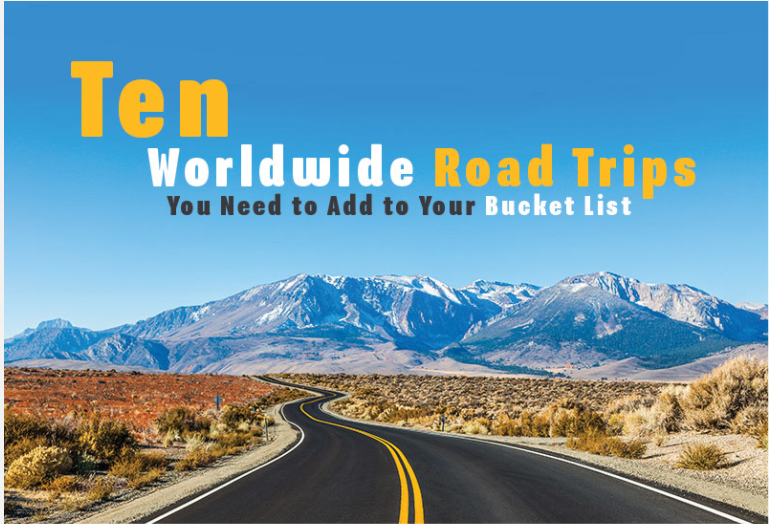
10 Worldwide Road Trips You Need to Add to Your Bucket List

When planning a holiday, the majority of us like to give the trip a fair bit of structure. For most, the break will be no more than two weeks, so it’s important that from the moment we land that we get the most out of the trip.

Obviously, one of the most important things to consider throughout a holiday is travel. Depending on where you’re planning on visiting, some options will be much more viable than others.

For example, if you fancy a weekend break in the beautiful city of Amsterdam, a car is largely pointless. This is because the city is largely car free due to the number of canals. Instead, the majority of locals tend to use bicycles.

Just take a look at this post from Amsterdam Mamas which explains it in more detail.

However, there are other locations when driving is pretty much the best and only way to truly enjoy the holiday.

For example, one of the most beautiful places to visit in Europe is the Amalfi Coast of Italy. This stunning stretch of coastline is definitely a must-see for many and is probably best experienced by driving along its coastal road.

In fact, there are plenty of amazing holidays where a car is totally essential to the experience. A number of great examples of this can be seen in an infographic from globehunters.com.

It’s called ‘10 Worldwide Road Trips You Need To Add To Your Bucket List’ and you can take a look at it below.

This infographic covers brilliant stretches of road which everyone should endeavour to experience.

For example, easily one of the most famous in the world is Route 66. The former main link between Chicago and California stretches a mammoth 2,451 miles and covers some of the most stunning landscapes in North America.