All posts by Len Rutledge

Len Rutledge has been travel writing for 40 years. During that time he has written thousands of newspaper articles, numerous magazine pieces, more than a thousand web reviews and around 35 travel guide books. He has worked with Pelican Publishing, Viking Penguin, Berlitz, the Rough Guide, and the Nile Guide amongst others. Along the way, he has started a newspaper, a travel magazine, a Visitor and TV Guide, and completed a PhD in tourism. His travels have taken him to more than 100 countries and his writings have collected a PATA award, an ASEAN award, an IgoUgo Hall of Fame award, and other recognition. He is the author of the Experience Guidebook series which currently includes Experience Thailand, Experience Norway, Experience Northern Italy, Experience Myanmar, Experience Istanbul, Experience Singapore, Experience Melbourne, and Experience Ireland. They are available as ebooks or paperbacks from amazon.com

Monument Valley is A ‘Must-see’ for Movie Fans

Words: Len Rutledge   Images: Phensri Rutledge

Anyone who is a cowboy movie fan has seen pictures of Monument Valley. It was originally shown to the world by Director John Ford who used the location for a number of his best-known films. Now it is a popular feature of Instagram. So, is it worthwhile to visit? My answer is definitely yes but international visitors will have to wait for the country to open up fully after the Covid19 shutdown.

It is located on the Arizona-Utah border in the USA and lies within the territory of the Navajo Nation Reservation. Because of this, it is not officially a National Park but the area that is most visited by tourists is known as Monument Valley Navajo Tribal Park. The main features are clusters of vast sandstone buttes, the largest reaching 300 m above the valley floor.

Monument Valley isn’t close to anything. The nearest airport is in Flagstaff some 300 km away but most international visitors end up renting a car from Las Vegas (640 km away) or Phoenix (500 km away) and driving to the Valley. Access to the Tribal Park is from US163 and you need to pay an entrance fee.
Monument Valley
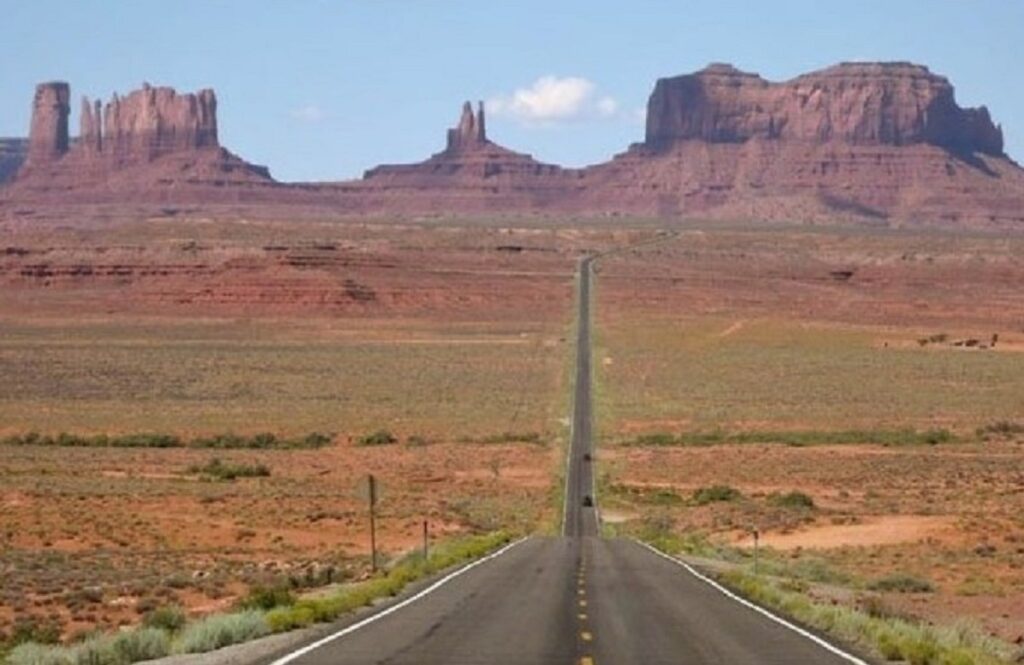
The road towards Monument Valley

This takes you to the Visitor Centre and the View Hotel and also allows you to drive Valley Drive. Organised tours, which you pay extra for, provide access to other parts of the park.

Valley Drive

You can access this unpaved road in your own vehicle or take a tour with a Navajo guide. The drive is 27 kilometres long and typical times for the full trip are 2 to 4 hours. The road can become very busy during summer days, with queues at the major overlooks. I recommend early morning at this time of the year as the light is better for photography and there are far fewer people than later in the day. In summer, the park opens at 6 am and at 8 am for the rest of the year.
Monument Valley
Along Valley Drive

There is much to see along the Valley Drive. This part of Monument Valley is one of the most impressive large-scale landscapes anywhere in the Southwest of the USA. The best to photograph are the tall spires and thin buttes, and the contrasting smooth orange sand all around.

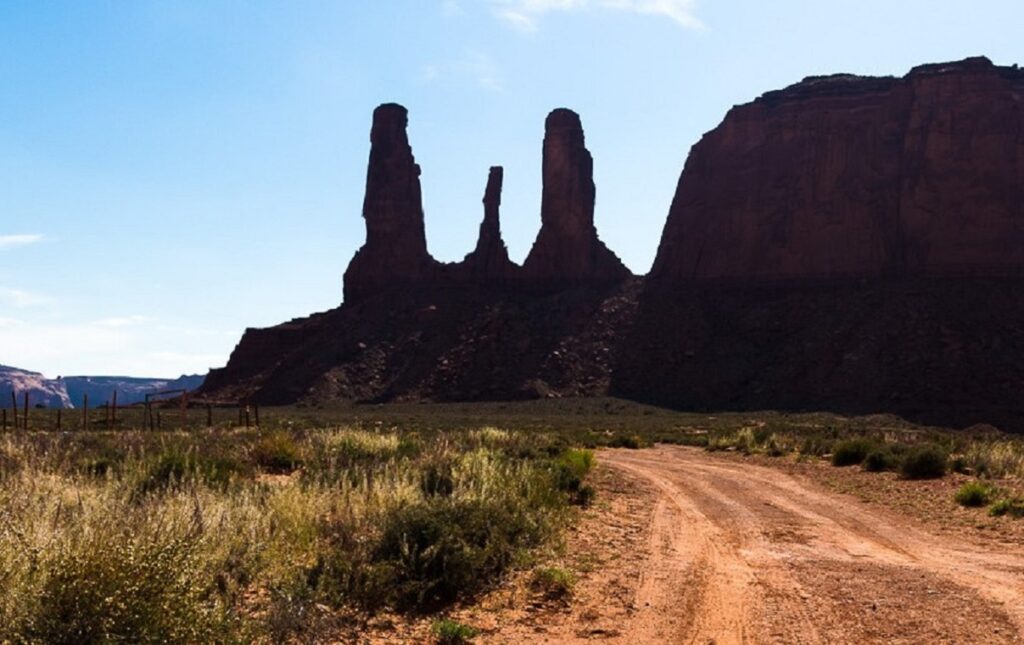
The initial descent from the Visitor Centre traverses a steep, rocky hillside via a series of switchbacks, then the road levels out and passes by three of the most famous Monument Valley formations; West Mitten Butte, Merrick Butte and East Mitten Butte. Further on, the Three Sisters are a group of thin pinnacles, eroded remnants of a narrow ridge extending southwards from one corner of Mitchell Mesa.

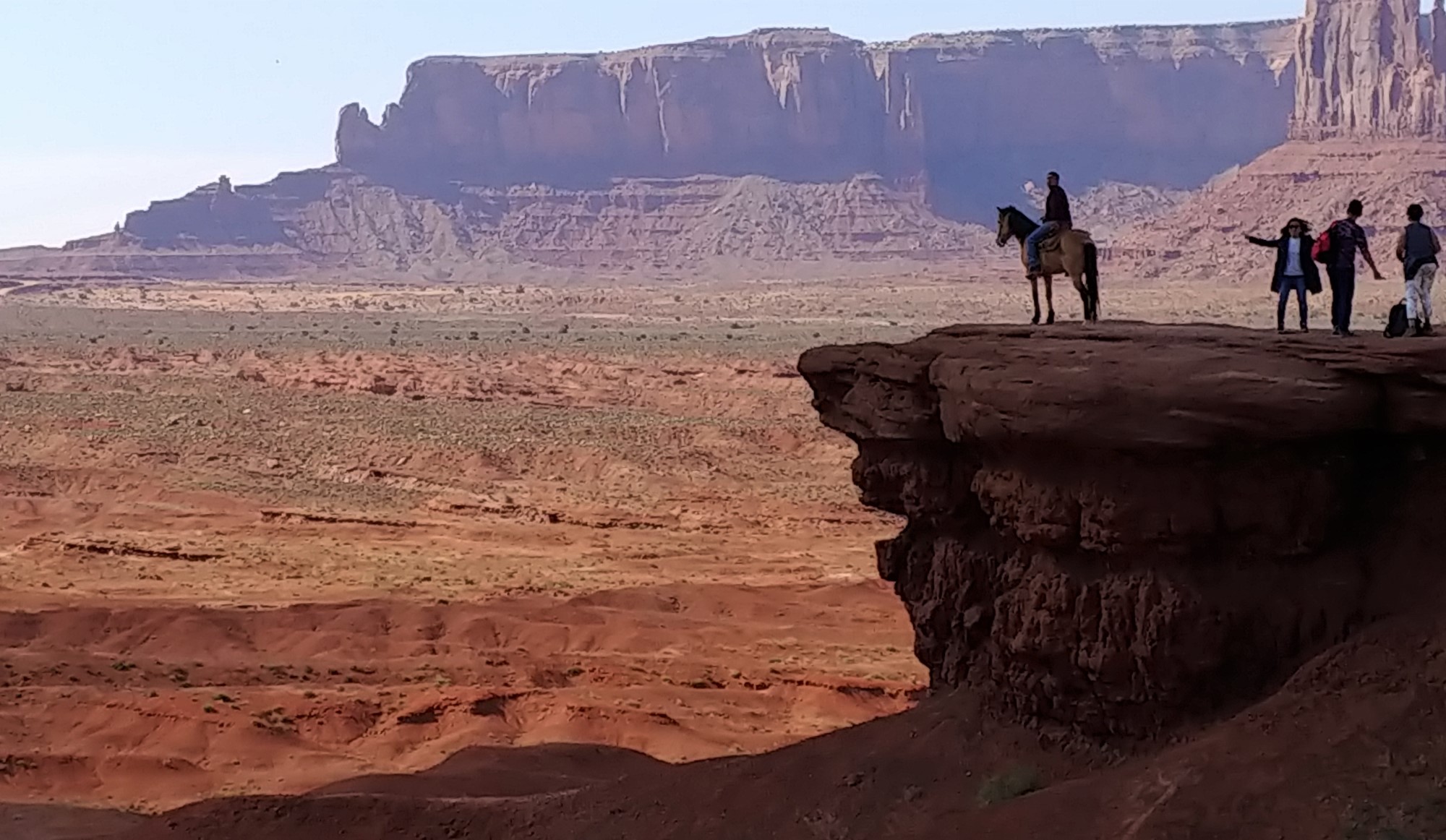
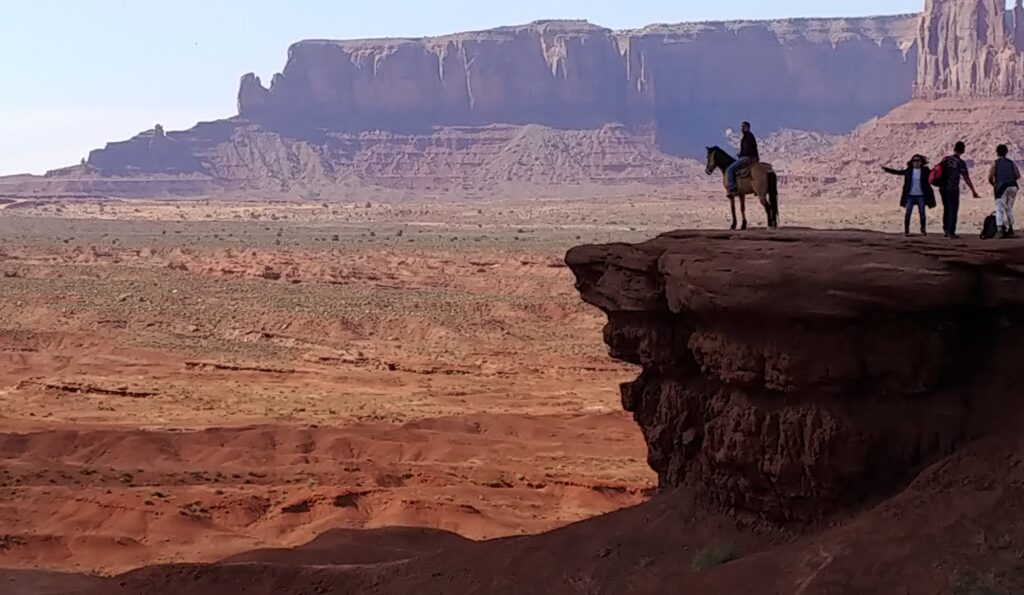
John Ford’s Point is a promontory at the edge of a plateau overlooking a large area of uneven, undulating desert land with several isolated peaks beyond. This is probably the best overlook in the park and has a large parking area because of its popularity.
Monument Valley
John Ford Point

A permanent Navajo jewelry store is located nearby, and you might be lucky to see an iconic image of a lone rider on a horse standing at the edge of the viewpoint as there are horses stationed here most of the day just for this purpose. This is the site where the famous Marlboro cigarette advertisement was shot.

The road continues from here as a one-way loop past Camel Butte, The Hub, Totem Pole and Yei Bi Chei, Sand Spring, Artist’s Point, North Window, and The Thumb before returning to the crossroads near John Ford’s Point.

Lower Monument Valley tour

This is a popular excursion, recommended for people interested in a thorough visual, historical and cultural insight. As well as the regular scenic wonders, you visit a traditional home where you see a demonstration of traditional Navajo rug weaving.

You also get to experience a traditional music performance with either the traditional drum, customary chant or flute playing in one of the valley’s largest natural arch amphitheatres. Most participants return with a new enlightenment and unforgettable memories.

Mystery Valley tour

If you’re looking for something extra in Monument Valley, you might want to explore Mystery Valley, home to labyrinth canyons, sandstone arches, and ancient ruins. This is only accessible with a Navajo guide who will share an insider perspective of this iconic area and teach you about Navajo culture and tradition.

You visit the ancient Anasazi dwellings and ruins with petroglyphs that look like they could have been scratched into the sandstone yesterday. Another feature is walking under many breathtaking arches.

Eating and staying

Inside the park, The View Hotel has rooms with scenic panoramas and they also have cabins. There are also RV sites or wilderness campsites.

Monument Valley
Through a window at the View Hotel

The hotel’s View Restaurant offers breakfast, lunch and dinner with a menu of Navajo inspired dishes and classic American cuisine. The adjacent View Express offers deli sandwiches, hot and cold food to take away, and cold drinks and ice cream.

Guided tours to Monument Valley are available from Los Angeles, Las Vegas, Phoenix and some other closer centres.
www.LenRutledge.com

Vancouver! Canada’s Most Appealing City is A Personal Favourite

Vancouver, Canada’s most appealing city is a personal favourite

Words: Len Rutledge   Images: Phensri Rutledge

Vancouver Canada, Melbourne Australia, and Vienna Austria seem to vie for the title of “world’s most liveable city” each year. It is perhaps no surprise then that, beautiful Vancouver is one of my favourite cities in the world. The city will appeal to all ages and budget levels with its mountain backdrop, urban beaches, wonderful Stanley Park, and excellent accommodation, restaurant, shopping and theatre/museum offerings.

It was four years since I last visited so when I was there earlier this year, I took the opportunity to reacquaint myself with many of the things that make the city so interesting. Amazingly, most were free.

Granville Island

Once mainly industrial, Granville Island is now a thriving social place with a relaxed atmosphere. You see it best at the Granville Island Public Market which sells fruit vegetables, seafood, drinks, and ready-to-eat items. Aside from delightful food products, this is home to dozens of artisans crafting jewelry, handmade soaps, preserves, candles and more. We love it.

vancouver

The adjacent area has seen artists and retailers move into converted warehouses alongside theatres, galleries and restaurants. Close by, you can rest your weary feet and grab a table in the tasting room of the Granville Island Brewing Co. and perhaps even join one of their daily tours and see the manufacturing process. Alternatively, take a walk over to Rodgers’ Chocolate which serves up chocolates using 19th-century recipes.

Small ferries connect the island to the downtown area and houseboats and pleasure craft crowd the small harbour.

Kits Point

We walked from Granville Island, past some of the cities prettiest apartments to Kits Point. This is the location of several interesting museums. The Museum of Vancouver is the largest civic museum in Canada.  It features displays on the natural, cultural, and human history of the Vancouver region. It shares its iconic domed building with the H.R. MacMillan Space Centre, which is part space and science museum, part planetarium, and part observatory.

vancouver

Nearby, is the fascinating Vancouver Maritime Museum which tells the story of the Pacific Northwest maritime history. Its main exhibition is St. Roch which was the first vessel to sail the Northwestern Passage from west to east and was also the first vessel to circumvent North America.

English Bay

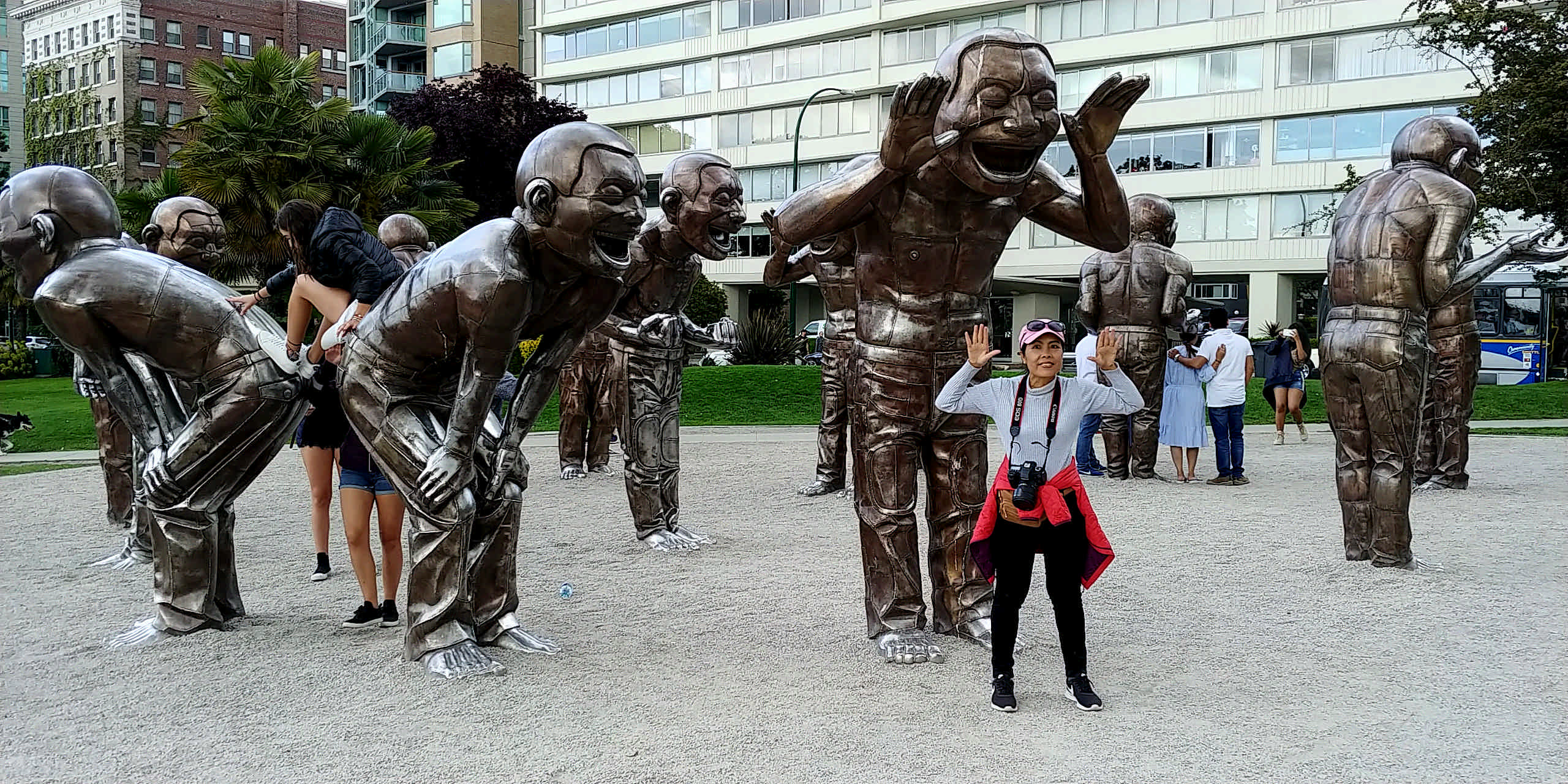
This is one of the city’s loveliest and busiest beaches but it was far too cold to swim when we visited. Fortunately, it is also a place to walk, bike or roller skate and there are public art installations, shopping and high-end restaurants. On sunny days it is a great place to listen to beach musicians, rent a boat, kayak or see the Laughing Men statues, a wonderful, light-hearted piece of public art.

vancouver

The place really buzzes for three nights in summer when crowds watch three nights of fireworks set to music as part of the Celebration of Light festival. The fireworks blast off at 10:00 pm each night, but there is also live music and other activities starting in the early afternoon.

Stanley Park

This large, lush park has been named the World’s Best Park by Trip Advisor. Eight million people visit here each year to walk the 5.5-mile paved seawall path that encircles the green space or visit other specific attractions like the totem poles at Brockton Point, the Vancouver Aquarium, and a miniature train.

vancouver

You can explore on foot, rent a bicycle from one of several outlets in Denman Street or take a slow horse-drawn tour. The one-hour tour departs about every 30 minutes, stops at the totem poles for photographs then goes by the famous Girl in a Wetsuit Statue and the Empress of Japan Figurehead. The ride continues on the north side of Stanley Park with views towards North Vancouver and the Lions Gate Bridge before returning to the stay point. Don’t miss it.

Back to the City Centre

A lovely waterfront pathway leads back to the city. On the way, you see several up-market hotels, numerous boat harbours, the seaplane terminal and some of the city’s famed flowers.

Finally, you reach Canada Place with its unusual roof. This is part cruise ship terminal, part convention centre and hotel, and part hub for sightseeing tours. The walkway provides wonderful panoramic views across to North Vancouver.

Robson Street is several blocks south of Canada Place. This is best known as a shopping centre but it is also the setting for many activities, particularly in Robson Square. This is where you find the Vancouver Art Gallery with its excellent collection of paintings. It’s housed in the former provincial courthouse and its exterior has been used in many films and TV shows.

An oasis of peace and calm in the busy city is found in Vancouver’s oldest surviving church, 125-year-old Christ Church Cathedral. The interior has been completely renovated and the woodwork, the stained-glass windows, the organ, and the altar are all stunning.

Gastown

This is the oldest part of the city and in recent times it has been gentrified with restaurants, galleries and shops set in carefully restored Victorian buildings. Cobblestone streets and iron lampposts help give the district a distinct atmosphere.

It is named after an early resident and a statue in Maple Leaf Square is a popular place for photos. So too is the nearby two-ton steam clock which uses steam to whistle and shoot steam from its five whistles in its version of the Westminster Chime every 15 minutes. On the hour it also gives a toot from each whistle.

Chinatown

Beyond the ornate entrance gate, interesting Chinatown is a mixture of the old and new. This area was once quite seedy and remnants of that can still be seen but it is safe to walk in daylight hours. A highlight is the pretty walled Dr Sun Yat-Sen Classical Garden which is modelled after a traditional garden from the Ming Dynasty. This has a C$10 admission fee but the adjacent Dr Sun Yat-Sen Park has some similar elements and is free.

Just south of here, BC Place is called Western Canada’s premier venue for live events and sports. It has a retractable roof which makes it suitable for events in all weathers, and it hosts the BC Sports Hall of Fame.

Getting around

The driverless YVR Airport Skytrain is the most convenient way to get from the international airport to the downtown area. Buses and Seabus provide good transport around the city.

www.LenRutledge.com

https://www.youtube.com/channel/UCX5HUmGP1lR2aoscn3O8P2Q

The Colours of Chiang Rai – Black, White and Blue

The colours of Chiang Rai – Black, white and blue

Words: Len Rutledge  Images: Phensri Rutledge

Until recently, when you mentioned Northern Thailand most people thought of Chiang Mai. But now another place is also drawing attention. Chiang Rai, Thailand’s most northerly city, is firmly on the tourism route and for very good reasons.

Our recent visit showed that Chiang Rai City has an abundance of tourism attractions, headlined by three amazing architectural marvels. These can be summarised as the black, white and blue. The surrounding province contains some of Thailand’s most dramatic mountain scenery so a week in this area is not really enough.

The Black

The Baandam Museum (Black House) will astound you. Renowned Thai artist Thawan Duchanee spent more than fifty years building this somewhat controversial museum of folk art. It isn’t just one structure but a collection of around 40 buildings of varying shapes and sizes dotted around a peaceful garden. Each one is different and most are worth visiting.

Chiang Rai

Thawan was an incredibly talented recluse who lived in one of the houses on the site until his death in 2014. Now the whole complex has been taken over by the government. Black, gold and red were the three signature colours of the master painter. These striking contrasts permeate the collection of houses, sculptures, animal skins, bones and relics.

Located about 12 km north of Chiang Rai City, you will need at least 1 hour to look around. This is a very popular spot, so if you want to beat the crowds its best to go either early morning or an hour before the museum closes. Try the mini-pineapples while you are there and you will agree that they are the sweetest in the world.

The White

Wat Rong Khun or the White Temple was designed by national artist and native of Chiang Rai, Chalermchai Kositpipat. The entire complex is an enthralling fusion of religious sanctuary, museum and art gallery. It has evolved into the top attraction for first-time visitors to Chiang Rai and the complex is packed in the mornings with tourists who commute from Chiang Mai for the day.

It’s not really just a temple, despite the monks; it’s more of a wildly expensive and expansive art exhibition. Visitors are surprised to find curiously irreverent imagery on the exterior — as well as Hello Kitty, Michael Jackson and Spiderman on the inside. Some find this imagery kitschy and its sacrilege to others.

Chiang Rai

The emergence of the Predator from the ground is interesting and many hands reaching up as you traverse through the lifecycle of life, death and rebirth is a strange experience. But none of this should distract from what is probably the most artistic of Thailand’s temples.

Work on the temple will probably never really be finished, with present projects scheduled for many years but this on-going work does not distract a visitor. There is an art gallery, shop and café amongst the other structures in the compound.

The best time to visit is near dawn or dusk to miss the tour groups. The temple is 12 km south of Chiang Rai City. Foreigners are charged Baht 100 (about US$4) to enter.

The Blue

Wat Rong Suea Ten, commonly known as the ‘Blue Temple’, opened in 2016. An artist who studied under white temple artist, Chalermchai Kositpipat, completed the exterior and interior designs.

Chiang Rai

What’s instantly attractive about the Blue Temple is just how vibrant the colours are. The deep blue building decorated with golden detail is simply stunning to look at. Unlike the White Temple, you’re allowed to take photos inside the Blue Temple. You won’t find any pop-culture references inside this one as the interior has a more classic design. At the centre of the room sits a white Buddha lit up with bright blue lights.

The temple has quickly caught the imagination of visitors who flock to its courtyard to take photos and worship. Entrance is free. A popular activity is to buy and eat the blue ice cream available from a vendor on-site.

The tall

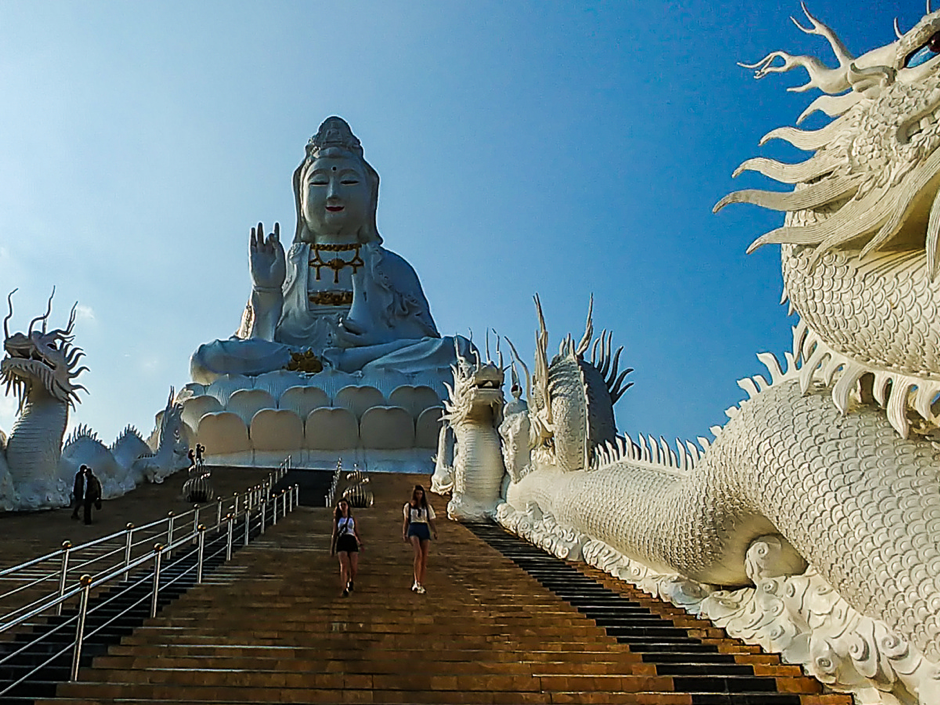
Wat Huay Pla Kung which is a new entry on Chiang Rai’s growing list of unusual temples combines gold and white. There is a giant white statue of the Bodhisattva Guan (Goddess of Mercy) within which you ride to the top in an elevator, a white temple decorated with Lanna-Chinese art, and a 9-storied gold pagoda.

Chiang Rai

The monk here has supposed healing powers and the mainly Thai Chinese who come to the temple to be healed have donated large amounts of money to build the Chinese statue. It is a giant landmark which dominates the local area.

Getting to Chiang Rai

There are many daily flights from Bangkok on several airlines which take about an hour and 15 minutes. If coming from Chiang Mai, the road trip takes about three and a half hours. The city has a wide variety of accommodation suitable for all tastes and budgets.

Len Rutledge is the author of Experience Thailand 2020 available as an e-book or paperback from amazon.com

https://www.LenRutledge.com

https://www.youtube.com/channel/UCX5HUmGP1lR2aoscn3O8P2Q

Australia’s East Coast Highlights

Australia’s East Coast Highlights

Words: Len Rutledge Images: Phensri Rutledge

Australia continues to attract many visitors because of its animals, lifestyle and sunshine but just about all are surprised at its size. Australia is larger than Europe so don’t expect to be able to see the whole country in one visit unless you are planning on a three month vacation or a two year working holiday. The East Coast is the most populated area so this is not a bad place to start. From Melbourne in the south to Cairns in the north is around 3000 kilometres but there are several great places to visit in between.

Melbourne

We start in the World’s Most Liveable City and quickly see why it has scored this award for several years. Melbourne is Australia’s sporting, coffee, restaurant and arts capital. Depending on your interest you can attend the Australian Tennis Open, the Formula 1 Australian Grand Prix, the AFL Football Final Series, the Melbourne Cup Horse Racing Carnival and international cricket tests. A recent study found Melbourne hosts over 60,000 live concerts annually, making it one of the live music capitals of the world. The city has more theatres and performance venues than anywhere else in Australia. There are approximately 5000 cafes and restaurants in the city, the highest per capita in the world. Many are top class.

East coast

Flinders Street Railway Station, Melbourne

Canberra

Australia’s little-known capital is well worth a visit. There is nothing old here but there are modern buildings aplenty. Parliament House, the Australian War Memorial, the National Gallery of Australia, the National Library of Australia, the National Science and Technology Centre, the National Zoo and Aquarium, the National Museum of Australia and more, will have you extending your stay.

east coast

Looking towards Parliament House from the Australian War Memorial, Canberra

Sydney

Located on the East Coast of Australia, Sydney is the oldest and largest of the Australian cities and today the city’s attractions are dominated by the Opera House and Harbour Bridge. There is a guided walking tour of the Opera House and you can join a guided ascent of the bridge. Between these two is Circular Quay, the city’s main ferry terminal and just nearby is The Rocks where more than 100 heritage sites and buildings jostle along the narrow streets. Elsewhere, Darling Harbour is a waterfront pedestrian precinct packed with shops, restaurants, museums, exhibitions, and entertainment venues. Sydney is famous for its beaches from tiny harbourside strips of sand to Bondi, Coogee, Bronte, Tamarama, Maroubra, Manly Collaroy, Dee Why, and Narrabeen on the Pacific Ocean.

east coast

Circular Quay with fountain, Opera House and Harbour Bridge, Sydney

Brisbane

Once it was called a big country town but Brisbane has now grown up. Across the river from the CBD, South Bank is home to the Cultural Centre with its world-class galleries and entertainment. You can climb the Storey Bridge, cuddle a koala at Lone Pine Koala Sanctuary, while Morton Island is the place to feed wild dolphins and snorkel around an old ship wreck. One hundred kilometres to the south is the famous Gold Coast with its excellent beaches, theme parks, restaurants and nightlife. To the north is the Sunshine Coast for more beach activity.

east coast

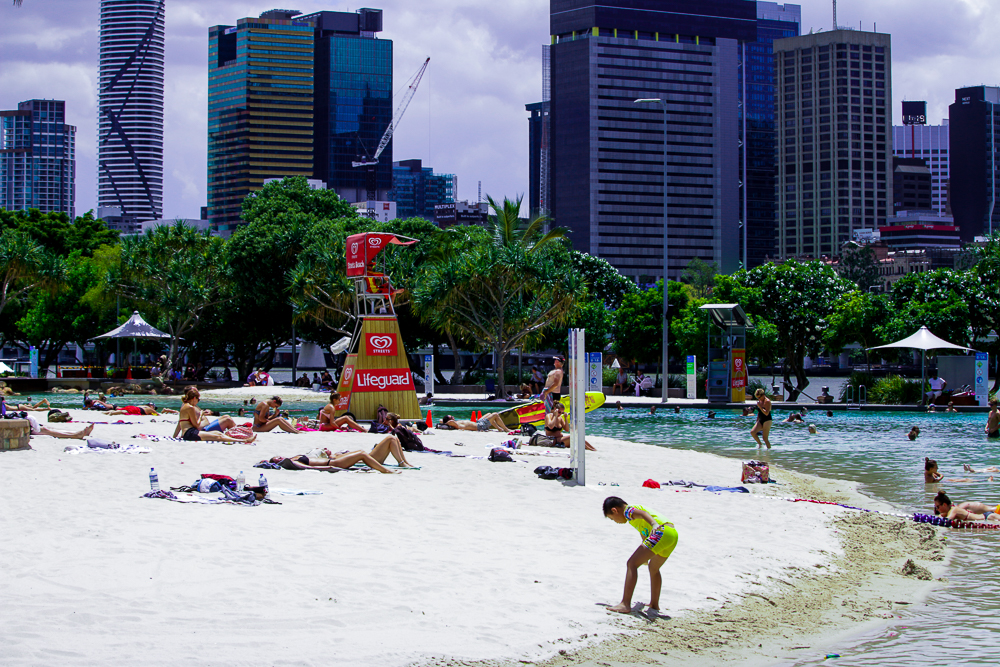
South Bank artificial beach looking towards Brisbane CBD

North Queensland Islands

With rugged coastlines and surrounding reefs bursting with life, you are spoiled for choice when choosing an island off the coast of North Queensland. Many are wholly or partly National Parks and many have nature viewing, snorkelling and sailing opportunities, and bush trails. Quite a few have accommodation. Some are very up-market such as One & Only Hayman, Hamilton, Orpheus, Badarra and Lizard while others have a range of rooms from excellent to budget. Magnetic Island off Townsville is the easiest to reach with ferries and car barges making the crossing multiple times a day.

east coast

Visitors to our room on Daydream Island

The Great Barrier Reef

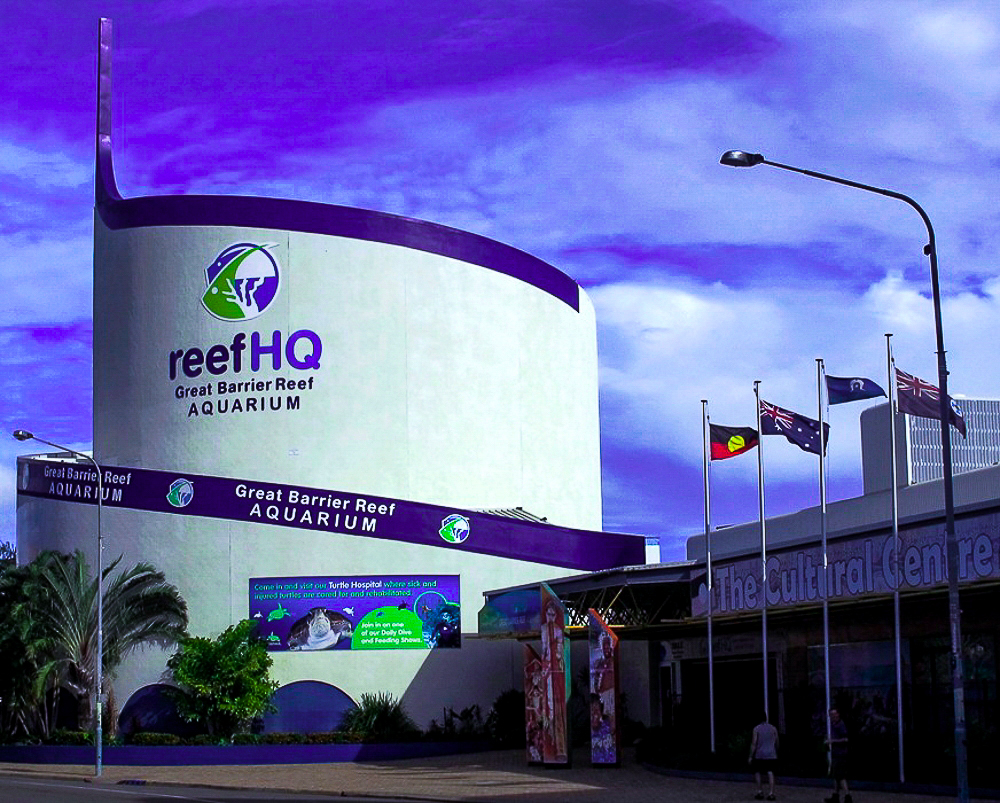
The Great Barrier Reef is blessed with the breathtaking beauty of the world’s largest coral reef. This is one of the seven wonders of the natural world, larger than the Great Wall of China, and the only living thing on earth visible from space. A visitor can enjoy snorkelling, scuba diving, aircraft or helicopter tours, bare boats (self-sail), glass-bottomed boat viewing, semi-submersibles and educational trips, whale watching, and swimming with dolphins. Townsville is the headquarters of the Great Barrier Reef Marine Park Authority and it is home to the world’s largest living coral reef aquarium. Reef trips leave from many other northern towns including Cairns and Port Douglas.

east coast australia

The headquarters of the Great Barrier Reef Marine Park Authority, Townsville

www.lenrutledge.com

Germany’s Romantic Road is Ideal for Slow Travel

Germany’s Romantic Road is Ideal for Slow Travel

Words: Len Rutledge  Images: Phensri Rutledge

Magnificent medieval architecture, the dramatic Alps, pretty green rolling countryside, castles and some of the most picturesque villages in Europe combine to make Germany’s Romantic Road a very special drive. Driving in Europe can be a challenge but this road is perfect for those who wish to take their time and experience the German countryside and explore some delightful towns.

For this Germany’s Romantic Road, we began in Füssen in the south with its large former monastery and castle and finished in Würzburg 350 kilometres to the north. While this drive could have taken four hours, in fact we took three days and felt rushed in the process.

These were some of Germany’s Romantic Road highlights.

Schwangau

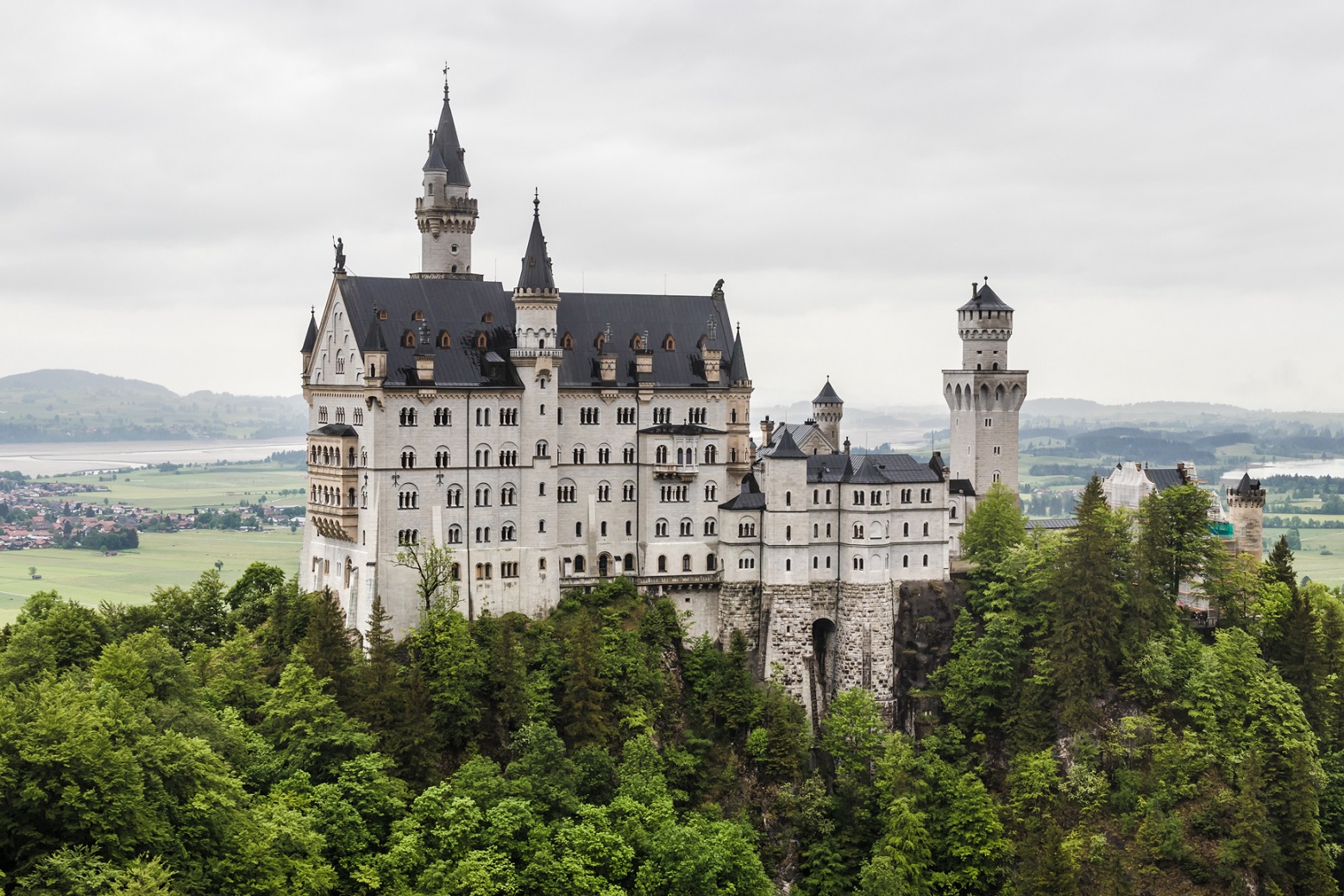
This small village is home to one of Germany’s most iconic sights, Schloss Neuschwanstein, the fairy tale castle that inspired Disneyland’s Sleeping Beauty Castle. Commissioned by King Ludwig II of Bavaria as a personal retreat, the castle has enough towers, turrets, balconies, pinnacles and sculptures to satisfy anyone.

You can visit the castle with a timed ticket but you will share the trip with hundreds of others during busy times. I suggest the best view is from Marienbrücke, the suspension bridge behind the castle where you can see the dreamy castle in all its glory.

Germany’s Romantic Road
Schloss Neuschwanstein Castle

If you have the time, also tour the less-visited Hohenschwangau, the neighbouring castle where King Ludwig II grew up and dreamed about his magical castle.

Augsburg

The city was founded in 15 BC and was a free imperial city until the early 19th century. Due to a flourishing textile trade, luxurious palatial homes, civic buildings, baroque fountains and gothic churches were built. You can enjoy them all on a visit today.

Constructed in the early 1600s, the “Rathaus” still serves as the administrative centre of the city. Next to it you can climb an ancient Perlachturm tower, built over 1000 years ago to serve as a watchtower.

Harburg

Towering over the town, Harburg Castle exemplifies medieval architecture. It comes complete with sentry walk, prison tower, dungeon and ballroom. There is a small hotel inside if you wish to stay.

Nördlingen

This has beautifully preserved town walls and the Rieskrater Museum, where you’ll learn about the meteor that struck this area some 15 million years ago. In fact, the entire almost perfectly round walled old town is built inside a massive crater. Because it sees fewer tourists than Rothenburg or Dinkelsbühl, the other two walled towns, it can be enjoyed more quietly.

Dinkelsbühl

Dinkelsbühl was not bombed in the Second World War, so it stands as it was in the Middle Ages, when it was created. It is a gem.

St. George’s Minster, a late 15th-century Gothic masterpiece, dominates the town while magnificent gabled buildings, dating from around 1600, line the central Weinmarkt. Many are now restaurants and cafés. The square hosts many festivals and celebrations throughout the year.

Germany's Romantic Road

I strongly suggest a walk on the town walls with their 18 towers and four gates. The views are nice but the thought of walking where many armed defenders have been over hundreds of years makes it something special.

Rothenburg ob der Tauber

This is a very popular tourist destination overlooking the Tauber River, so it can get quite crowded. You have a real sense of stepping back into Renaissance era Germany and most visitors love it. The narrow cobblestone streets feel like they haven’t changed in hundreds of years.

Late afternoon is the best time after the tourist buses have left and the shops are closing, leaving only the restaurants open. It’s a calm atmosphere allowing you to really take in the town.

Rothenburg’s well-preserved town walls which completely encircle the old town are great for walking along. It is free and it was one of the highlights for us.

Parking is almost impossible inside the walls so we chose a hotel close by with its own car park and we left our car there the whole time.

Germany's Romantic Road
A classic Rothenburg view

Walking along cobbled streets, you’ll notice that each building here is special. There are various popular photo points but we equally enjoyed walking the back streets and making our own discoveries.

Bad Mergentheim

This is home to one of Southern Germany’s spa resorts. If you’re looking for a massage, an Ayurvedic treatment or some time in a sauna, this is the place for you. There is also a large castle and a wonderful Rococo church.

Würzburg

Built around the Main River and surrounded by rolling hills, the city of Würzburg has impressive architecture and a nice vibe.

In 686, three Irish missionaries made a vain attempt to convert the town ruler to Christianity. Later, Würzburg had a bishop appointed and became a duchy as well, and the ruling prince-bishops brought their wealth here causing the city to experience a period of growth and lavishness.

Germany's Romantic Road

You see this today in the Wurzburger Residenz a baroque palace now inscribed on the UNESCO World Cultural Heritage list and once the seat of the reigning prince-bishop; the rococo-style church Käppele; and Festung Marienberg, a medieval fortress high above the city.

www.LenRutledge.com

http://instagram.com/experience_guides

https://www.youtube.com/channel/UCX5HUmGP1lR2aoscn3O8

Downtown Los Angeles’ museums and music venues

Words: Len Rutledge   Images: Phensri Rutledge

Los Angeles is recognised as the centre of the USA video and film industry but it also has a growing recognition as a music and museum hotspot. Much of this is centred on the rejuvenated downtown area where new apartment blocks, office complexes and accommodation facilities are rising from long degraded areas. A real authentic cultural buzz is associated with this area and every visitor should experience it.

This is a partial list of what I found on a recent visit. It would take you days to give each place the time it deserves.

LA Plaza de Cultura y Artes is a cultural museum dedicated to telling the story of the Mexican origins of Los Angeles. It occupies the first two floors of two 1880s buildings adjacent to La Placita Church, across Main Street from the gazebo and Mexican Market at Olvera Street. It traces the history of Los Angeles from Old Mexico to annexation, and from the first settlers to the new immigrants. Upstairs there is a mini Main Street with a variety of shops designed for kids and adults to explore.

The Chinese American Museum is symbolically housed in the oldest and last surviving structure of Los Angeles’ original Chinatown. It reflects the vibrant development of an immigrant history that began over 150 years ago when the first major Chinese settlement was documented in Los Angeles. The free museum has three permanent exhibitions and usually one or more temporary exhibits.

The Plaza Firehouse Museum is in the oldest fire station in the city. It features helmets, photos, and firefighting equipment of the late 19th and early 20th centuries.

los angeles
Fountain in front of Music Centre

The Music Center

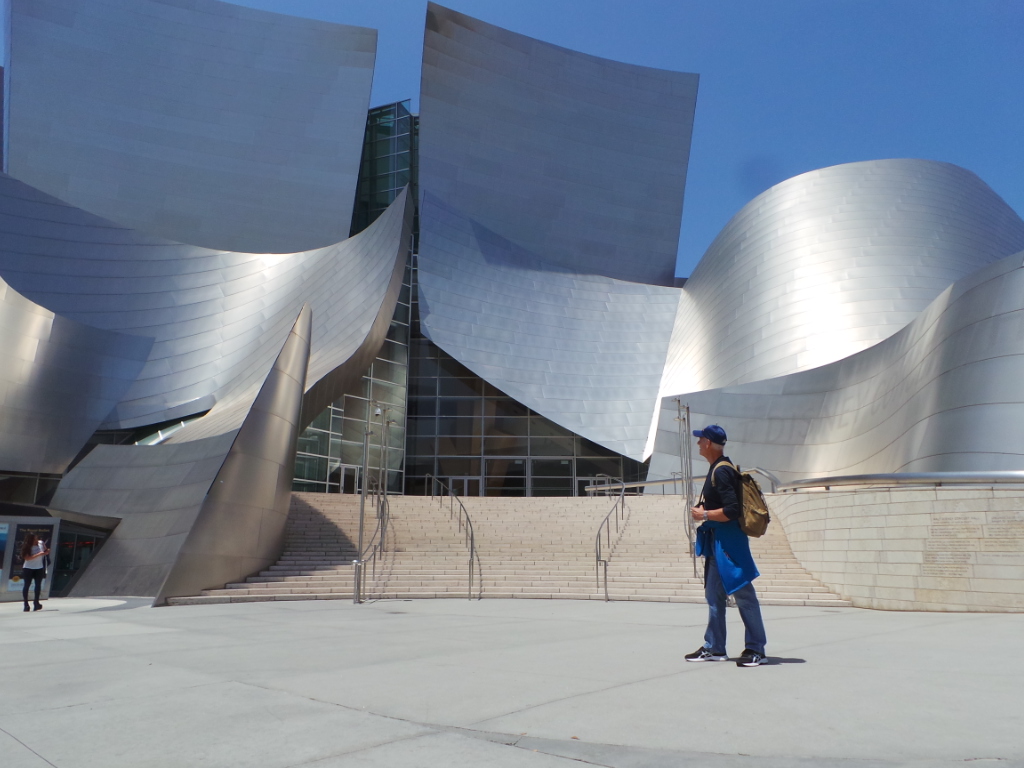
The LA Music Center is one of the largest and most active performing arts centres in the United States.  It is home to the Dorothy Chandler Pavilion, a 3200-seat theatre; The 2000-seat Ahmanson Theater; the 240 seat Mark Taper Forum; the Roy and Edna Disney/Cal Arts Theater; and the stunning Walt Disney Concert Hall.

Each year, The Music Center welcomes more than 1.3 million people to performances and if you have the time you should see a performance by one of its four internationally renowned resident companies: Los Angeles Philharmonic, Los Angeles Opera, Los Angeles Master Chorale, and Center Theater Group.

The metallic ship-like structure of the Walt Disney Concert Hall seems to be sailing down Grand Avenue. One of the most unique aspects of the building is that it is designed to be explored. Stairways and walkways allow you to climb up and around the sweeping stainless-steel sails to get really unique views of the structure and the downtown landscape. Best of all, it’s open to exploring inside and out during the day totally free of charge.

Walt Disney Concert Hall

Other Museums

Right next to the concert hall is The Broad a contemporary art museum offering free general admission and an active program of rotating exhibitions. The museum is named for philanthropist Eli Broad, who financed the $140 million building. Timed tickets are recommended to avoid long waits and can be reserved online. If you just turn up you may have a long wait for same day visits.

Across the road is the main site of the Museum of Contemporary Art which is home to almost 5,000 artworks created since 1940, including masterpieces by classic contemporary artists, and inspiring new works by emerging and mid-career artists.

The free Wells Fargo Museum is something completely different. The Museum is located in the Wells Fargo Centre on Bunker Hill. Exhibits depict the history and development of Wells Fargo Bank and the West since the company’s founding in 1852. Highlights include an authentic 19th-century Concord stagecoach and a replica you can climb into, the 26-ounce Challenge nugget, and historic maps of Los Angeles.

Old coach in Wells Fargo Museum

The A & D Museum located on 4th Street is a museum for architecture and design. Through exhibits, multi-disciplinary projects, educational and community programming, A+D serves as a showcase for the work of important regional, national and international designers, providing a forum for contemporary issues in architecture, urbanism, and design that are helping to shape the city.

L.A. LIVE

This is an entertainment complex adjacent to the Staples Center and the Los Angeles Convention Center.It has ballrooms, bars, concert theatres, restaurants, movie theatres, and a 54-storey hotel and condominium tower.

Xbox Plaza is an open-air plaza that serves as the central meeting place for L.A. LIVE. The square provides a broadcast venue featuring giant LED screens. Microsoft Theater is a music and theatre venue seating 7,100, while The Novo is an intimate venue with a seating capacity of 2,300 for live music and cultural events.

The Grammy Museum opened in 2008 for the Grammy Awards 50th anniversary. It consists of four floors with historical music artefacts. Embedded in the footpaths of the LA Live streets are bronze disks honouring each year’s top winners, for Record of the Year, Best New Artist, Album of the Year, and Song of the Year.

IF YOU GO

Numerous airlines fly to Los Angeles. There are five-star hotels to budget properties in central Los Angeles, but prices tend to be high. Cheaper accommodation is available in other parts of the city.

www.LenRutledge.com

https://www.youtube.com/channel/UCX5HUmGP1lR2aoscn3O8P2Q

Len Rutledge is the author of the Experience Guides travel books available from amazon (https://www.amazon.com/s?k=len+rutledge&ref=nb_sb_noss)

https://www.youtube.com/channel/UCX5HUmGP1lR2aoscn3O8P2Q

Yellowstone Where the Concept of National Parks Started

Words: Len Rutledge    Images: Phensri Rutledge

With geysers, grizzlies, an impressive grand canyon, and great mud pools, Yellowstone National Park in America’s west is dramatic, imposing and at times overwhelming. The world’s first national park, established in 1872, is a wonderful blend of land, water, forest, grassland, wildlife and geothermal features. It challenges your senses and stirs your soul.

Yellowstone
Old Faithful

The first expedition to reach here returned with accounts that were rebuffed by magazine editors and politicians who said their accounts were too far-fetched to be believed. Writers need to be careful even today. Fortunately, images and video readily available on our screens confirm todays words.

Yellowstone is in Wyoming with small parts spilling over into Montana and Idaho. Heat and volcanic activity from the depths of Earth power this dramatic landscape which is visited by four million visitors each year. In 1978, Yellowstone was named a UNESCO World Heritage Site.

There are several different approaches that feed into the Grand Loop Road, a figure-eight highway in the middle of the park. Rather than a single focus, Yellowstone has several hubs so travelling around is essential. Most visitors do this by car but various tours are available which visit most areas. During my recent visit, I thought these were some of the park highlights.

Old Faithful Village

A highlight here is Old Faithful Inn, a masterpiece of national park rustic architecture, with the lobby containing a massive stone fireplace and soaring timber ceiling. Just outside, Old Faithfull Geyser erupts around 17 times per day to an average height of 40 metres. Wait on the wooden boardwalk built around the geyser and watch it erupt with your camera in hand. With its reliable eruption times it’s easy to plan a visit to witness a blowout.

Old Faithful Inn

Afterwards, the Old Faithful Visitor Education Centre explains the geology behind the world’s most famous geyser. Visitors can then easily hike the Upper Geyser Basin, home to around 60 percent of the world’s geysers.

Further north is the Norris Geyser Basin, where geological wonders like Artist Paint Pots, Roaring Mountain, and Steamboat Geyser are complemented by the indoor exhibits of two museums. Visitors can also explore the eerie Norris-Canyon Blowdown with its ghost trees, or fly fish for trout in the swift-flowing Gibson River.

Colourful hot spring

Grand Prismatic Spring

Yellowstone’s largest hot spring, is in the Midway Geyser Basinand is accessible by boardwalk. It is a large turquoise pool ringed with orange and yellow with steam coming off the surface. Temperatures around the pool are high, especially during the summer. The rainbow colours are best viewed from a height so take a slightly strenuous hike up the Midway Bluff trailfor the perfect vantage point.

Grand Canyon of the Yellowstone

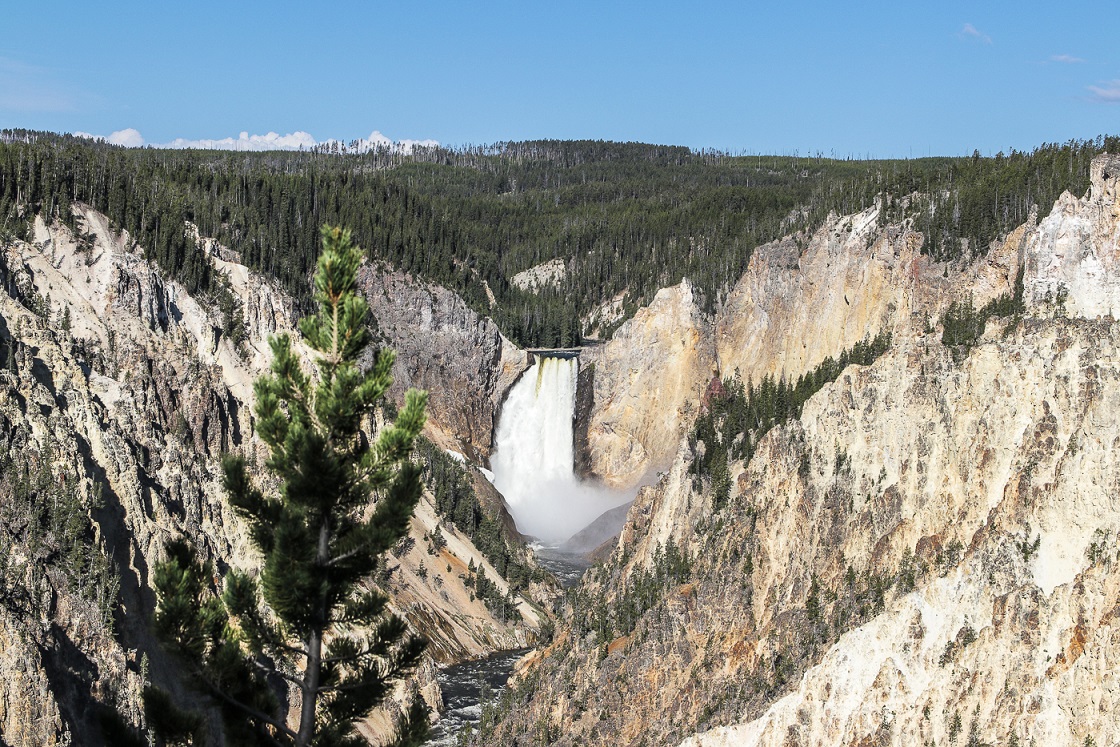
This is an immense multicoloured trench that stretches 38 kilometres and rises as much as 360 metres above the Yellowstone River. Trails lead to outstanding viewpoints like Artist’s Point on the south rim and Lookout Point on the north rim, for great views of the 100-metre-high Lower Yellowstone Falls. The canyon is marked by steep white-and-yellow cliffs and its vents and spires reveal thermal activity that continues unabated underground.

Lower Yellowstone Falls

Yellowstone Lake

The largest high-altitude lake in North America offers the park’s best opportunities for boating, fishing, and waterfront camping but it is too cold for swimming. There are rental boats, guided fishing charters, and scenic lake cruises, as well as shuttle services to remote campsites along the 141-mile lakeshore.

Lamar Valley

This is the best place in Yellowstone to get a glimpse of the wolves that have been reintroduced to the park. Bison and elk also frequent the valley with its lush grasslands.

Here and elsewhere there is abundant wildlife, including elk, bison, grizzlies, black bear, pronghorn antelope, moose, and bighorn sheep. March and April are the best months to view bear, while the winter months are best for wolves and bighorn sheep. Elk, moose, bison, and mountain goats can be spotted during the summer months.

You are guaranteed to see bison. The park’s herd dwindled to just 23 animals during the late 19th century, but the population later bounced back thanks to more effective protection and now totals roughly 5,500.

Surrounded by mountain towns immediately to the north, east, and west, and bordered by Grand Teton National Park to the south, there is plenty to do not only within, but also around the park.

Accommodation

These hotels provide accommodation in the park. Old Faithful Inn is the world’s largest log structure with restaurants, bars and shop. Lake Yellowstone Hotel with its Greek Revival facade is the park’s oldest hotel overlooking the lake. Mammoth Hot Springs Hotel is a classic motor lodge with motel-style rooms and cabins, restaurant, shop, and map room.

The park has 12 developed campgrounds, including Mammoth, Canyon, and Grant Village.

www.LenRutledge.com

http://instagram.com/experience_guides https://www.youtube.com/channel/UCX5HUmGP1lR2aoscn3O8P2Q

Antelope Canyon and Horseshoe Bend are Instagram favourites

Words; Len Rutledge   Images: Phensri Rutledge

If you ever doubted the power of social media, you need to visit Page, Arizona, USA. There are two attractions nearby that were hardly known by anyone other than locals twenty years ago. Then came Instagram, and Antelope Canyon and Horseshoe Bend have become internationally known tourist attractions that everyone visiting the western USA wants to see.

<a href=

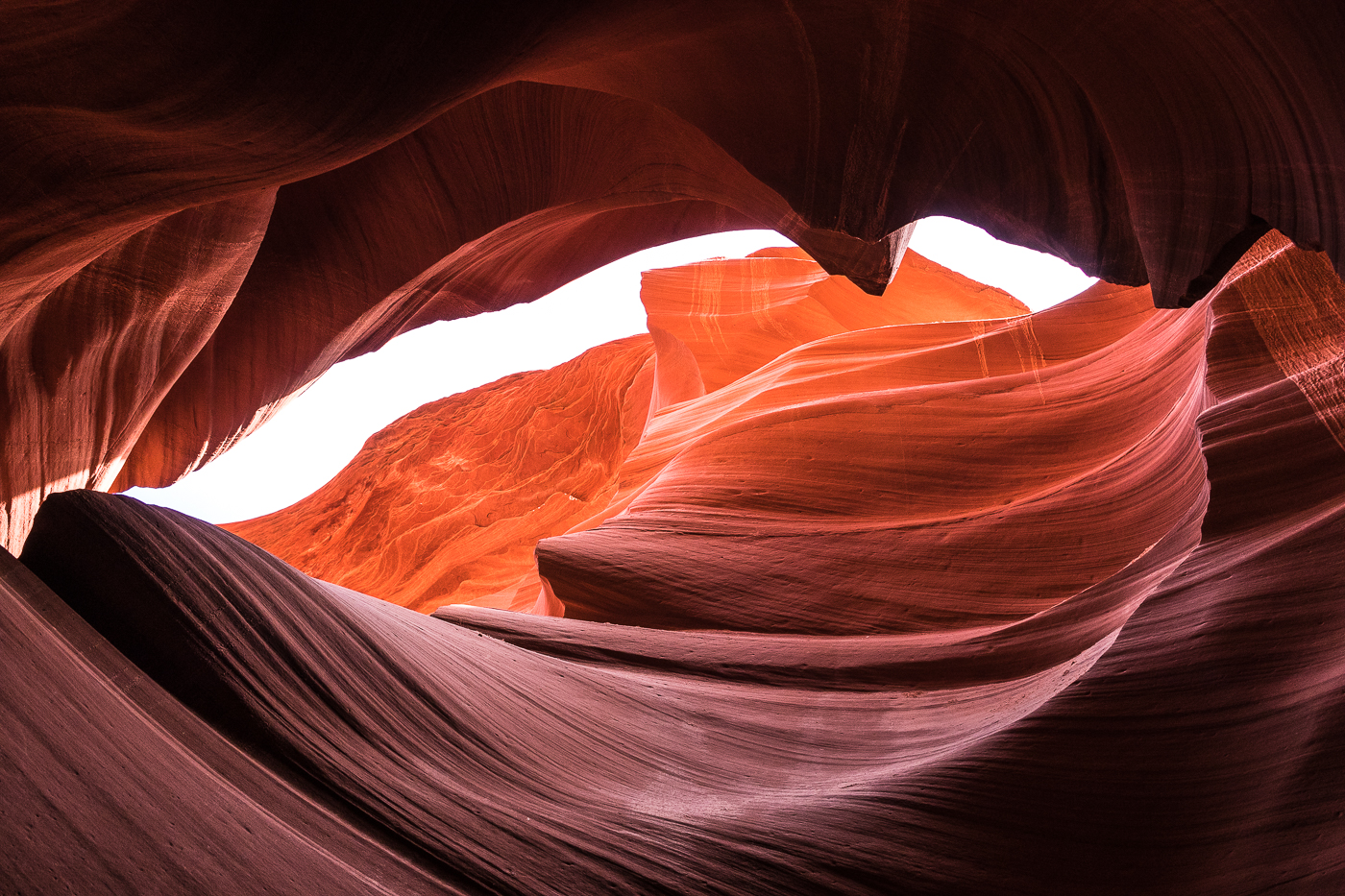
Antelope Canyon is a slot canyon on Navajo Indian land. It has two separate, scenic sections; Upper Antelope Canyon and Lower Antelope Canyon. The two canyons are distinct but are within a 10-minute drive of each other. You can choose to do both in one day and each will take roughly two hours. But it’s not as easy as that because you need to book ahead and tours are often running late.

Antelope Canyon was formed by erosion primarily due to flash flooding. Rainwater runs into the extensive basin above the slot canyon sections, picking up speed and sand as it rushes into the narrow passageways. Over time the passageways eroded away, making the corridors deeper and smoothing hard edges.

Antelope Canyon is a very popular location for photographers and sightseers, and a source of tourism business for the Navajo Nation since the first tour in 1997. All visits are through one of several licensed tour operators. It is not possible to visit the Canyon independently. You will need to rent a car or take an organised tour to reach Antelope Canyon since there is no bus or public transportation.

You cannot drive your car straight to the entrance of the canyons. Instead, you drive to your tour provider, park at their shop, and then your tour provider transports you to the canyon, either by car for Upper Antelope Canyon or by foot for Lower Antelope Canyon.

Lower Antelope Canyon

Because I was on a very tight schedule, I could only visit the lower canyon where two operators provide tours. As far as I can tell they operate almost identical tours at a similar cost. To a large extent the success of the tour depends on the guide. Our guide was very helpful in taking photos and told us stories surrounding the rock formations.

Lower Antelope is a more difficult hike than Upper Antelope. It is longer, narrower in spots, and there is uneven footing in some parts. Five flights of steep stairs are available to aid in descent and ascent. It is not recommended for people with walking difficulties, pregnant women or the very obese.

Antelope Canyon is visited exclusively through guided tours, in part because rains during monsoon season can quickly flood the canyon. Rain does not have to fall on or near the Antelope Canyon slots for flash floods to whip through, as rain falling many kilometres away upstream of the canyons can funnel into them with little prior notice.

Visitors start their guided Lower Antelope Canyon tours with a short 10-minute walk from the ticket booth to the entrance of the canyon. The trail leading to the entrance is both rocky and sandy, so appropriate shoes are necessary.

The Antelope slot Canyon tours are all-walking tours that are about one and a half hours long. Visitors walk just over 1,800 meters round trip. Visitors are welcome to take photos with handheld devices (no tripods, monopods, selfie sticks, or GoPros are allowed). It would be a pity to visit without some photographs because the canyon is really spectacular.

Horseshoe Bend

This Instagram favourite is a horseshoe-shaped incised meander of the Colorado River (think Grand Canyon) within Glen Canyon National Recreation Area, about 6 km southwest of Page. Just like Antelope Canyon, social media has dramatically increased the number of visitors who come here and the parking lot has just been tripled in size to help accommodate the rush.

It is a 2.5 kilometre round-trip from the parking lot to an outlook point. The track is a bit rough in places and it descends some distance so it’s not suitable for wheelchairs or those with restricted movement. Make sure you take water with you when the weather is hot and there isn’t any shade. The overlook is 1,300 m above sea level, and the Colorado River is at 980 m, making it a 320 m drop.

There is usually a large, steady stream of people walking to and from the bend and once you get there everyone is jockeying for a photo spot. I’m surprised that people don’t fall over the edge on a regular basis because there is no barrier along most parts. You will be amazed by the view and by the craziness of some people taking extreme measures for their perfect picture. Most visitors get in, get the picture, and get out within an hour or so.

www.LenRutledge.com

There is another side to Istanbul apart from old Constantinople

There is another side to Istanbul apart from old Constantinople

constantinople

Words: Len Rutledge   Pictures: Phensri Rutledge

Roman ruins, great mosques and churches, huge city walls, palaces, 500-year-old bazaars, and intriguing museums make Istanbul a ‘must-see’ city. Despite the recent strife in the Middle East, Istanbul remains a fascinating city for visitors of all ages and my wife and I found it perfectly safe and very welcoming. It was in the 10 Top Visited Cities in 2018.

It is common to say that Istanbul is caught between Europe and Asia and while this is correct, it is just a small part of the picture. Others romanticise the fact that this has been a ‘world city’ for over two thousand years and talk up its ancient buildings and monuments as the greatest appeal of the city. They are probably right.

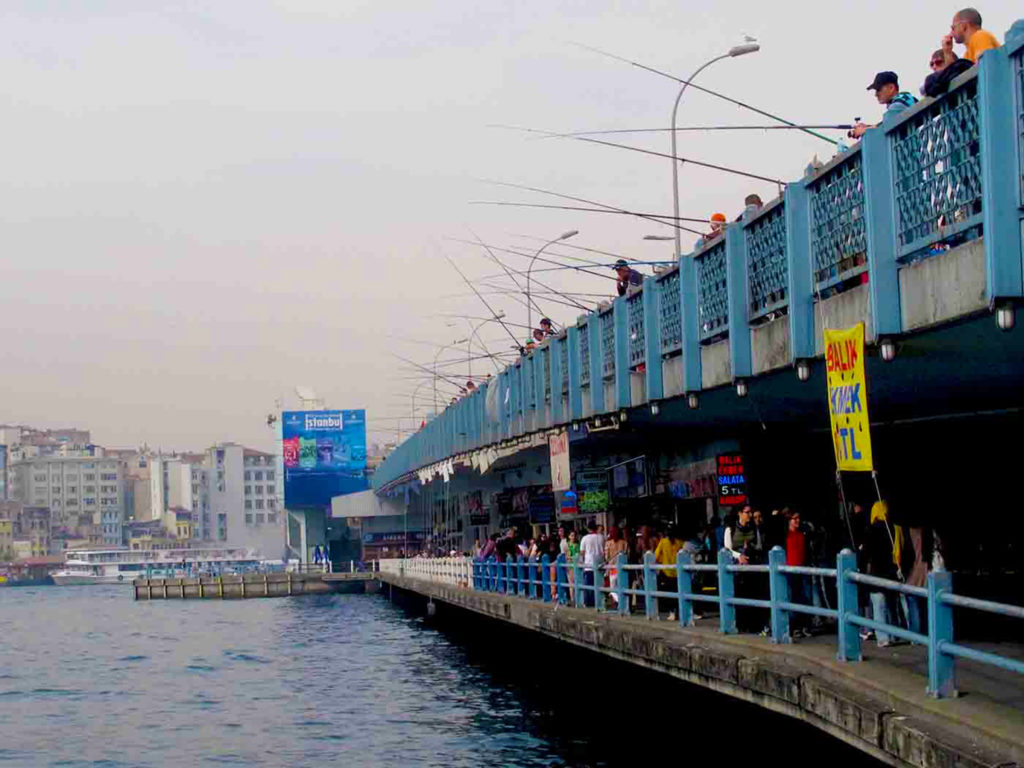
Much is written about the Old City that once was called Byzantium then later Constantinople. Less well known, but also impressive, is ‘New’ Istanbul just a few hundred meters across the stretch of water known as the Golden Horn. You are still in Europe but in many ways, it is as though you are in a different city.

The Asian side of the city is less visited but this too provides cultural insights that cannot be gleaned elsewhere. Walking is the best way to explore but for those who do not find this enjoyable, taxis and public transport is available. Be aware though that motorists rarely stop to let pedestrians cross roads even at major crossings.

In 1503 the ruling Sultan wished to construct a bridge between Old Istanbul and Galata and he asked Leonardo da Vinci to produce a design. His design for an unprecedented single span 240 m bridge was rejected, however, and the construction of a bridge was not completed until the 19th century.

Galata

When you cross the bridge from Old Istanbul, you enter Galata which is almost as old as Constantinople but there are few relics from the early days. The area had city walls at least 1600 years ago and there was also a fortress here during early Byzantine times. In 1261, Galata became a semi-independent colony controlled by the Genoese.

The 67 m Galata Tower is the most obvious landmark. It was built in 1348 and for many years it was used as a fire lookout tower. Today you can ride to near the top by elevator and the view from the narrow outside balcony is impressive.

For those who don’t like walking up hills, the Tünelis a godsend. It was opened in 1875 and was one of the first underground urban railways in the world.

Istiklal Caddesi

When you climb the hill from the Galata Bridge or exit the Tünel, you are on Istiklal Caddesi, one of the most important streets in the city. It is lined with hundreds of shops selling just about everything you need, and much you don’t. It has many large and small stores and street vendors of all kinds.

If you get tired and thirsty, there are plenty of cafes along the way for refreshments and there are many bars to drop in on if you feel so inclined. A kebab or freshly baked simit (circular, sesame seed-coated bread), are good choices followed by some melt-in-your-mouth Turkish Delight.

Enjoying the local food in Istanbul is one of the real joys of the city. Midway along Istiklal Caddesi, there are a couple of beautifully restored arcades on the left. The most famous is Çiçek Pasajı (Flower Passage) which is outstanding and has several attractive restaurants inside.

For something cheaper, you can head through the nearby fish market and find some local eating places along Nevizade, a small street parallel to Istiklal Caddesi. These are safe and you will find someone who speaks good English.

Shopping

Istanbul has some of the best shopping to be found in Eastern Europe with modern shopping centers, ancient bazaars, independent boutiques, design shops, and thousands of street stalls. You can start shopping in Istiklal Caddesi and keep going north. 

Cukurcuma is a charming area of winding side streets and alleyways where rambling apartments house some of the finest collections of antiques, boutique fashion, and kitsch in the city.

A complete contrast if provided by Abdi İpekci Street, located in the Nişantaşı district which hosts luxury retail shopping venues and is currently the most expensive street for retail stores in the city.

Visitor attractions

The area also has some excellent visitor attractions. Istanbul Modern is a contemporary art museum in a converted warehouse by the Bosphorus. If you walk further you come to Dolmabahçe Palace,home to six Sultans from 1856 until 1924, and the largest palace in Turkey.

Further on is Ortaköy, an artsy neighborhood with two structures that dominate the area- the baroque Ortaköy Mosque and the First Bosphorus Bridge. The charming waterfront hides a lattice of narrow cobbled streets filled with nice cafes and trendy small clothing boutiques.

Across the Bosphorus, there are huge suburbs on the Asian side with their own commercial centers and transport systems. You reach here by ferry or by an undersea rail tube. I strongly recommend that you check out this area.

If you go

An Istanbul Tourist Pass can be useful if you plan extensive sightseeing. It also includes a one-way transfer between the airport and your hotel by car, a Bosphorus cruise, and unlimited mobile internet access.

Len Rutledge is the author of Experience Istanbul, available as an e-book at https://www.amazon.com/Experience-Istanbul-2019-Guides-Book-ebook/dp/B07LD3JT2S/ or as a paperback at https://www.amazon.com/Experience-Istanbul-2019-Guides/dp/1793826404/

www.LenRutledge.com

Lovely Lucerne is a Swiss icon

Words: Len Rutledge

Images: Phensri Rutledge

White swans, a low-flying vintage aircraft, colourful boats, and a seven hundred-year-old bridge battle for my attention as I gaze out across the still waters of Lake Lucerne, Switzerland. In the end, the bridge wins. The Kapellbrücke is a covered wooden footbridge with more than 100 17th-century pictures hanging from the roof rafters. It is my lasting image of Lucerne.

lucerne

For a city of only 75,000 Lucerne punches way above its weight in terms of visitor appeal. It’s almost too picture-perfect, sitting on the lake with the hills all round. A highlight is the Old Town, which we explore on foot, with its churches, bridges, narrow cobbled streets, and colourfully painted Renaissance squares.

Old Town

Many of the defensive walls and towers that once surrounded the city were demolished in the 1860s, but we find we can still walk the surviving stretch around the northern perimeter of Old Lucerne – for excellent views across the town and lake.

To the north of here we find the famous Lion Monument, a huge figure of a dying lion hewn from the face of the rock ledge. Two hundred years old, the monument commemorates the death of 26 officers and more than 700 troops of the Swiss Guards, who were killed while protecting King Louis XVI during the French Revolution in 1792.

Apart from the old town, there are several other buildings worth seeing. A visit to Tribschen, the lakeside villa of Richard Wagner, gives a glimpse into the domestic and social life of the 19th-century composer. You can walk to it along the southern shore of the lake or take a bus from the train station.

The extraordinary Sammlung Rosengart Museum is housed in a former bank. It comprises one of the greatest private collections of 20th-century art, including more than 100 paintings by Picasso, as well as dozens more by Klee and Matisse.

The Jean Nouvel-designed concert hall next to the railway station has a sweeping cantilevered roof which reflects the sparkling lake. This is the main home of the outstanding Lucerne Festival, established eighty years ago by Arturo Toscanini, which presents great classical music each year.

Concert Hall

Then there is the Swiss Museum of Transport which offers an entertaining history of planes, trains and automobiles. There’s also an Imax Theatre and a planetarium.
Swiss food is all about schnitzel, cheese, potatoes, and chocolate and Lucerne is a great place to indulge. Schnitzel is normally meat coated with flour, beaten eggs and bread crumbs, and then fried, but some variants are not breaded. Fondue, which is melted cheese served in a communal pot in which small pieces of bread or potatoes are dipped, is a very popular cheese dish. Thinly grated potatoes, pan-fried until crisp and golden, called rosti is one of Switzerland’s iconic national dishes.
The smooth, delicious chocolate we know and love today was invented in Switzerland and the country still produces some of the world’s finest. Until the Swiss entered the chocolate scene, chocolate was only a hot beverage.

Into the mountains

The nicest relaxing way to see Lucerne and its surroundings is aboard the handsome ferries which criss-cross the lake. Boats depart from beside the central station and dock at about a dozen scenic spots around the lake.

Lucerne’s top attraction is probably Mount Pilatus, the 2,132m-high peak that towers over the city. You reach the top by cable car from Kriens or on the world’s steepest mountain railway from Alpnachstad. The mountaintop itself is a tourist trap, but the views are spectacular.

We instead decide to go to Mt Rigi. This offers a gentler scene, with its green slopes and lush meadows scattered with wild orchids.

We take a leisurely boat ride along Lake Lucerne to the town of Vitznau. Here the bright red Vitznau-Rigi Railway train is waiting, with cogwheels and toothed racks especially designed for steep climbs. The Rigi was the first mountain railway in Europe, launched in 1871.

From the toy train, we watch the lake recede and the views grow more dramatic. We see mountain flowers, forests, and ski resorts, and ride past peaceful farms with cows wearing cowbells. Then we are swamped with cloud. At the top it is just a short walk uphill to an outdoor terrace but we see nothing but fog.

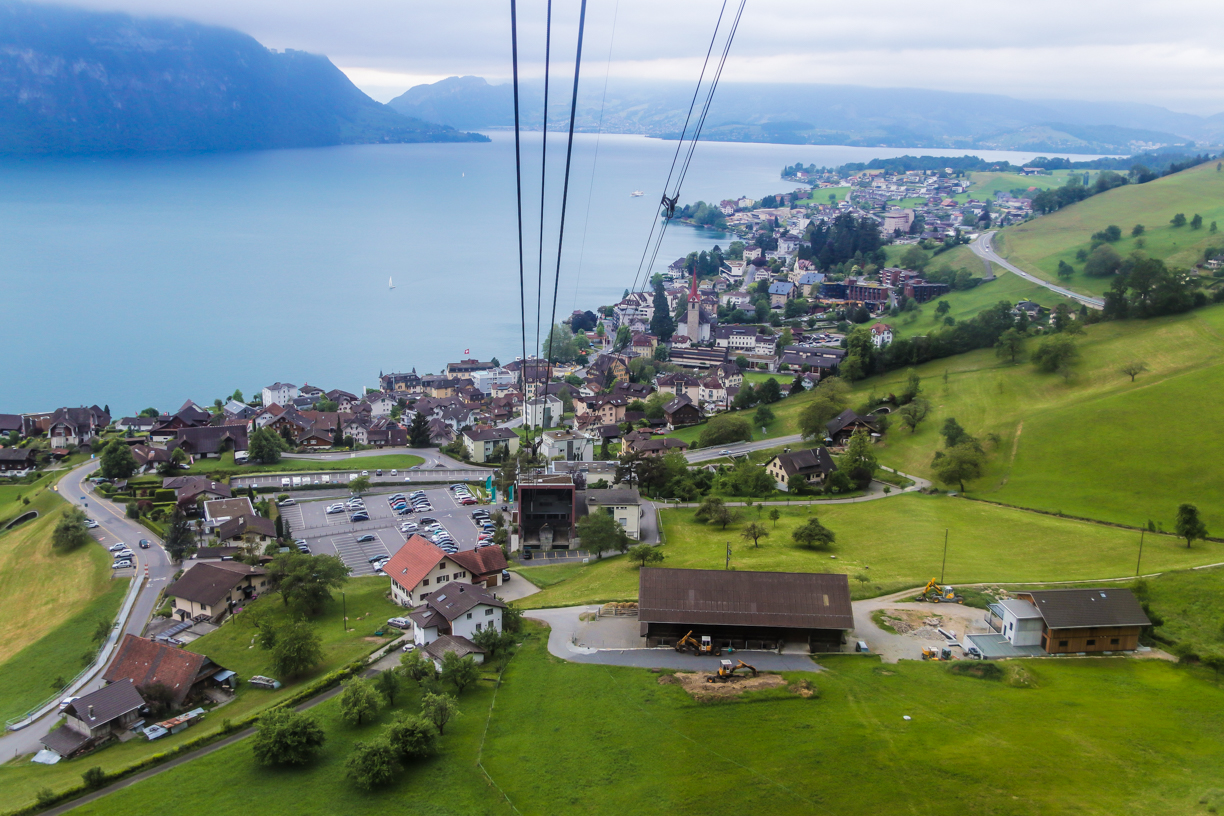
Coming down from Mt. Rigi by cableway

On the way down we get off at Rigi Kaltbad, a mountain station along the route, and catch the steep Rigi Kaltbad Aerial Cableway car. In less than 10 minutes, we reach the lakeside town of Weggis. Soon we are cruising back to Lucerne. Despite the cloud, we have enjoyed the experience very much and would recommend it to anyone.

IF YOU GO

There are many international flights to Zurich, Switzerland then there are regular trains from Zurich airport to Lucerne, bus connections twice a day, or you can travel by taxi.

www.LenRutledge.com