Germany’s Romantic Road is Ideal for Slow Travel
Words: Len Rutledge Images: Phensri Rutledge
Magnificent medieval architecture, the dramatic Alps, pretty green rolling countryside, castles and some of the most picturesque villages in Europe combine to make Germany’s Romantic Road a very special drive. Driving in Europe can be a challenge but this road is perfect for those who wish to take their time and experience the German countryside and explore some delightful towns.
For this Germany’s Romantic Road, we began in Füssen in the south with its large former monastery and castle and finished in Würzburg 350 kilometres to the north. While this drive could have taken four hours, in fact we took three days and felt rushed in the process.
These were some of Germany’s Romantic Road highlights.
Schwangau
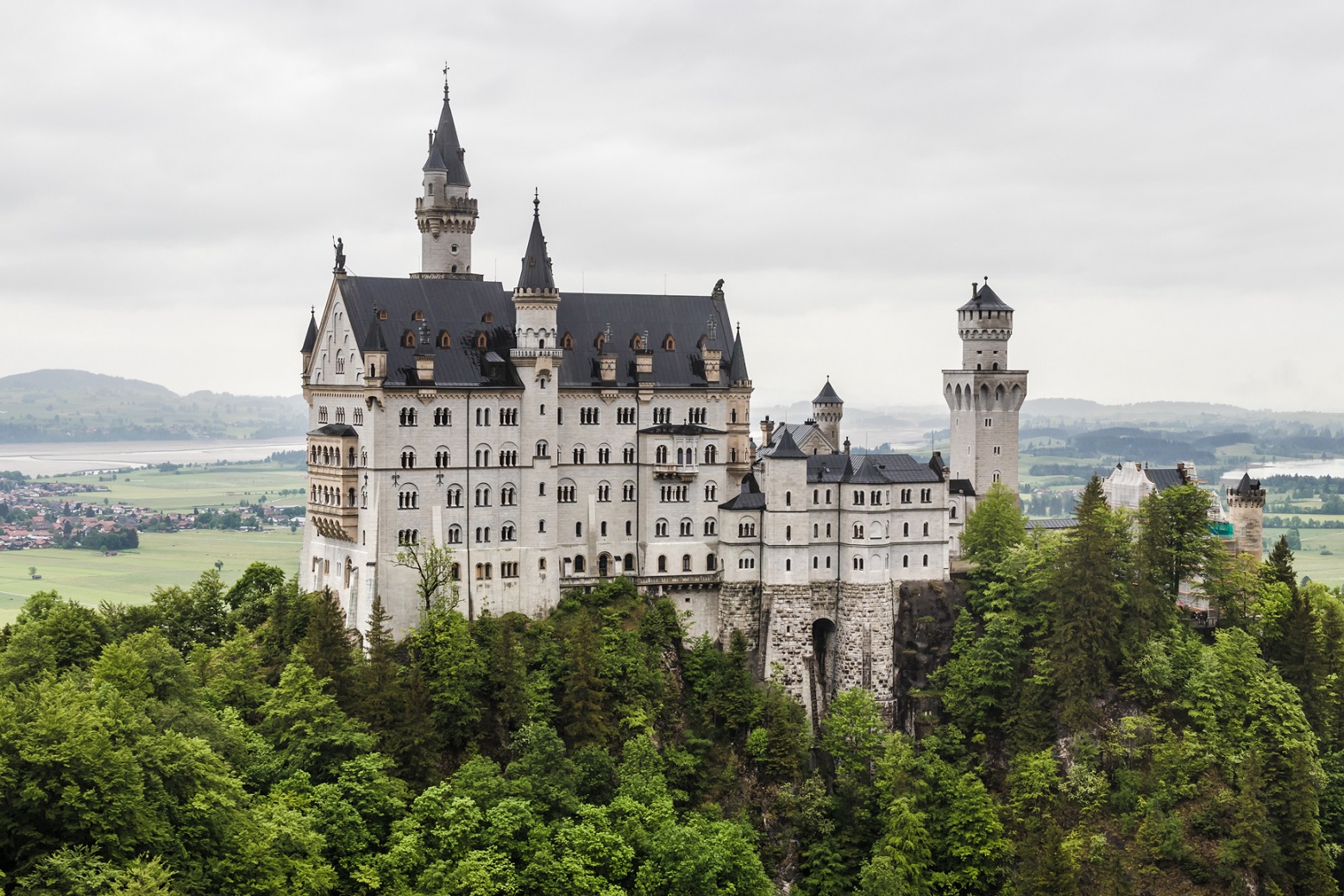
This small village is home to one of Germany’s most iconic sights, Schloss Neuschwanstein, the fairy tale castle that inspired Disneyland’s Sleeping Beauty Castle. Commissioned by King Ludwig II of Bavaria as a personal retreat, the castle has enough towers, turrets, balconies, pinnacles and sculptures to satisfy anyone.
You can visit the castle with a timed ticket but you will share the trip with hundreds of others during busy times. I suggest the best view is from Marienbrücke, the suspension bridge behind the castle where you can see the dreamy castle in all its glory.

If you have the time, also tour the less-visited Hohenschwangau, the neighbouring castle where King Ludwig II grew up and dreamed about his magical castle.
Augsburg
The city was founded in 15 BC and was a free imperial city until the early 19th century. Due to a flourishing textile trade, luxurious palatial homes, civic buildings, baroque fountains and gothic churches were built. You can enjoy them all on a visit today.
Constructed in the early 1600s, the “Rathaus” still serves as the administrative centre of the city. Next to it you can climb an ancient Perlachturm tower, built over 1000 years ago to serve as a watchtower.
Harburg
Towering over the town, Harburg Castle exemplifies medieval architecture. It comes complete with sentry walk, prison tower, dungeon and ballroom. There is a small hotel inside if you wish to stay.
Nördlingen
This has beautifully preserved town walls and the Rieskrater Museum, where you’ll learn about the meteor that struck this area some 15 million years ago. In fact, the entire almost perfectly round walled old town is built inside a massive crater. Because it sees fewer tourists than Rothenburg or Dinkelsbühl, the other two walled towns, it can be enjoyed more quietly.
Dinkelsbühl
Dinkelsbühl was not bombed in the Second World War, so it stands as it was in the Middle Ages, when it was created. It is a gem.
St. George’s Minster, a late 15th-century Gothic masterpiece, dominates the town while magnificent gabled buildings, dating from around 1600, line the central Weinmarkt. Many are now restaurants and cafés. The square hosts many festivals and celebrations throughout the year.

I strongly suggest a walk on the town walls with their 18 towers and four gates. The views are nice but the thought of walking where many armed defenders have been over hundreds of years makes it something special.
Rothenburg ob der Tauber
This is a very popular tourist destination overlooking the Tauber River, so it can get quite crowded. You have a real sense of stepping back into Renaissance era Germany and most visitors love it. The narrow cobblestone streets feel like they haven’t changed in hundreds of years.
Late afternoon is the best time after the tourist buses have left and the shops are closing, leaving only the restaurants open. It’s a calm atmosphere allowing you to really take in the town.
Rothenburg’s well-preserved town walls which completely encircle the old town are great for walking along. It is free and it was one of the highlights for us.
Parking is almost impossible inside the walls so we chose a hotel close by with its own car park and we left our car there the whole time.

Walking along cobbled streets, you’ll notice that each building here is special. There are various popular photo points but we equally enjoyed walking the back streets and making our own discoveries.
Bad Mergentheim
This is home to one of Southern Germany’s spa resorts. If you’re looking for a massage, an Ayurvedic treatment or some time in a sauna, this is the place for you. There is also a large castle and a wonderful Rococo church.
Würzburg
Built around the Main River and surrounded by rolling hills, the city of Würzburg has impressive architecture and a nice vibe.
In 686, three Irish missionaries made a vain attempt to convert the town ruler to Christianity. Later, Würzburg had a bishop appointed and became a duchy as well, and the ruling prince-bishops brought their wealth here causing the city to experience a period of growth and lavishness.

You see this today in the Wurzburger Residenz a baroque palace now inscribed on the UNESCO World Cultural Heritage list and once the seat of the reigning prince-bishop; the rococo-style church Käppele; and Festung Marienberg, a medieval fortress high above the city.


