Tag Archives: Istanbul

There is another side to Istanbul apart from old Constantinople
There is another side to Istanbul apart from old Constantinople

constantinople

Words: Len Rutledge   Pictures: Phensri Rutledge

Roman ruins, great mosques and churches, huge city walls, palaces, 500-year-old bazaars, and intriguing museums make Istanbul a ‘must-see’ city. Despite the recent strife in the Middle East, Istanbul remains a fascinating city for visitors of all ages and my wife and I found it perfectly safe and very welcoming. It was in the 10 Top Visited Cities in 2018.

It is common to say that Istanbul is caught between Europe and Asia and while this is correct, it is just a small part of the picture. Others romanticise the fact that this has been a ‘world city’ for over two thousand years and talk up its ancient buildings and monuments as the greatest appeal of the city. They are probably right.

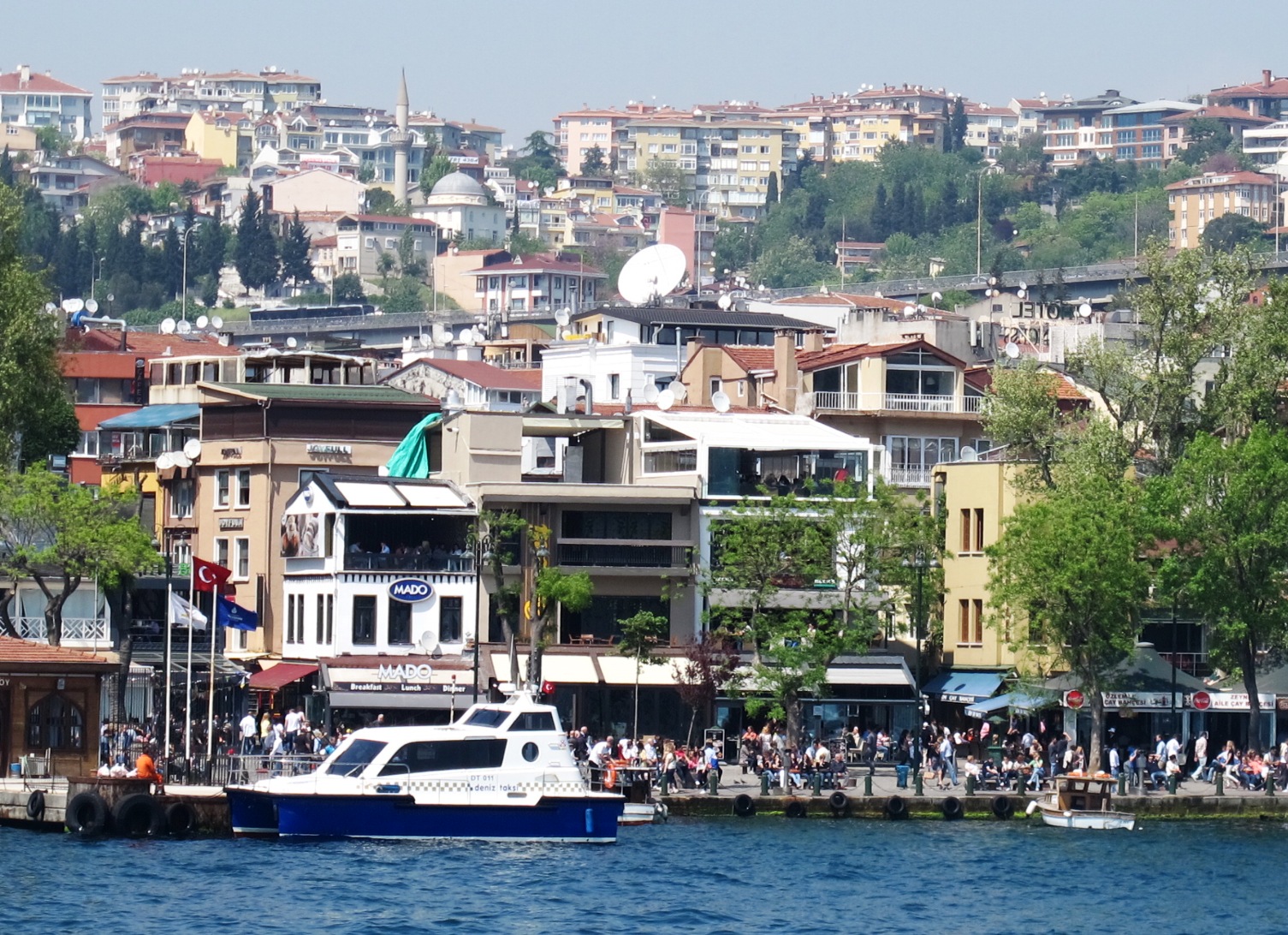
Much is written about the Old City that once was called Byzantium then later Constantinople. Less well known, but also impressive, is ‘New’ Istanbul just a few hundred meters across the stretch of water known as the Golden Horn. You are still in Europe but in many ways, it is as though you are in a different city.

The Asian side of the city is less visited but this too provides cultural insights that cannot be gleaned elsewhere. Walking is the best way to explore but for those who do not find this enjoyable, taxis and public transport is available. Be aware though that motorists rarely stop to let pedestrians cross roads even at major crossings.

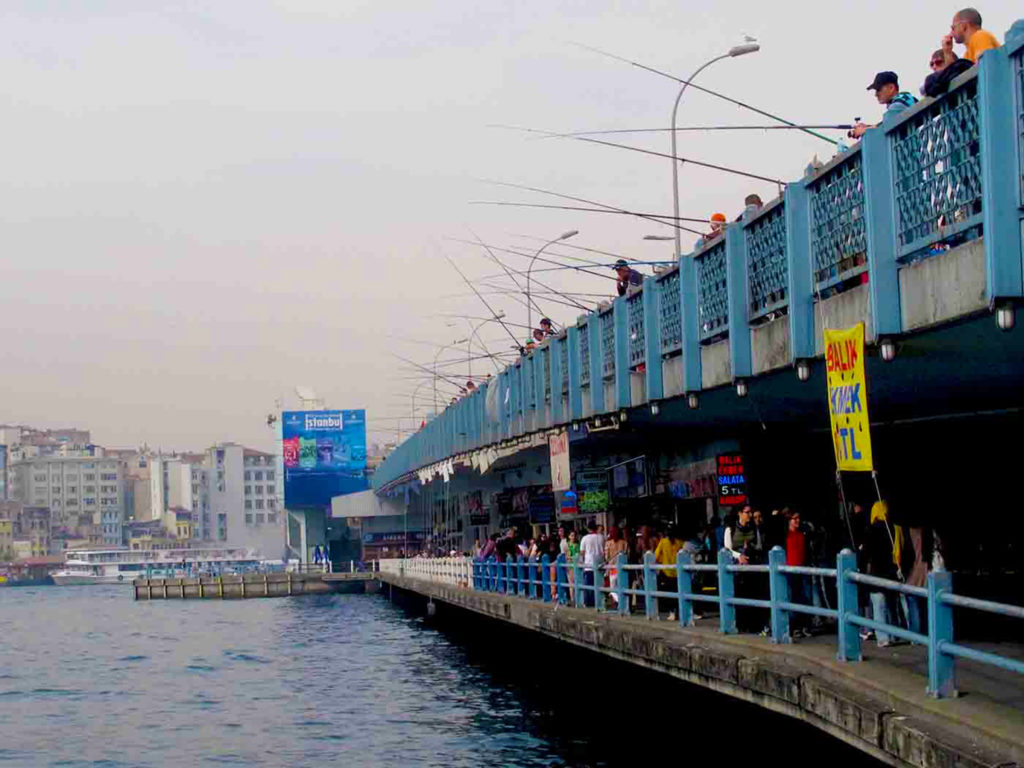
In 1503 the ruling Sultan wished to construct a bridge between Old Istanbul and Galata and he asked Leonardo da Vinci to produce a design. His design for an unprecedented single span 240 m bridge was rejected, however, and the construction of a bridge was not completed until the 19th century.

Galata

When you cross the bridge from Old Istanbul, you enter Galata which is almost as old as Constantinople but there are few relics from the early days. The area had city walls at least 1600 years ago and there was also a fortress here during early Byzantine times. In 1261, Galata became a semi-independent colony controlled by the Genoese.

The 67 m Galata Tower is the most obvious landmark. It was built in 1348 and for many years it was used as a fire lookout tower. Today you can ride to near the top by elevator and the view from the narrow outside balcony is impressive.

For those who don’t like walking up hills, the Tünelis a godsend. It was opened in 1875 and was one of the first underground urban railways in the world.

Istiklal Caddesi

When you climb the hill from the Galata Bridge or exit the Tünel, you are on Istiklal Caddesi, one of the most important streets in the city. It is lined with hundreds of shops selling just about everything you need, and much you don’t. It has many large and small stores and street vendors of all kinds.

If you get tired and thirsty, there are plenty of cafes along the way for refreshments and there are many bars to drop in on if you feel so inclined. A kebab or freshly baked simit (circular, sesame seed-coated bread), are good choices followed by some melt-in-your-mouth Turkish Delight.

Enjoying the local food in Istanbul is one of the real joys of the city. Midway along Istiklal Caddesi, there are a couple of beautifully restored arcades on the left. The most famous is Çiçek Pasajı (Flower Passage) which is outstanding and has several attractive restaurants inside.

For something cheaper, you can head through the nearby fish market and find some local eating places along Nevizade, a small street parallel to Istiklal Caddesi. These are safe and you will find someone who speaks good English.

Shopping

Istanbul has some of the best shopping to be found in Eastern Europe with modern shopping centers, ancient bazaars, independent boutiques, design shops, and thousands of street stalls. You can start shopping in Istiklal Caddesi and keep going north. 

Cukurcuma is a charming area of winding side streets and alleyways where rambling apartments house some of the finest collections of antiques, boutique fashion, and kitsch in the city.

A complete contrast if provided by Abdi İpekci Street, located in the Nişantaşı district which hosts luxury retail shopping venues and is currently the most expensive street for retail stores in the city.

Visitor attractions

The area also has some excellent visitor attractions. Istanbul Modern is a contemporary art museum in a converted warehouse by the Bosphorus. If you walk further you come to Dolmabahçe Palace,home to six Sultans from 1856 until 1924, and the largest palace in Turkey.

Further on is Ortaköy, an artsy neighborhood with two structures that dominate the area- the baroque Ortaköy Mosque and the First Bosphorus Bridge. The charming waterfront hides a lattice of narrow cobbled streets filled with nice cafes and trendy small clothing boutiques.

Across the Bosphorus, there are huge suburbs on the Asian side with their own commercial centers and transport systems. You reach here by ferry or by an undersea rail tube. I strongly recommend that you check out this area.

If you go

An Istanbul Tourist Pass can be useful if you plan extensive sightseeing. It also includes a one-way transfer between the airport and your hotel by car, a Bosphorus cruise, and unlimited mobile internet access.

Len Rutledge is the author of Experience Istanbul, available as an e-book at https://www.amazon.com/Experience-Istanbul-2019-Guides-Book-ebook/dp/B07LD3JT2S/ or as a paperback at https://www.amazon.com/Experience-Istanbul-2019-Guides/dp/1793826404/

www.LenRutledge.com

Asian Istanbul

Words: Len Rutledge   Pictures: Phensri Rutledge

Istanbul sprawls between Europe and Asia and this has a profound effect on the city. The experiences here are like no-where else on earth. Where else does the haunting, age-old invocation to worship from a hundred minarets mix easily with clanging tram bells, western rap music and the noise of thousands of hawkers?

Don’t be fooled by the outward appearance of a modern Western city. It is still very much a Middle East Muslim city so non-Muslim visitors should be aware of the customs and traditions associated with that culture and religion particularly when visiting mosques.

You probably see this best of all in the Asian side of the city. This is the least visited part of Istanbul but I strongly recommend that all visitors should go there. There are few grand tourist attractions here but the whole area is different and more conservative compared to much of the European shore.

Getting There

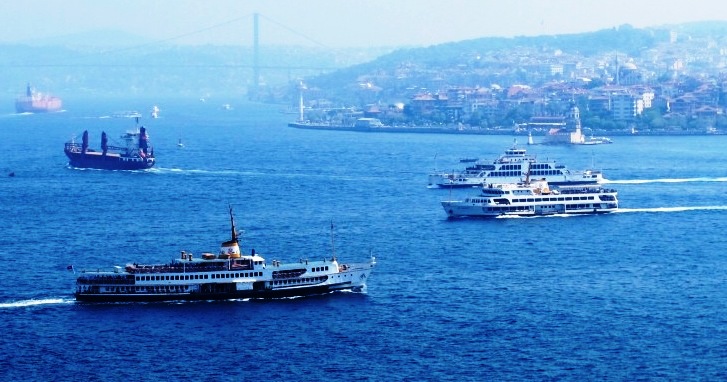
The best way to start exploring the Asian side of Istanbul is by taking a ferry to Kadıköy or Üsküdar. Riding the yellow-striped vapur (local ferry) is a nice experience. I never tire of watching the scene from the back of the boat with a glass of hot tea and Turkish style bagel in hand. There are the seagulls, the call to prayer coming from a distant minaret, and the whistle of other boats to listen to, and just being out on the water produces a feeling of peace.

Chapter 7 ferries

An alternate way is to take the train through the new undersea tunnel which links Europe and Asia. A 14 km section between Kazlıçeşme station on the European side and the Ayrılıkçeşme station on the Asian side went into service in October 2013 as p[art of a major transformation of the suburban railway system.

Kadıköy

Kadıköy is a lively place with a local feel. There are several alternative ways to go once you leave the ferry. One option is to turn right, then start walking the board walk. Thislines the entire neighbourhood, is several kilometres long, and it has some neat bazaars, antique shops, and restaurants along its length.

If you happen to be in town on a Tuesday, then you should head to the famous Tuesday market. Other days you can visit the dailyKadıköy market. It’s a different experience, but not less enjoyable. You will then see the beautifully restored Sureya Opera House with its Neo-classical facade.

Kadıköy is also the site of the 1828 vast, forbidding Selimiye Army Barracks, the site of the Crimean-War-era military hospital and the fascinatingFlorence Nightingale Museum.

Bağdat Caddesi

Undoubtedly the most famous street on the Asian side is Bağdat Caddesi, a brand-name shopping destination. If you thought of Asian Istanbul being behind the times, come here and be amazed. It easily ranks with London, Paris and New York for sophisticated shopping. Bağdat Street is kilometres long and has every shop imaginable. It is especially popular with Istanbul’s rich young people, and they come here to shop, sip a café latte and talk. Along its length are shopping malls, department stores, both local and international cuisine restaurants, cafes and pubs. Stores are open seven days a week.

Üsküdar

This was a Greek colony in the 7th century B.C., and today it is a popular, conservative middle-class area with many mosques, fountains, waterside mansions and palaces. The central business district, which lies adjacent to the harbour, is known for its reasonably priced clothing and shoe stores as well as its many antique shops.

Chapter 4 Uskudar

During Ottoman times, the main Square in Üsküdar was the departure point for the imperial caravan as it set out on its annual pilgrimage to Mecca. The solid marble Ahmet III Fountain in the square was built by the Sultan in 1728 and it displays calligraphic verses written by Ahmet III himself.

The promenade, which stretches from the harbour to Harem, is an especially popular place to enjoy a steaming tea or a fresh fish meal because of its wonderful views across the water to Old Istanbul.

This is also the point from which a shuttle boat goes across to the Maiden Tower. This was first mentioned 2400 years ago but it has been reconstructed and renovated many times since then. It is now open to the public as a bar, cafe and restaurant and it has undoubtedly one of the greatest views in Istanbul. Some readers will remember that the tower appeared in a 1990s James Bond movie.

North along the Bosphorus

A succession of small villages lines the shore. Once you go under the First Bosphorus Bridge which connects Europe and Asia they seem to become prettier. Çengelköyhas huge oak trees with branches shading the waterside cafes and restaurants near the boat landing. The quaint fishing village is dotted with waterfront tea gardens while stately Ottoman era mansions rise up on the hill above.

Kanlica, a pretty village famous throughout Istanbul for its delicious yoghurt sweetened with a variety of toppings including fruit preserve, honey and icing sugar. Kanlica has a scattering of tea gardens along the shoreline and these are a popular place to watch the passing boats or admire the graceful waterfront mansions.

Beykoz is something of a tranquil haven with stunning natural scenery and somewhat dilapidated charm. The area has been settled for a long time and has repeatedly been fought over. Beykoz centre today, however, has a quiet village atmosphere with several Ottoman-era fountains, a few historical buildings and nice eateries.

Grand Palaces

The Asian shore is home to many of the grandest private homes in Istanbul and there are also some palaces opened as museums or hotels.

Beylerbeyi Palace was constructed between 1861 and 1865 and although it’s smaller and less sumptuously decorated than some of the city’s other palaces, it has a lovely position on the Bosphorus. The building has 26 rooms over three floors and there are spectacular Bohemian crystal chandeliers, hand knotted Hereke carpets and Sèvres vases. There is an impressive staircase leading up to the Palace with a pool and fountain and there are terraced gardens with two marble bathing pavilions and the pretty former stables of the Sultan.

Chapter 4 Küçüksu Palace

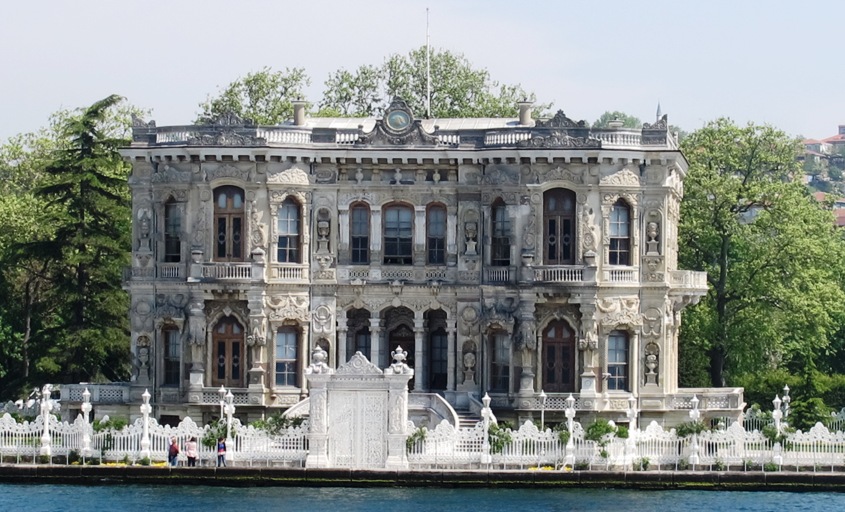
Küçüksu Palace, a small Rococo summerpalace (1857) over four floors which was used by sultans for short stays. This is another location which has appeared in a James Bond movie. The interior is lavish with Bohemian crystal chandeliers, antique furniture, mahogany floors and lavish carpets. There is a cafe in the grounds with good views of the water.

The Khedive Palace, a former residence of the Egyptian Governor high up the hill within a green park, is now a famous city landmark and restaurant, noted for its Sunday brunch. It is a beautiful example of ‘art-nouveau’ architecture and has a stunning marble fountain at its entrance. There is a cafe outside as well and the view and flowers are excellent.

Len Rutledge is the author of Experience Istanbul available as an e-book from Amazon

Historic Istanbul

Istanbul has been a ‘world city’ for millenniums and there is no better place to start than where it all began. Historians tell us that there was a Mycenaean settlement here from around the 13th century BC then Byzas the Megarian founded a Greek settlement here in the 7th century BC and this led to the name Byzantium. The town became an important centre of trade over the next thousand years and in the 4th century AD, Constantine chose it as the site for the new capital of the Roman Empire. Thus Constantinople was born.

Constantinople grew to become a great city, protected by water on three sides and by a great wall on the other. Grand buildings were built and the city remained safe until the beginning of the 13th century when the Christian crusaders sacked and destroyed much of it. The Byzantines finally regained control but the city fell to an Ottoman siege in 1453. The name Istanbul was used in Turkish alongside the original Constantinople, during the period of Ottoman rule. This period saw a rebuilding of the city with new palaces and many mosques and these are today some of the great attractions in the Old City.

Hagia Sophia

This is a magnificent building completed in 537. This was the greatest Christian church in the world until 1453, when it was converted into a mosque. In 1935 it became a museum. It is a place that everyone ‘must visit’ when in Istanbul as it is probably the city’s greatest historic site. It is the interior with its huge dome that visitors find so magnificent. The dome is supported by 40 massive ribs which are held by hidden columns. The effect is stunning and no rival was attempted anywhere in the world for the next thousand years.

Chapter 2 Hagia Sophia

Most of the millions of gold mosaic tiles which covered the church’s interior have recently been restored and the result is something quite spectacular. There are several Islamic touches from the buildings time as a mosque. Most noticeable are the large 19th-century medallions inscribed with gilt Arabic letters with the names of Allah, Mohammed, Ali and Abu Bakr.

Blue Mosque

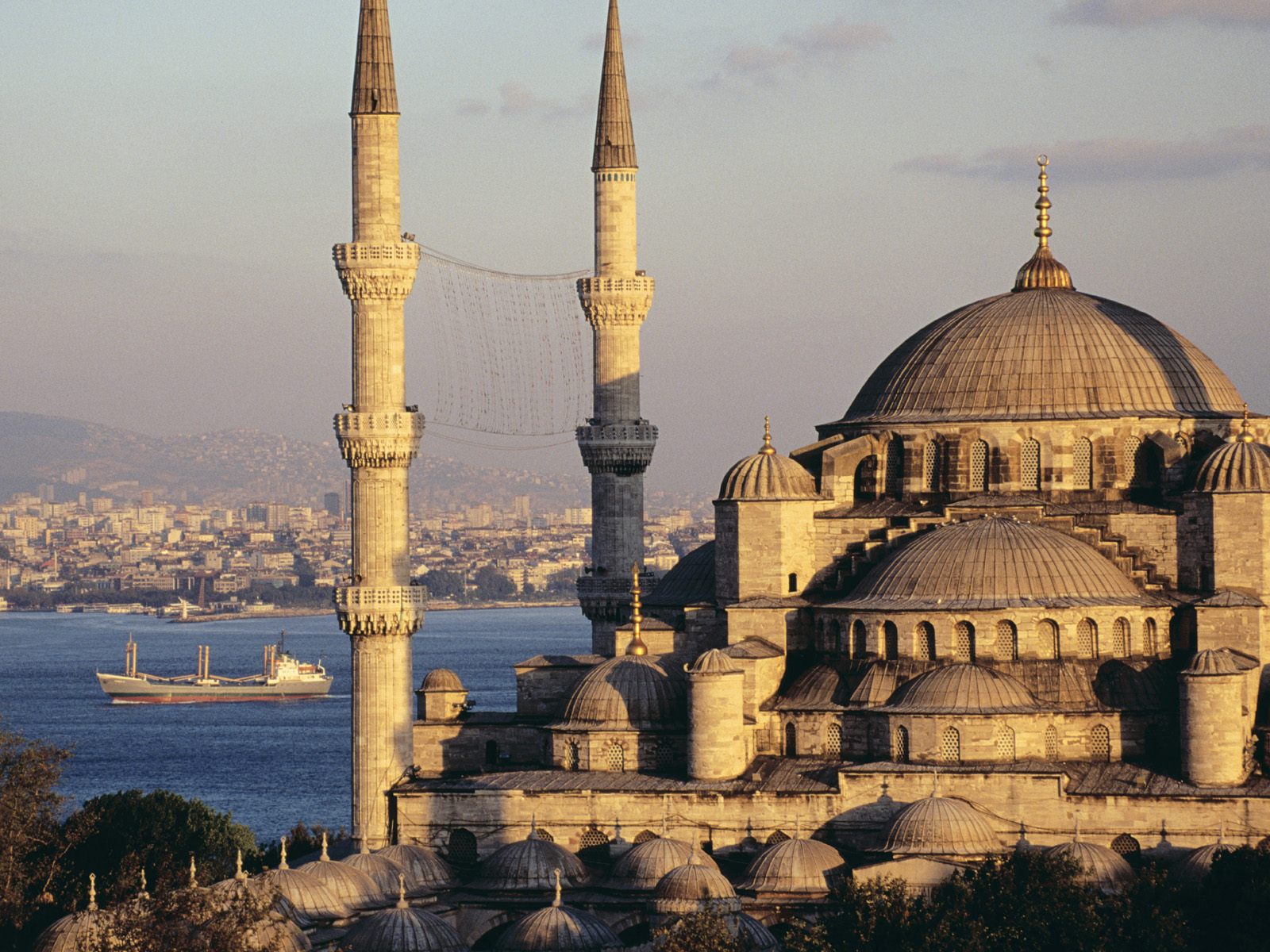
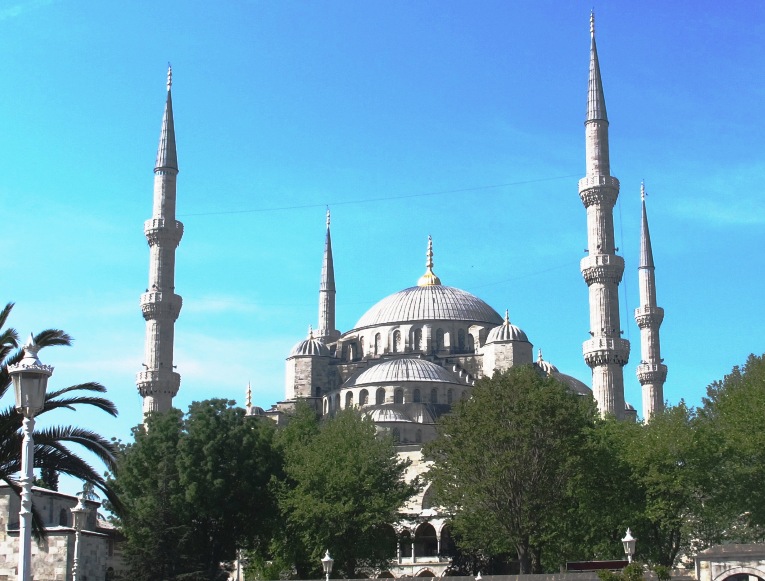
The Sultan Ahmet Camii was built in the 17th century by Sultan Ahmet I and he planned to build something that would surpass the Hagia Sophia. With the instantly recognised exterior and its six minarets he has achieved that but the interior falls far short. The domes billow upward as we enter into the huge courtyard which is the same size as the mosque itself and is surrounded by a portico with thirty small domes. From here the full grandeur of the exterior is revealed.

Chapter 1 Blue Mosque

The interior space is huge but somewhat dark and the four huge pillars which support the dome seem oversized and almost overpowering. The mosque derives its popular name from the twenty thousand or so blue Iznik tiles that adorn its upper interior but many areas are difficult to see properly. The lower walls and arches are covered with arabesque stencilling.

Basilica Cistern

This 1500 year old underground water reservoir is a wonderful escape from the outside heat and we linger here. It was first used to store water for the palace and surrounding buildings but apparently hasn’t been used for this purpose for the past 1000 years. Now the structure has been restored and opened as a unique attraction.

p23

The cistern is huge and the roof is supported by 336 columns arranged in rows. We had been told about two columns supported on upside-down Medusa heads and we find them at the far left-hand corner of the reservoir at the end of one of the raised wooden walkways. There is still a small amount of water in the reservoir and there are carp swimming around. The lighting in nightclub colours throughout the reservoir is very attractive and we end our visit in the candlelit café, where soft lighting and classical music contributes to the overall atmosphere of the place.

Topkapi Palace

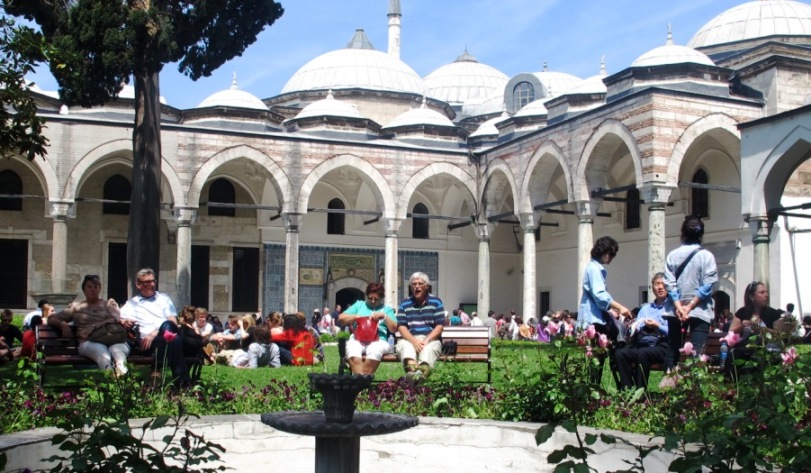
This was the home of the sultan from the 15th to the 19th centuries. The complex is huge and you can’t see it all in less than half a day. The palace is a series of pavilions built around four courtyards. The Imperial Gate behind the Hagia Sophia leads to the first courtyard. This is open to everyone and it is here that we buy tickets for other areas. This courtyard houses the Byzantine Aya Irini, a former Eastern Orthodox church, and an entrance to the Imperial Mint.

Chapter 2 Topkapi Palace

Middle Gate leads to the Second Court where there are some important buildings such as the Palace kitchens, Imperial Council Chamber and Inner Treasury. All these have displays or things worth seeing. This court also provides access to the Harem which some say is the highlight of their palace visit. The sultan was allowed four wives and as many concubines as he could support and you can see a small section of their quarters including some of the dormitories, a bedchamber with a large indoor swimming pool, a charming small hamam, library and a dining room.

Grand Bazaar

The famous Grand Bazaar at first appears chaotic but actually there is some order to it. This has been the heart of the Old City for centuries and you must visit even if you don’t want to shop. There are over 4000 shops, 3000 different traders, several kilometres of covered lanes, and mosques, banks, restaurants and workshops. Construction started in 1456 and repairs, expansion, and reconstruction have continued to the present day.

Chapter 2 Grand Bazaar

There are many opinions about the Grand Bazaar but a visit can be very enjoyable. Some say it is a tourist trap while others swear that many locals shop here all the time. Probably both are correct. Spend some time looking at the array of goods, or searching out the little cafes that hideaway among the shops. The architecture, colour and the tea men who run around with small glasses of hot tea are fascinating.

Valens Aqueduct

Chapter 2 Valens

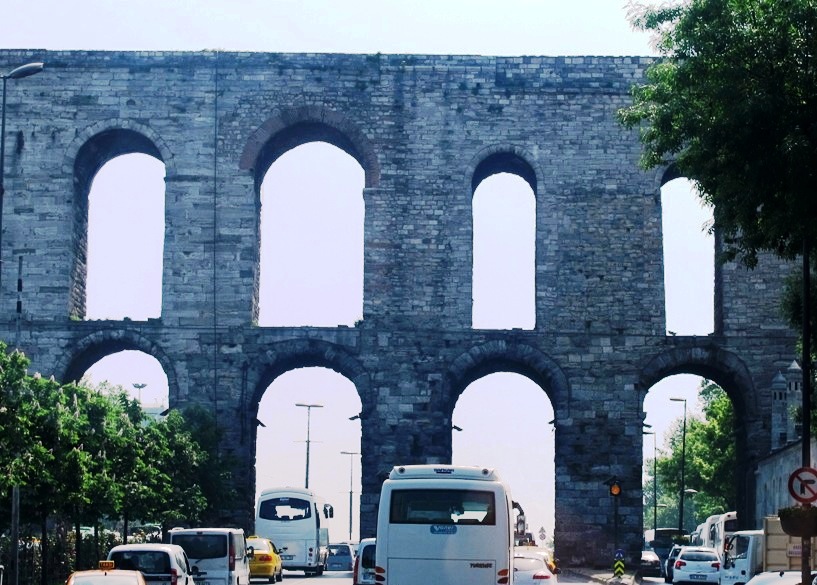
Probably nothing says that Istanbul was once a Roman city better than this. Only a small section of the original now remains but it is still an impressive sight. This was part of the major water supply system for Constantinople which at one time formed a 250 km network of water supply canals and aqueducts. The surviving section is just under a kilometre long as it crosses the small valley between Istanbul University and the Fatih Mosque. The most impressive view is where the wide Atatürk Bulvarı road passes under its arches but we are fascinated by the remains further to the east where it is incorporated into some old buildings.

Len Rutledge is the author of Experience Istanbul available as e-book from amazon at http://www.amazon.com/dp/B00IR1X5K6