Category Archives: Editor’s Picks

Around the World in 15 National Spirits [Infographic]

Around the world in 15 National Spirits

When we think of ‘culture’ we all too often use it as a synonym for music, film and the fine arts, but a true look into a nation’s soul requires contemplation of everything the people cultivate – from language and gestures to food and drink. Of course, you won’t learn everything there is to know about a country by sitting at home with a bottle of tequila and a sombrero, but enlightening yourself on the drinking preferences of far-flung places can provide a little window on the world and make exotic destinations feel closer to home.

Even better, if you’re making plans to visit one region or another, is to brush up on the way things are done so that you’ll feel confident drinking in local homes and bars – and the people will welcome your respectful interest in their way of life. Downing that tequila with lemon and salt, for example, will quickly mark you out as a tourist. Sipping and savouring it from a brandy glass will aid your enjoyment of the drink, as well as letting your Mexican hosts know you didn’t just fly in with a stag party.

In England, you’re unlikely to offend with the way you drink your gin and tonic, but its genteel image of aristocratic grace can be misleading. Even your new English friends may be surprised to learn of gin’s grim history as a low-quality drink of the masses in the 18th century, which was even used by unscrupulous bosses to supplement the meagre wages they paid. Thankfully, the recipe and the culture are a little more refined today.

Costa Rica’s delicious guaro has a similarly shady past – it was illegal until 1851, but still popularly produced by moonshiners and enjoyed all the more, perhaps, as a forbidden fruit. In Hungary, the legality of producing their famous pálinka at home remains contentious to this day.

For further insights into the drinking preferences and histories of our global neighbours, be sure to check out this new infographic exploring the national spirits of twenty desirable destinations around the world.

Around-the-World-in-X-National-Liquors-DV2


Source

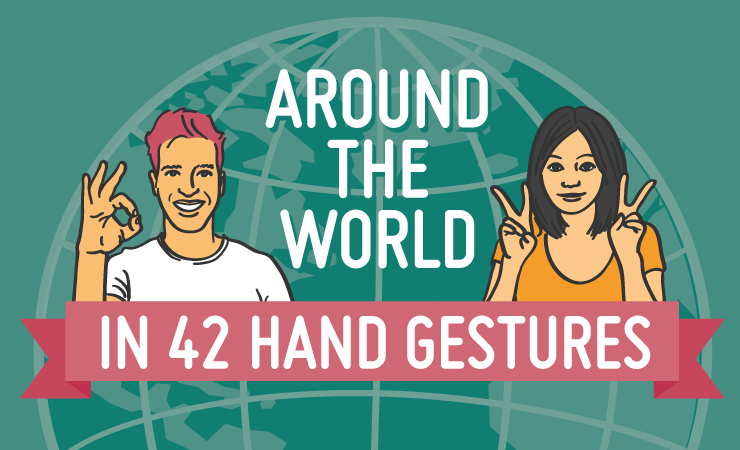
Around the World in 42 Hand Gestures [Infographic]

How’s your Nepali? Not too hot? Well, never mind – spoken languages makeup but a fraction of the way we communicate, and some minds just weren’t built to absorb them. If you find that you’re fortunate enough to spend a lot of time travelling, you’ll discover that listening and observing is half the battle when it comes to being involved with the world around you. Whatever forgettable phrases they may print in the guidebooks are rarely comparable to the way the locals of any given area communicate with each other.

Hand gestures are a great way into a local culture, especially if words aren’t your strong point. To take that Nepalese example, you’ll get a lot further greeting locals with a palms-together gesture than a mumbled ‘namastē’ and a vague wave. You’ll also discover that saying ‘no’ – or being told it – involves a swiveling wrist, rather than a shaking head. Likewise, the Japanese have a specific gesture – arms crossed diagonally across the chest with hands open – to indicate that something is just not allowed.

Italy, though, is arguably the most famously gesture-oriented destination, and you can get a long way with no words at all – as long as you’re confident in the nuances between the hand movements. Running your finger into your cheek is a good start for tourists – it’s a way to show you appreciate the food. Other gestures – the notorious chin swipe (“I don’t give a damn”), for example – tend to be less positive, but that’s all part of the package of getting into a meaningful conversation with your new friends.

For more tips on how to engage with other cultures without memorizing the phrasebook, check out this handy new infographic, with some of the most helpful/friendly/no-nonsense hand gestures that those on the inside use as second nature.


Around the world in X hand DV1


Source

Exploring Central Sofia

Words: Len Rutledge.   

Photographs: Phensri Rutledge.

A spectacular cathedral, Roman ruins, restored markets and delightful gardens are just a few of the joys of central Sofia, Bulgaria’s interesting capital. My wife and I arrived knowing little about the city and we discovered a place which we really enjoyed. Sofia’s main sights are nearly all located within a short walking distance of each other. After some sightseeing, dining and relaxing we left vowing that we would return to explore further before long.

Tsar Osvoboditel Monument.

This monument portrays the Russian Tsar Alexander II on horseback. It was erected in gratitude for the liberation of Bulgaria in 1878 from Ottoman rule. The 14-metre high statue is by the Italian sculptor Arnaldo Zucci. Around the pedestal are statues of Russian and Bulgarian fighters. In the spring the small garden around it is covered with flowers. The monument was restored in 2012 to its original condition.

National Assembly Building.

Across the road is this grand Neo-Renaissance style white structure from 1885 which houses the parliament. It is depicted on the Bulgarian 20 leva banknote. In 1997 the building was stormed and damaged, leading to the eventual downfall of the then ruling Socialist party. The words on the facade translate to something like “United we are strong” while on the roof are a row of Grecian-style urns. The interior has been refurbished several times but its original appearance has been basically preserved.

Alexander Nevski Cathedral.

This is without a doubt the most spectacular building in Sofia. The Neo-Byzantine style building is said to hold 8000 people. There are five aisles and three altars, some lovely stained glass windows, Venetian mosaics and dramatic murals. It is one of the largest Eastern Orthodox cathedrals in the world. It was started in 1882 but was not finished until 1912. The crypt below the cathedral is part of the National Art Gallery and there is art from the 4th to the 19th centuries. The focus is primarily on icon painting.

Cathedral Saint Alexandar Nevski

St Sofia.

It is just a hundred metres or so to another important church. This is the oldest Eastern Orthodox church in Sofia and the contrast in style between it and the cathedral could not be starker. The simple red brick church dates back to the 5th century and it gave its name to the present day capital back in the 14th century. During the Ottoman period, it was turned into a mosque but it was restored as a church after the liberation. Just outside the church burns the Eternal Flame of the Unknown Soldier where we watched a dignified military tribute taking place.

St. Sofia church

Russian Church.

Tsar Osvoboditel Blvd., known locally as the ‘Yellow Brick Road, is where you find this small and beautifully ornate Russian Church with its five golden onion domes. It was apparently built for a Russian diplomat who was afraid to worship in Bulgarian churches. While the outside is lovely, the interior, which is currently under repair, is quite dark. You can see the box where people place notes and wishes hoping for a miracle.

National Art Gallery.

This former Royal Palace has been partial renovated in recent times. It houses the national Art Gallery and the Ethnographic Museum. On entering the building you will see the impressive staircase that leads to the rococo-decorated rooms. The gallery space is very limited but there are some nice works on display. We hear that a brand new museum of art is being built. After viewing the art, go to the cafe at the back of the building which serves good tea and coffee in the peaceful garden with old trees.

Ivan Varov National Theatre.

Cross the road and walk through the park to the neoclassical theatre building which opened in 1907. It is imposing from the front with its large pediment supported on six white marble columns. Behind this, rise twin towers crowned with sculptures of the goddess, Nike. On a nice day, the area outside has stylish street cafes and when we visited there was an orchestra playing. The theatre has three stages with the main one able to seat 750 people. The building has been damaged by fire and bombs over the years but a restoration project a few years ago has returned it to excellent condition.

Archaeological Museum.

A little further west along the yellow brick road is this museum, the oldest in Bulgaria. It has been in this location inside the old Bujuk Mosque since 1899. The mosque itself dates back to the 15th century. The highlights include the Valchitran gold treasure from the 14th century BC, pre-historical monuments, many icons and the more recent Thracian gold discoveries. Quite a few of the exhibits have English descriptions, but the Thracian gold room has excellent and extensive English explanations.

Outside the Archaeological Museum

St. George Rotunda.

Cross the road and enter the courtyard of the Presidency building. The 4th century round red brick church sits amongst the excavations of an ancient Roman town called Serdica. This is Sofia’s oldest preserved building and it is open to the public. The highlight is the three layers of frescoes under the dome, the earliest dating back to the 10th century. These were painted over during the Ottoman period when the building was used as a mosque.

St. George Rotunda

www.LenRutledge.com

11 TV & Film Coffee Shops You Can Visit For Real [Infographic]

Wherever you travel around the world, no matter how far or how exotic, from time to time you need to check back in with the basics: a cup of coffee, some WiFi, perhaps even a slice of pie. This needn’t be a mundane moment in your otherwise thrilling trip, however, as many of the most desirable cities are host to iconic coffee shops that you’ll recognize from perhaps your favourite TV shows and movies. These quiet moments when you catch your breath in the middle of an adventurous day can form at least a classic Instagram moment – and at best, a memorable pilgrimage to the regular haunt of your big screen heroes.

Paris, for example, is home to Café des 2 Moulins, Amélie’s workplace in the movie that bears her name, and one of the loveliest and most iconic of all cafés from the big screen and beyond. So desirable is this destination, the owners had to change the chairs outside the café when fans kept repeatedly stealing them. Of course, another perk to coffee here is the French cuisine: you’ll want to grab something sweet to go with it, just to stay in character.

You’ll likewise find quality among the reflected glamour at Regency Café in Pimlico, London. Early Daniel Craig vehicle ‘Layer Cake’ may not be the most memorable of mockney crime capers, but you can at least be assured that Regency boasts the title of London’s 5th best restaurant. Its authentic décor will complete the London experience, so be sure to head to South West London when you’re in need of a British cuppa.

Whether it’s big movie moments you crave, or the reassuring regularity of your favourite TV show’s regular coffee shop, there’s a place for you. Check out this new infographic for a rundown of some of the most famous screen coffee shops and where to find them.

X-film-and-tv-coffee-shops-you-can-visit-for-real-DV4


Infographic by: https://www.darwinescapes.co.uk/2016/07/11-film-tv-coffee-shops-can-visit-real/


10 Etiquette Rules for Flying Economy Class [Infographic]

10 Etiquette Rules for Flying Economy Class

They say there’s something special about flying first class, but most of us mere mortals would rather save the extra cash for our destination and put up with the struggle of economy class instead. A couple of hours of meaningless struggle are usually well compensated by the number of fancy dinners, beachside cocktails and museum entries that the difference will cover. But with planes filling up, tempers rising, and butts getting bigger (scientific fact!) the more refined 21st-century economy class traveler may be starting to feel the squeeze. The truth is, it’s a temporary community up there and if we want it to be bearable – enjoyable, even – we each have a responsibility to check our own behavior on board.

In fact, spreading good cheer among your esteemed co-passengers begins at the security gate, where there’s little that will crank up the rage of more seasoned travellers than watching you fumble with gadgets, coins and paperclips from the depths of your pockets when you should be well through the scanner. Think about how you pack so you can quickly empty your metallic objects into the tray and be on your way.

Throughout the arduous queuing process, be sure not to push, shove or rush. Folk has a funny need to beat others to each post of the boarding process, though most of the panic has little basis in reality. Stowing your hand luggage directly above your seat is really not as important as acknowledging and respecting the guy you were about to shove out of the way to do so. For extra points, place the luggage long-ways (not horizontally) in the locker to make more efficient use of the space.

Like any community, the secret to a successful plane ride is empathy. Acknowledging the needs and preferences of others, making kind gestures and addressing air stewards with gratitude are all ways to spread good will without compromising your own comfort. For further tips on how to do so, do check out this new guide to economy class etiquette – and may you, and those around you, have a good flight!

10-etiquette-rules-DV2

Source

Your Road Trip Guide to TV’s Most Iconic Landmarks

Your road trip guide to TV’s most iconic landmarks

When life in front of the TV gets tiresome – or, worse yet, you’ve reached the end of every box set – there’s nothing better to rekindle your love affair with the gogglebox than hitting the road to visit your favourite shows’ locations in person. Whether you fancy sleuthing on Baker Street or just want to check the coast is clear in The Walking Dead’s Atlanta, Georgia, seeing the worlds your heroes and anti-heroes inhabit can be more rewarding than any virtual reality experience – with the added bonus of live sounds and smells to take in as you go.

Washington DC has always been a popular tourist destination, as the seat of the world’s power is surrounded by imposing monuments and buildings familiar from both Hollywood and the news. Post-House of Cards, however, The Peachoid and the Capitol take on further pertinence to the avid fan – and a short trip to Baltimore will allow you to also tick Frank Underwood’s Park Avenue address off your to-see list.

What they rarely seem to mention in Game of Thrones is just how lovely the country surrounding King’s Landing is. On their days off from all that killing and ‘sexposition’, we can only assume the murderous cast make their way down to the beaches of Dubrovnik, Croatia, to top up their tans and catch up on the plot twists of their favourite fantasy novels. Not such a bad life to be a Lannister after all, eh?

In London town, you’ll find that Baker Street has drifted from the map, somewhat. While the atlas Baker Street remains a fine place to view classic London architecture and even do a bit of shopping, in the series the famous address is played by a stand-in, an address on North Gower Street in Kings Cross. Of course, taking a black cab from one destination to the other is the perfect way to get the full experience all the same.

If you’ve still got a few air miles to spare, be sure to check out this infographic listing some more such destinations from the latest hit shows, including some suggestions on the most ‘in character’ forms of transport in which to experience them.

Road-Trip-Guide-to-TV's-Most-Iconic-Landmarks-DV4


Source

Backpackers Guide to Packing [Infographic]

Preparing to backpack is about a lot more than filling an ample bag with a ton of stuff you think you might need over the next weeks. Of course, this method might get you to the train station quicker, and you might not even notice the problem for a few hours – but our bodies were not made to carry randomly assembled weights on our backs, and a poorly thought-out pack will soon result in unexpected aches and pains just when you’re meant to be enjoying your adventure. The ‘chuck it in’ method will also likely result in finding yourself far from home with several items you don’t need while something vital is missing; and you’re bound to find, when a burly border guard is staring down on you or you’re exhausted and ready to pass out for the night, that your passport or toothbrush is right at the bottom of your bag.

The key to avoiding these pitfalls is twofold: picking and packing. The day before you travel, take time to lay out your stuff into a pile of essentials and one of ‘wish’ items. Once you’ve done a dummy pack of all the essential gear, you’ll know how much of your wish list will fit in the bag – and how much you can bear to carry. Essentials are items that will make your travels comfortable, safe and easy, without doubling up on other items.

There is a science to the packing part: put lightweight stuff to the bottom of your bag, heavy things closest to your back, and mid-weight things in the middle and top. By now, you’ve already twigged it’s useful to put your passport, toothbrush, and any medication in a separate pocket where it can be easily accessed.

It’s by no means a quick process, which is why it’s calming to pack comfortably in advance of your departure time. You can also ease the process by referring to this excellent new infographic, which comes replete with suggestions about just what constitutes an ‘essential item’ and a few more tips on making that weight comfortable on your back. It’s the adventure of a lifetime, and you’ll want to free up that concern so you can enjoy the rest of your trip.

A-Backpackers-Guide-to-Packing-DV4

Source

The Rise of the Expat-preneur’s [Infographic]

The Rise of the Expat-preneur’s

The world has got a lot smaller since the advent of the Internet, improved international relations and low-cost airlines – and it’s easier than ever to escape the grey skies of home to enjoy life in a new culture. From Ecuador to Australia (and it seems to be the warmer climates that attract the most expats), economic migrants and romantic adventurers are finding ways to make a living outside of their country of birth, offering a fresh perspective to foreign businesses as well as helping to expand the international networks of their new colleagues.

Expat network/information source Inter Nations surveyed nearly 15,000 such migrants, to try to get a clearer idea of who is moving and why. The gender split is pretty even, with an average age of 41 – suggesting that those making the move are either looking for a fresh burst of energy, or were waiting for the financial security to make the leap. But in fact, a sense of challenge and of romance are often the fuel that gets them there. One in ten expats moved to be closer to a loved one, with around the same proportion moving for the sense of adventure.

These motivations are reflected in the choice of destination. Three of the top ten landing places are in Latin America, with migrants to Ecuador (number one) and Mexico (number two) specifically listing the cost of living, quality of life, and leisure activities among the aspects that attracted them. An abundance of teaching opportunities and translation gigs for foreigners, as well as the option to work remotely for your employer back home (or anywhere else in the world for that matter), indicate that the time is ripe to take advantage of these opportunities – and if you’re looking for a bit more insight into what it’s like, you can do no better than to check out this new infographic which puts some of Inter Nations extensive research into context.

The Rise of the Expat-preneur's


The Rise of the Expat-preneur’s Source

Exploring Best Cities in the World for Creative People [Infographic]

Exploring Best Cities in the World for Creative People

The infographic is designed to introduce you with the best cities in the world that are ideal for creative people. The names of around 7 cities including London, Paris, Austin, and Tokyo are provided in this infographic which are most suited for creative travellers.

creative cities

If you are leisure traveller and planning to visit London for a stay in a serviced apartment to enjoy heavy discounts and comfortable stay in the central location. Visit thesqua.re, to choose from excellent serviced apartments in London’s popular neighbourhoods.

Corporate Traveller and Planning to Visit London [Infographic]

Corporate traveller and planning to visit London

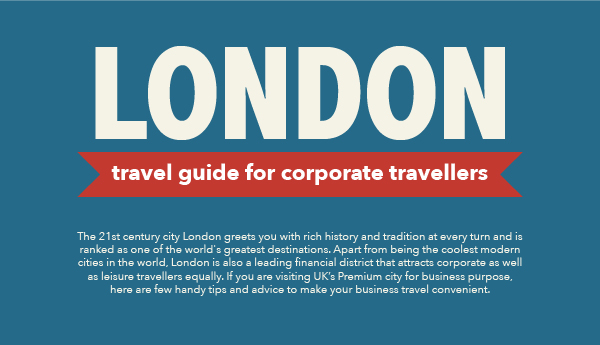
The infographic is designed to provide key information about the London for corporate travellers. Get to know about the important things that you need to keep in mind while travelling in London for business purposes. Key information like where to stay and how to travel conveniently is mentioned in this infographic.

If you are a corporate traveller and planning to visit London and want to stay in a serviced apartment to enjoy heavy discounts and comfortable stay in the central location. Visit thesqua.re, to choose from excellent serviced apartments in London’s popular neighbourhoods.

visit london