The Bizarre & Amusing Translations of Place Names Around The World [Infographic]

The Bizarre & Amusing Translations of Place Names Around The World

It’s fair to say that we don’t always put a lot of thought into the names of places we visit. In fact, unless they are in the English language, we just take them as read.

This point is widely proven across the USA and the UK, where we all enjoy poking fun at some of the truly ridiculously named villages, towns and cities across both nations.

Ridiculous Place Names

Just take a look at this very enjoyable article from The Telegraph which lists 10 of the silliest place names in Britain.

As you can see, history often plays a big role in naming certain places. Because of this, the original meaning becomes lost and ends up becoming something much more humorous!

The sheer volume of strangely named places is perfectly illustrated in this post from Thought Catalog which lists 52 across the United States, including the likes of Accident, Maryland and Coupon, Pennsylvania.

Clearly, there is no shortage of odd place names in the English language, However, if this is what one language has to offer, how many ridiculous ones exist in all of the other languages?

Well, thanks to a new infographic from clarendonlondon.com, it turns out there’s plenty of them.

The Bizarre & Amusing Translations Of Place Names Around The World

They have gone about translating some of the strangest names into English, with quite frankly hilarious results.

It’s called ‘The Bizarre & Amusing Translations Of Place Names Around The World ‘ and you can take a look below.

This infographic covers a number of continents. However, the conclusion it clearly comes to is that there are a wealth of silly named places in Europe.

Germany is seemingly a wonderful example with a wealth of giggle-inducing place names. The infographic includes Feuchtwangen, which translates as “wet cheeks” and Kotzen, which translates as “vomit”.

place names

How To Order A Pizza/Beer/Taxi/Coffee in 15 Different Languages

No matter where you head for your next holiday, you can be sure there will be no issues communicating with locals.

This is because a lot of countries around the world speak English. In fact, according to Wikipedia, English is the third largest language by number of native speakers in the world. If you take into account non-native speakers, it becomes the second largest.

This is obviously very helpful, especially if you’re travelling to countries very different to where you call home. However, it of course, means that you are very unlikely to make the effort to learn another language.

This lack of effort on the part of British and North American tourists is often interpreted as being rude in certain countries.

The assumption that locals will know English is a reasonable one. However, the expectation is something which understandably can seem rude to those who are already making an effort.

A great example can be seen in this article from the Telegraph. It explains why much of the British Expat community in Spain tends not to bother learning Spanish.

How To Order A Pizza/Beer/Taxi/Coffee in 15 Different Languages

It’s for this reason that before we head off on our next holiday, we should at least learn a few important things.

A great place to start is with common phrases you’re likely to use whilst away. You can find a number of great examples in a new infographic from silverdoorapartments.com.

It’s called ‘How To Order A Beer/Pizza/Taxi/Coffee In 15 Different Languages Around The World’. You can take a look for yourself below this post.

As infographics go, this one really does what it says on the tin. It covers languages from a number of popular destinations including Spanish, Italian and French. On top of this, it offers some for the more adventurous traveller, including Japanese and Russian.

21 Things You Didn’t Know About London [Infographic]

21 things you didn’t know about London

In recent years, the popularity of London city break has gone from strength to strength. It seems that millennials are doing away with the week beach break and instead favouring three days in one of the world’s great metropolises.

As you can see from this post from UK travel association ABTA, statistics now show that they are in fact as popular as beach holidays.

It’s really not hard to see why either. With more cheaper flights than ever and budget accommodation via Airbnb and other services, city breaks can prove to cost very little.

In fact, for the amount of money it takes to book one beach holiday, you could quite easily enjoy two city breaks.

When it comes to selecting a city break, there’s certainly a few everyone must visit. One of these is, of course, London.

London is bar far one of the most popular tourist cities on the planet. In fact, the Evening Standard reported earlier this year that a record 19 million tourist visited the English capital last year.

It’s pretty easy to see why too. London is both a city with a wealth of history and also bucket loads of contemporary attractions.

Just take a look at this post from Planet Ware, which lists a number of world famous attractions.

If you’re planning on visiting this marvelous city, it would be beneficial to learn a little about it first.

And thanks to a new infographic from Central London Apartments, you can do just that!

It’s called ‘21 Things You Didn’t Know About London’ and you can see it for yourself below.

It covers some truly fascinating things relating to contemporary London and also its rich history.

For example, do you know how many people use the London Underground each year? Or why the Palace of Westminster is positioned on the River Thames? You can find the answers and plenty more fascinating things by reading the infographic.

london

15 of The World’s Oldest Buildings and Where You Can Find Them [Infographic]

15 of The World’s Oldest Buildings and Where You Can Find Them

Travelling abroad gives us a chance to experience authentic cultures which can’t be enjoyed anywhere else.

Drinking Guinness in Dublin, eating pizza in Rome or watching a jazz band in New Orleans are great examples.

Authentic cultural experiences are often tied to history. For example, while you can take a trip on a punt or rowing boat all around the world, there’s something extra special about taking a gondola around the waters of Venice.

Venice, along with 99 other unique experiences makes up a great list from Wanderlust. If you want some inspiration for authentic trips, this is a good place to start.

Historic Sightseeing

Sightseeing is certainly a big part of enjoying authentic cultural experiences. For example, to really soak up all that Egypt has to offer, you really must visit the Pyramids.

One of the reasons visiting buildings such as these is so fascinating is because of how long they have existed.

These days, we often see Townes blocks bulldozed after standing less than half a century. However, there are some stunning structures which still exist thousands of years after their construction.

15 Of The World’s Oldest Buildings And Where You Can Find Them

If history and sightseeing are one of the biggest reasons you travel the world, you’re in luck. ŴThis is because a new infographic from Globehunters presents a number of must-see historic buildings from, around the world.

It’s called ‘15 Of The World’s Oldest Buildings And Where You Can Find Them’ and you can take a look below.

This fascinating piece presents 15 must-see locations for any history-loving sightseer.

It contains places you certainly will have heard of and other you probably haven’t. For example, probably the most famous is the Coliseum in Rome.

This truly iconic structure is one of the oldest amphitheatres on the planet and really offers a glimpse of what life was like in ancient times.

There’s also the lesser-known oldest house still in existence. The Knap of Howar sits on the island of Orkney, just off the coast of Scotland and is thought to have stood since 3700 BC.

 Oldest Buildings

13 Of The World’s Oldest Living Things And Where To Find Them [Infographic]

13 Of The World’s Oldest Living Things And Where To Find Them

While humans now wander just about every corner of the planet, there is still something truly fascinating and mysterious about the natural world.

In fact, while we have extensively mapped Planet Earth, we still know staggering little about what lives on it.

In recent years, scientists have discussed what they consider to be the number of species which have been catalogued.

According to National Geographic, they believe only 15% of all species have been discovered, that’s right, 15%!

Even among that seemingly tiny 15%, it’s fair to say that the world is full of truly fascinating nature and wildlife.

Natural Wonders of the World

The excitement of seeing natural wonders is something which many of us travel in search of.

A number of things which feature on most bucket lists are the 7 Natural Wonders of the World. You can take a look at them in this list from World Atlas.

For animal lovers, there are a number of stunning creatures to see before you die. The most common tend to be The Big Five.

The Big Five are all from the continent of Africa and are the reason so many people go on Safari. They are the Lion, Elephant, Buffalo, Rhino and Leopard.

Obviously, there is slightly more urgency to see certain natural wonders than others. This is because some species are closer to extinction than others.

13 Of The World’s Oldest Living Things And Where To Find Them

There are also a number of individual creatures which have lived for an incredibly long time. Witnessing them before they shuffle off this mortal coil is certainly something many travellers try to achieve.

You can find the most interesting of them in a new infographic by Globehunters. It’s called ‘13 Of The World’s Oldest Living Things And Where To Find Them’ and you can take a look below.

It covers everything from the world’s oldest living Black Rhino to the oldest standing tree in Europe!

Oldest Living Things

An A-Z Of European Country Name Origins [Infographic]

An A-Z Of European Country Name Origins

No matter whether you live in Europe or outside of it, there’s no denying what an utterly fantastic holiday destination it is.

One of the biggest reasons for choosing any part of Europe is for its fascinating and rich history.

Europe’s Many Landmarks

The list of fantastic cities and landmarks is almost endless. Just take a look at this article from USA Today which lists some of the best landmarks, all steeped in history.

Over the centuries, Europe has also changed a great deal. As empires, regimes, and governments have come and gone, borders have changed, and too to have the identities of nations.

With so many outside influences, every country in Europe has been influenced by those around it many times over.

Take a look at this fascinating three-minute video on Viral Forest. It maps the massive changes in European borders over the past 1000 years, its fascination just how much has changed.

Aside of borders, one of the simplest ways to learn a great deal about European history is from the names of different countries.

An A-Z Of European Country Name Origins

Throughout history, the names of many of Europe’s countries have altered. Because of this, a great deal can be learned from the current names.

A new infographic from globehunters.com explores this very idea. It’s called ‘An A-Z Of European Country Name Origins’ and you can take a look at it below.

The infographic contains a number of fascinating facts about Europe that you’ll likely never have heard before.

For example, did you know that Monaco derives from the Greek word Monoikos? This word translates as ‘single house’ or ‘single temple’ signifying a place to rest, which is very much still in keeping with modern-day Monaco.

Another good example is the origin of Kosovo. The name is taken from the Kosovo Plain, where the Battle of Kosovo, between Serbia and the Ottoman Empire was fought in the 14th century.

european

An A – Z Of European Country Name Origins – An infographic by the team at Globehunters.com

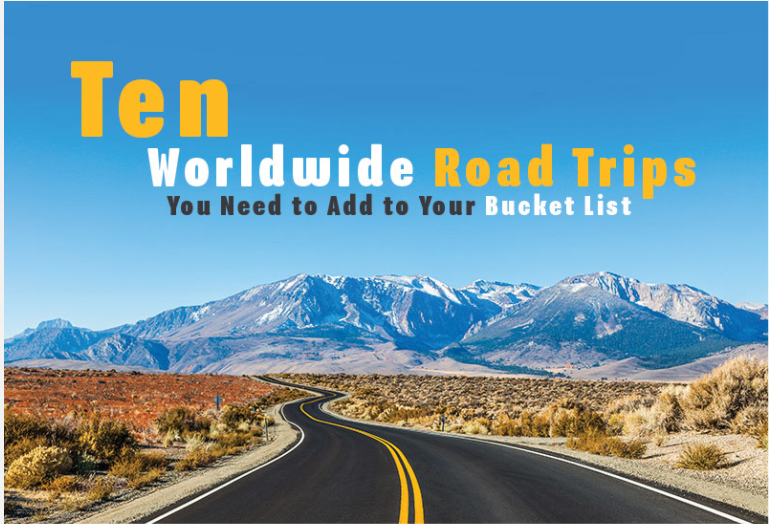
10 Worldwide Road Trips You Need to Add to Your Bucket List [Infographic]

10 Worldwide Road Trips You Need to Add to Your Bucket List

When planning a holiday, the majority of us like to give the trip a fair bit of structure. For most, the break will be no more than two weeks, so it’s important that from the moment we land that we get the most out of the trip.

Obviously, one of the most important things to consider throughout a holiday is travel. Depending on where you’re planning on visiting, some options will be much more viable than others.

For example, if you fancy a weekend break in the beautiful city of Amsterdam, a car is largely pointless. This is because the city is largely car free due to the number of canals. Instead, the majority of locals tend to use bicycles.

Just take a look at this post from Amsterdam Mamas which explains it in more detail.

However, there are other locations when driving is pretty much the best and only way to truly enjoy the holiday.

For example, one of the most beautiful places to visit in Europe is the Amalfi Coast of Italy. This stunning stretch of coastline is definitely a must-see for many and is probably best experienced by driving along its coastal road.

In fact, there are plenty of amazing holidays where a car is totally essential to the experience. A number of great examples of this can be seen in an infographic from globehunters.com.

It’s called ‘10 Worldwide Road Trips You Need To Add To Your Bucket List’ and you can take a look at it below.

This infographic covers brilliant stretches of road which everyone should endeavour to experience.

For example, easily one of the most famous in the world is Route 66. The former main link between Chicago and California stretches a mammoth 2,451 miles and covers some of the most stunning landscapes in North America.

What Does Breakfast Look Like Around The World [Infographic]

While every meal of the day is important to helping healthy, one which is often held above the rest is breakfast.

This is so important because it not only provides us with vital fuel for the day but also kick starts our metabolism.

Studies have also linked the meal to better memory, concentration as well as lowering the chances of heart disease and diabetes. You can read plenty more about the importance of your morning meal in this from Web MD.

Healthy & Unhealthy Choices

Obviously, simply eating breakfast doesn’t make it healthy. There are lots of unhealthy options on the modern day morning meal table, so it’s important to know what you are eating.

Just take a look at this helpful post from The Daily Meal which lists some of the healthiest and unhealthiest breakfast cereals.

If you are a particular lover of the morning meal, something which you might have noticed when on holiday is how much it differs.

In hotels, you might be slightly shielded from this, by being offered the ‘continental’ breakfast. However, depending on where you are visiting, there may well be a number of other delicious local options available.

Now you can discover lots of wonderful options from around the world thanks to a new infographic from citybaseapartments.com

It’s called ‘What Does Breakfast Look Like Around The World’ and you can take a look at it below.

By scrolling through the many different options you’ll see just how much breakfast varies around the globe.

There may well be a number you’re aware of, such as the Full English or the Australian Vegemite on toast. However, there are almost certainly plenty you haven’t sampled.

For example, the typical Japanese breakfast usually includes fish, fermented soybeans and tofu. This is certainly a morning meal which seems a million miles away from sausages, beans and eggs.

So, if you’re sick of having the same old breakfast, why not take a look what else you could be enjoying below?

breakfast

The Best Alternative Attractions In Europe [Infographic]


The Best Alternative Attractions In Europe

When it comes to sightseeing, it’s fair to say that there are few continents better to visit than Europe.

Unlike destinations such as the USA, the ‘Old World’ is steeped in thousands of years of varying civilisations, empires and different cultures.

On top of this, there’s also plenty of modern history, meaning there really is a wealth of tourist attractions.

Europe’s Wealth of Tourist Attractions

Just take a look at this list of the most visited European tourist attractions from Travel & Leisure. As you can see, there’s something wonderful for everyone.

There’s no denying that it’s fantastic visiting the Eiffel Tower or The Colosseum. However, it’s also true that cities such as Paris and Rome have a whole lot more to offer.

These are certainly the sort of destinations which you can revisit time and time again. However, no matter how great the Eiffel Tower might be, there’s a good chance you’ll want to see something else the second time around.

The Best Alternative Attractions In Europe

If you would prefer seeing something equally great but slightly less well known, then you’re in luck!
Thanks to a new infographic from citybaseapartments.com you can check out different tourist attractions from all of Europe big cities.

It’s called ‘The Best Alternative Attractions In Europe’ and you can take a look at the bottom of this post.

It takes one of the most prominent attractions of one particular European city and then offers up an alternative.

One of the best examples presented in the infographic is Paris. While the Eiffel Tower offers some truly sublime views of the French capital, there is clearly one amazing landmark missing from this view, the Eiffel Tower!

Instead, it suggests that you climb up to the Observatoire Panoramique De La Tour Montparnasse. This is on the 59th floor of France’s tallest skyscraper and offers some truly stunning views of the capital, including the Eiffel Tower.

Attractions In Europe

The Ultimate Guide to Ethical Travel [Infographic]

The ultimate guide to ethical travel

Let’s face it, we all love nothing more than escaping the daily grind to some exotic part of the world for a couple of weeks or exploration and relaxation.

One of the biggest parts of travel is experiencing a new culture. This comes in many forms, from eating the local cuisine to attending local attractions and events unique to that part of the world.

However, as travelling the world becomes a more plausible option for more holidaymakers each year, new moral challenges have arisen.

Ethical Travel Awareness

For example, for many years, one of the biggest attractions in the USA for tourists was Seaworld. At these parks, you can see performances from a variety of creatures, including Killer Whales.

However, following a number of revealing stories about the terrible ways in which some of the sea creatures were being kept, people began boycotting the theme parks.

Take a quick look at this post from Collective Evolution from 2015 which discusses this in much more detail.

There are many more moral and ethical things to take into consideration if you are planning on travelling abroad. The difficulty is that there isn’t always a simple answer as to whether you should take part.

The Ultimate Guide To Ethical Travel

Thankfully, a new infographic from globehunters.com looks to lend a helping hand. It’s called ‘The Ultimate Guide To Ethical Travel’.

This great infographic runs through a number of scenarios many tourists may encounter. It then offers up a couple of discussion points and a verdict on whether it would be a good idea or not.

For example, it discusses whether riding elephants is ok or not. This is something which has become big business in South East Asia off the back of Western tourists.

Take a look at what advice is on offer about riding elephants as well as a number of other ethical quandaries in the infographic below.

Ethical Travel