All posts by Len Rutledge

Len Rutledge has been travel writing for 40 years. During that time he has written thousands of newspaper articles, numerous magazine pieces, more than a thousand web reviews and around 35 travel guide books. He has worked with Pelican Publishing, Viking Penguin, Berlitz, the Rough Guide, and the Nile Guide amongst others. Along the way, he has started a newspaper, a travel magazine, a Visitor and TV Guide, and completed a PhD in tourism. His travels have taken him to more than 100 countries and his writings have collected a PATA award, an ASEAN award, an IgoUgo Hall of Fame award, and other recognition. He is the author of the Experience Guidebook series which currently includes Experience Thailand, Experience Norway, Experience Northern Italy, Experience Myanmar, Experience Istanbul, Experience Singapore, Experience Melbourne, and Experience Ireland. They are available as ebooks or paperbacks from amazon.com

There is Much to See in Oslo

Norway’s capital is a compact city with much to see. There are some wonderful museums, large parks, great restaurants and interesting nightlife. Here are some suggestions on things to see.

Main street

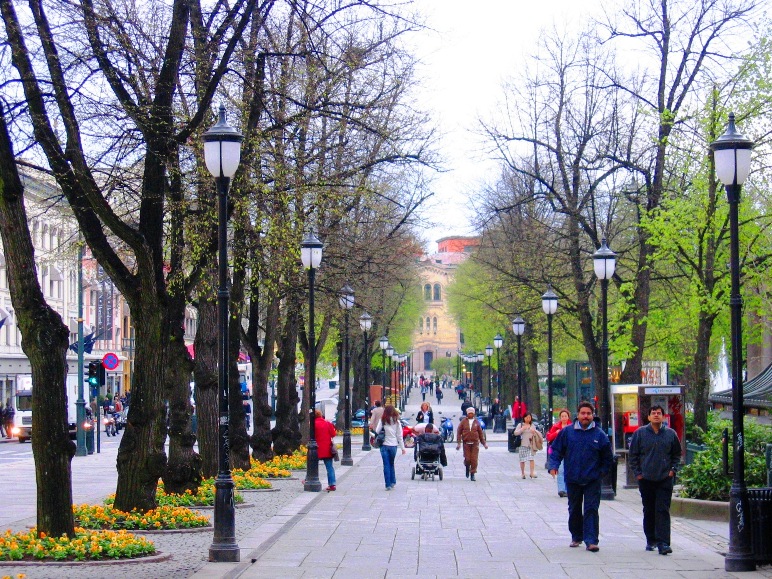
When we walk down the main street of Oslo, we feel at ease. There is no mad traffic, the airy streets and pleasant squares have a comfortable feel, and restaurants and cafes spill out onto the footpaths welcoming us to stay. It would be hard to find a significant capital city with a more good-natured feel.
Main street

The city centre has remained surprisingly compact and the main thoroughfare – Karl Johans gate – is a good reference point as it starts at the main railway station and ends at the royal palace. It is the location for the city’s parades, and the site of a seasonal ice-skating rink. The street is bustling with restaurants and stores that make for excellent people watching and window-shopping.

Royal Palace

The Royal Palace stands without walls, and reflects Norwegian openness and general safety. It is built in Neo-Classical style with a facade of stuccoed brick. The building has two wings and is three storeys high. The building was commissioned by Karl XIV Johan in the early 19th century but he died before it was completed. A statue of the king on horseback is in the open space in front of the palace.

Royal Palace

This is where the daily work of the monarchy is conducted and where the King and Queen live. It is where the King presides over the Council of State, grants audiences and holds official dinners. Foreign heads of state who visit Oslo generally stay at the Palace and most of the members of the Royal Court have their workplace here.

Folk Museum

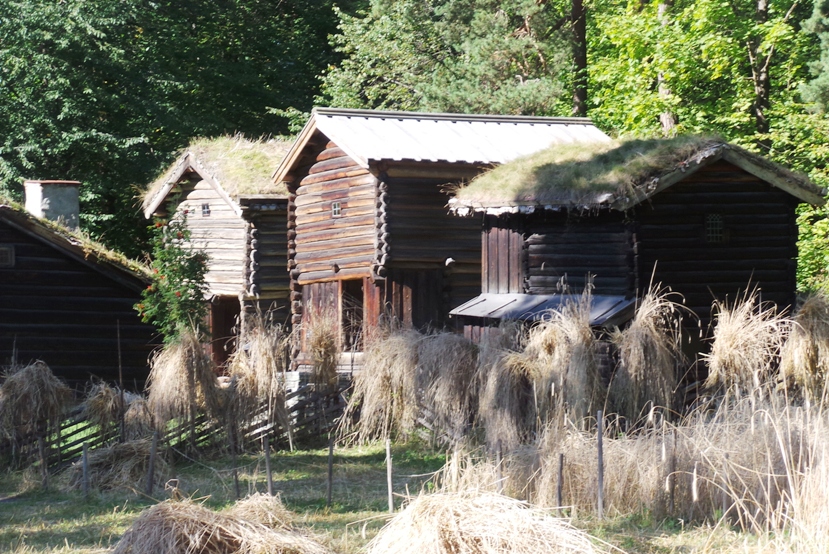
The Norwegian Folk Museum combines indoor displays with a collection of 160 reassembled buildings from around the country making it Europe’s oldest and largest open-air museum. The oldest two buildings are the shingle-covered Gol stave church and a house from Rauland, both from the thirteenth century.
U

In summer, costumed guides roam the site demonstrating traditional skills such as spinning, carving, dancing and horn blowing and this adds considerably to its appeal. An unexpected feature is an apartment building with exhibits and interiors representing different time periods during the past 130 years. Both the buildings and the indoor exhibits which cover furniture, clothing, tapestries, rose-painting, carving, farming implements and the Sámi population are interesting.

Viking Ship Museum

The Viking Ship Museum is a five-minute walk away. Here a trio of 9th-century Viking ships are on display in a specially constructed building which has viewing platforms to let you see into the ships. They are the best-preserved Viking ships in the world.

Two of the ships – the Oseberg ship and Gokstad ship -are in remarkably good condition and there is also a display of the treasures that were buried with them. As burial ships, they were equipped with unique treasures such as wagons, horses and textiles. Few examples exist elsewhere as they are seldom preserved from the Viking age.
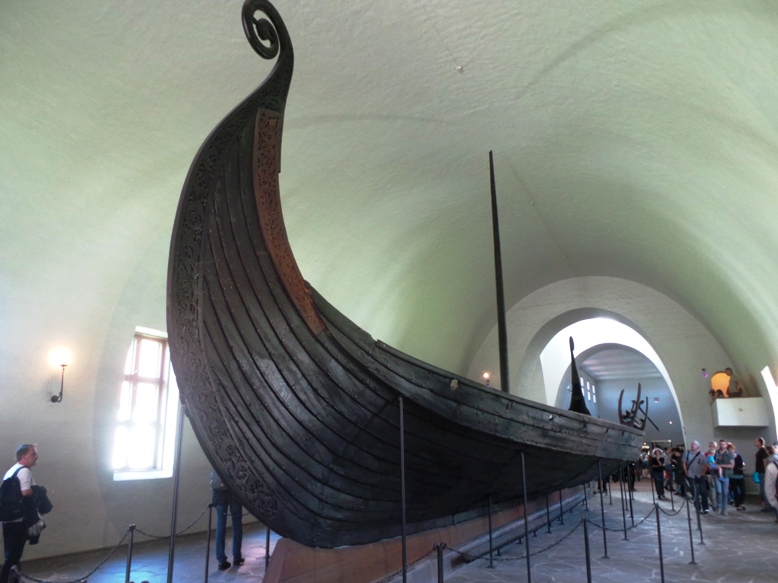
Viking Ship Museum (2)

The graves also contained jewellery, weapons, tools and household goods. I now see the Vikings in a new light – sure there was rape and plunder but there was also domestic sophistication. The museum was constructed over a long period starting in 1913 and it was not finally completed until 1957. It is the work of Amstein Arneberg a highly renowned Norwegian architect who also designed the Oslo City Hall.

Fram Museum

The Fram Museum displays the vessel that took explorer Roald Amundsen to within striking distance of both the South and North Poles. Fram is claimed to be the strongest vessel in the world, and the surface vessel that has been the farthest both to the north and south of the globe. It was launched in 1892. My wife and I clamour all over the boat and see the cramped living quarters that the crew endured.

Fram (1)

These explorers were undoubtedly strong men and the conditions they experienced were tough. I certainly would not have volunteered. Three galleries run along the museum’s walls displaying items taken on the voyages and detailing the route and conditions encountered by the intrepid explorers. There is also a representative selection of stuffed animals from the polar region which may interest children.

Sculpture Park

Oslo’s most popular attraction – Vigeland Sculpture Park – is the world’s largest sculpture park made by a single artist and is open to visitors all year round. There are more than 200 sculptures in bronze, granite and wrought iron.

The sculpture park is within a large green area called Frogner Park. Fifty eight of the park’s sculptures, including the popular Angry Boy are arranged along what is called The Bridge, the main connection between the Main Gate and the Fountain.

Sculpture Park (2)

The Fountain is one of the Park’s showpieces and is adorned with 60 statues portraying children and skeletons amid giant trees. The park’s most popular attraction is The Monolith which is situated at the highest point. This towers upwards and is composed of 121 human figures climbing towards the sky. I find the Park has enormous appeal and I urge everyone to visit whether you are into art or not.

Nobel Peace Centre

In Oslo’s old railway station is the Noble Peace Centre which celebrates and publicizes the Noble Peace Prize. The building’s ground floor features a series of displays about conflict and peace while upstairs there is a display on the Nobel family and the ‘Nobel Fiels’ where all past holders of the peace prize have a light bulb on a flimsy stalk in a striking display.

U

Choose a central hotel for your Bangkok visit

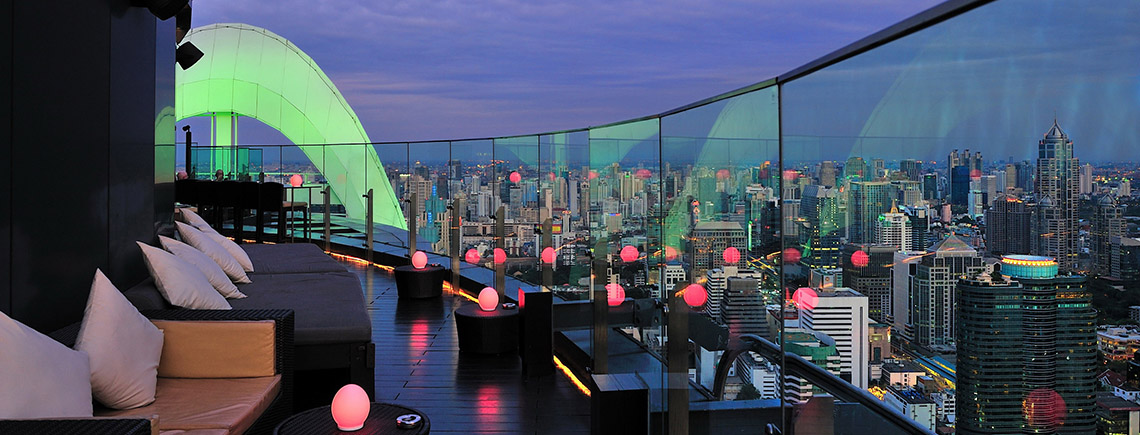
Bangkok has over 300 hotels in the central area so it can be extremely difficult to decide on where to stay in this sprawling city. A recent trip introduced me to the Ratchaprasong Square Trade Association which I discovered has eight major central city hotels as members.

The location is the most central in Bangkok so all the major shopping centres, some of the major tourist attractions, and many restaurants and night-time venues are walkable or within easy reach by the BTS Skytrain system. It seems a logical choice for everyone.

While the member hotels are all four or five-star properties, rates are attractive compared with many other cities and low transport costs help further. It is possible to walk between all of the hotels so it is possible to stay in one but dine and use other facilities in some of the others. Here is a quick run-down of what I found.

St Regis Bangkok

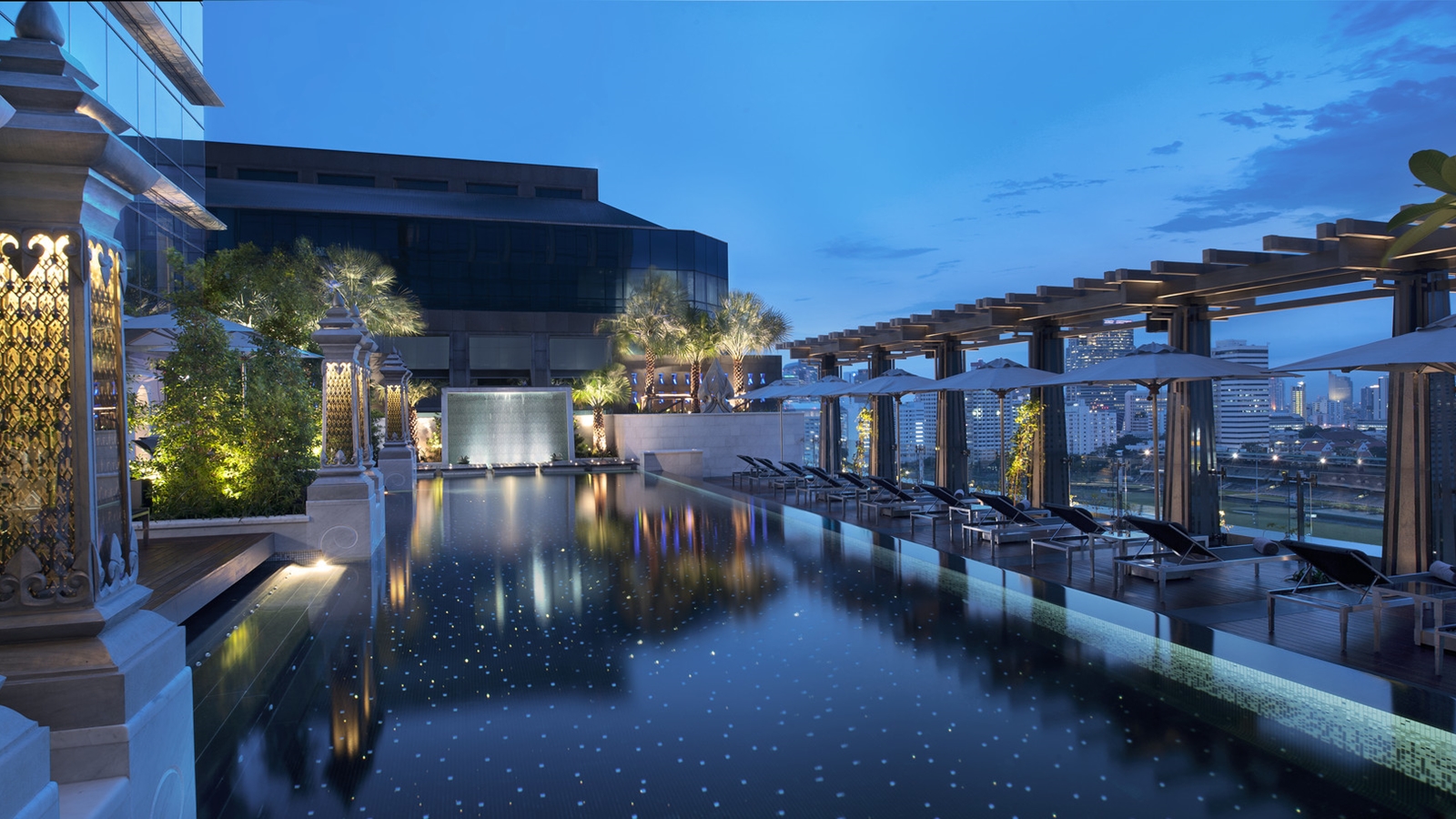
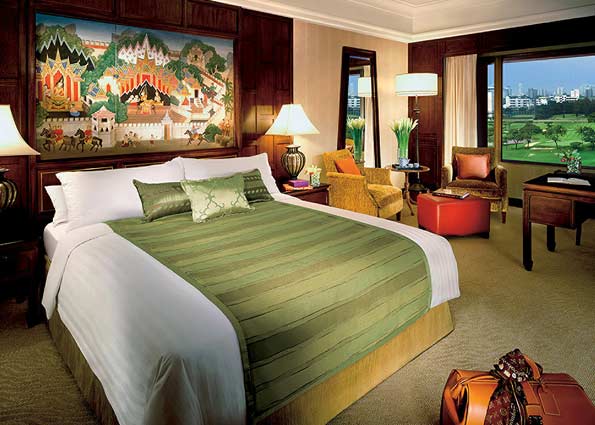
This is one of the newest five-star resorts. With 176 stunning large rooms and 51 suites, this is a great hotel. I stayed here for three nights and it was very clear to me that the hotel is very serious in providing what it calls the ‘art of living experience’ with an exclusive spa, well-appointed exercise room, outdoor swimming pool and contemporary poolside cafe. There is 24-hour butler service to every room which includes free pressing of two items per day amongst a host of services.

St Regis pool

The hotel has a large lounge and the Jojo Restaurant on the ground floor then reception, another lounge and the all-day VIU Restaurant are on floor 12. Rooms are above here so all provide good views, many over the Royal Bangkok Sports Club’s green fields. The Jojo Restaurant offers Italian cuisine, Decanter has a gentlemen’s club ambience and a vast wine cellar, while the Drawing Room has a traditional Afternoon Tea.

The Anantara Siam Bangkok Hotel

The 354 rooms and suites at this five-star hotel are delightful and I have considered this a favourite for nearly 30 years. There is a choice of award-winning restaurants and what is probably Bangkok’s best Sunday brunch. The spa, outdoor swimming pool and 24-hour health club are all superb while the cooking school is a must for culinary enthusiasts.

Anantara Bangkok Siam bedroom - Copy

Everyone seems to have a favourite restaurant here. Mine is Spice Market which is designed to resemble a charming old Thai spice shop and has fine Thai cuisine to match. I’m sure others like Madison, a contemporary steakhouse; Shintaro, a lovely Japanese restaurant; or Biscotti with its Italian offerings. Several other outlets offer casual and light bites.

Grand Hyatt Erawan Bangkok

This is just metres away and it is another fine five-star property with 380 guest rooms. It is directly linked to a Skytrain station so going further afield is easy. There is plenty to keep you here, however. One is its stunning new i.sawan Residential Spa & Club which has six residential spa cottages, nine treatment bungalows, hair salon, nail bar, health and fitness studios, and a free-form swimming pool.

Grand-Hyatt-Bangkok-Lobby - Copy

Erawan shopping mall is attached to the hotel so there is wide choice and this contains the lovely Erawan Tea Room which is my choice for afternoon tea and Thai cuisine. Tables Grill offers meat and seafood dishes, The Dining Room has all-day buffet dining while Spasso is an Italian restaurant and late night entertainment hot spot.

The Renaissance Bangkok Ratchaprasong Hotel

This has 333 guestrooms and suites and the mandatory spa, swimming pool and 24-hour fitness centre all within 160 metres of Chidlom Skytrain Station and 200 metres from Erawan Shrine. Guests can relax with a soothing massage at Quan Spa or in the steam rooms. The hotel also offers free fitness lessons at its gym, and an indoor pool.

Renaissance Fei Ya  - Copy

All-day dining with international dishes is available in the stylish environment of Flavours Restaurant. Fei Ya offers fine Chinese dishes while La Tavola Restaurant has a wine bar. The R Bar transforms during the day from Italian coffee and Danish muffins in the morning to tapas and fine wines as you groove to the latest beats with the resident DJ in the evening.

The Intercontinental Bangkok

Another 5-star hotel is just across the road. It has 381 luxury guest rooms, including Club InterContinental rooms and a range of suites. The hotel has an ambience of understated luxury and this extends to the rooftop swimming pool, the many restaurants and bars, and to the Spa Intercontinental where I recently experienced a relaxing treatment to die for.

Intercontinental Summer Palace - Copy

Restaurant choices include the Fireplace Grill which serves prime steaks and fresh seafood; the Grossi Trattoria with Italian and Australian influences; Espresso which serves dishes from around the world; and Summer Palace with Cantonese cuisine and daily Dim Sum lunch.

Centara Grand at Centralworld

The largest of the hotels in this area soars almost 200 metres into the sky with 505 5-star rooms over 55 floors. The rooms have state-of-the-art equipment and the nine World Executive Club floors offer even more. Facilities include an outdoor swimming pool, fitness centre with aerobic studio, sauna, tennis courts and Spa Cenvaree. There is a steak restaurant, an al fresco bistro and bar, Ginger which serves Japanese and Chinese cuisine, and a 24-hour world dining restaurant.

centara - Copy

Centara Grand is part of Centralworld, Bangkok’s first totally integrated hotel, convention venue and mega shopping centre. With over 500 stores, 100 restaurants, 15 cinemas and much more in the complex it really is a one-stop destination. You may never leave the complex.

The Holiday Inn Bangkok

Holiday Inn-Bangkok - Copy

This slightly less luxurious 4-star property with 379 rooms in two towers provides an attractive alternative. You can have the same location benefits at a cheaper price. The hotel has a fitness centre, a pool, sauna, children’s playground, and three dining options. The hotel has a ballroom which can seat up to 900 theatre style.

Hotel Novotel Bangkok Platinum Pratunam

Novotel - Copy

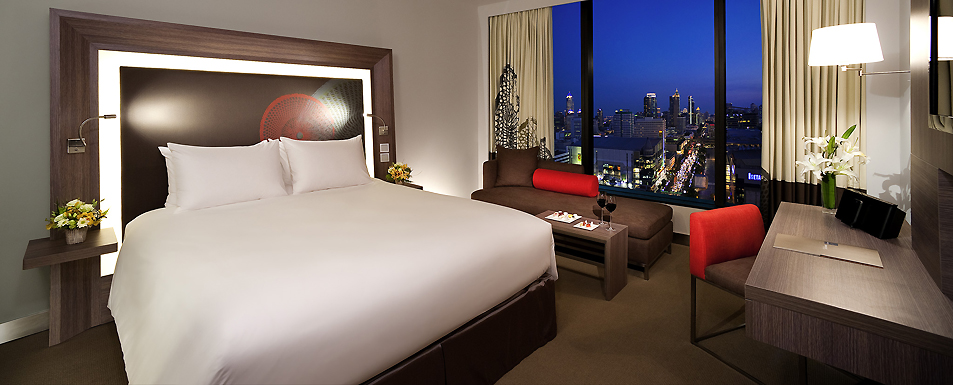
This is a very modern 283 room 4-star family-friendly hotel in the heart of the fashion district, ideally located above Platinum Mall. The hotel has a restaurant and two bars but these are complemented by many others in the mall. There is an outdoor pool, fitness centre and Turkish bath.

The amazing Thai capital

Bangkok has great attractions, lovely people, some of the world’s best shopping, and a whole cultural experience to enjoy. For me these far outweigh the problems of pollution, overcrowding, horrendous traffic and lack of green spaces seen in all megacities. Just look at a few aspects of the city.

Palaces and Wats (temples).

The Grand Palace must be one of the great architectural complexes in the world. From certain angles, this represents all that is best about Thailand and Thai culture. It is a sight guaranteed to impress the most blasé traveller. The whole complex just assaults the senses from all sides.

Grand Palace-4

Wat Po is the oldest and largest temple in Bangkok and is often called Thailand’s first university. The main attraction is the gigantic 46-metre long reclining Buddha, entirely covered in gold leaf but there is much more to see.

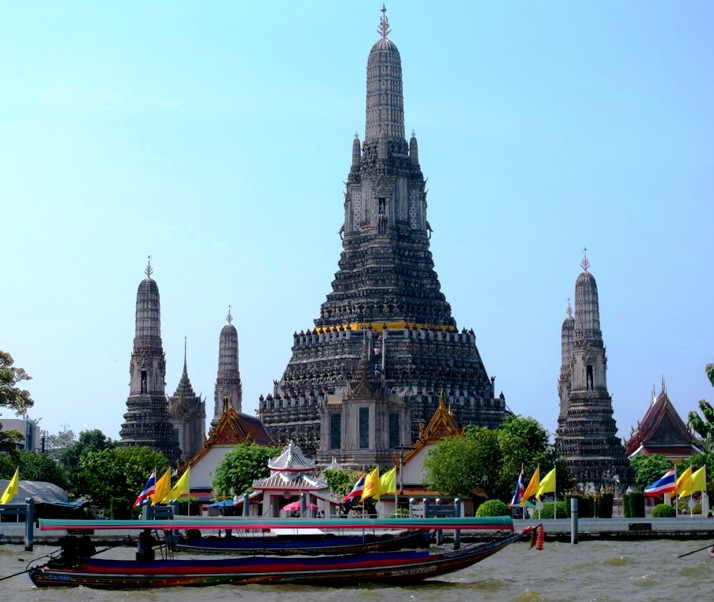
There are over 400 wats in Bangkok and Wat Arun (Temple of the Dawn) is one of my favourites. It sits beside the Chao Phraya River and is particularly spectacular in the early morning.

Wat Aroon-1

Don’t miss a visit to Vimanmek Palace which is billed as the world’s largest golden teak building. Also worth visiting is Suan Pakkad Palace, where five traditional Thai houses overlooking a lovely garden display a large collection of Thai arts and antiques.

Food.

Thai food has become one of the most popular cuisines in the world. If you enjoy it in your home country, you will love it in Bangkok. Contrary to popular opinion, Thai food is not always hot. In fact some of the dishes I most enjoy are those where the subtle flavours of the herbs and spices slowly fill the mouth for a special experience.

I love sitting on a rickety stool on a street footpath watching the passing throng just as much as I do sitting in a fine-dining restaurant. A meal on the footpath will cost less than $2 while in the restaurant it may be $30.

The food courts in the shopping malls are also fun. You can wander around and select from stalls selling all sorts of food. If there are several of you, a gourmet meal to share can be easily assembled.

C and C

For a different experience, visit Cabbages and Condoms in Sukhumvit Soi 14. This is run by Thailand’s Population and Community Development Association which believes in getting the safe sex message out to all customers. The food is good and the setting sublime despite its popularity with tourists.

Shopping.

Bangkok has Asia’s best shopping. The combination of markets, thousands of small retailers, huge department stores and gigantic malls offers variety seen in few cities around the world. Add wonderful Thai handicrafts, world famous Thai silk, smart fashion and great prices and it is hard to beat.

Outdoor market

I recommend you start at Chatuchak Weekend Market perhaps the largest weekend market in the world. On a typical weekend, more than 200,000 visitors come here to sift through the goods on offer. You will be amazed at the sheer variety of merchandise.

If you are looking for an up-market shopping experience, one of the huge central city megamalls is the answer. Those around Siam Square have long been favourites of locals and visitors but several new malls have opened recently which challenge this area.

The Cultural Experience.

Walk down the side streets and you will find a wonderful city. You will see life on the streets, spectacular little temples, street eateries, and Thais going about their normal business. It’s available to every visitor and it’s free.

Take a ferry along the river and see a different side of the city. For less than a dollar, you can go several kilometres, calling in on floating piers, weaving in and out of cross-river traffic and enjoying a cool breeze on the face.

IMG_0127

There are also plenty of deeper experiences. I recently discovered the Wat Mahadhatu Meditation School. You can learn meditation from the monks by turning up to the daily classes.

Thai massage is something that many non-Thais find fascinating. I usually manage at least one massage in Bangkok but enthusiasts can enrol in the Wat Po Massage School and learn all the finer points of this art form from the experts.

www.LenRutledge.com

All photographs by Phensri Rutledge.

Impressive New Delhi

The noise from honking horns, market sellers and mosques and temples is relentless. The smells from flowers, incense, food and open sewers are overwhelming. The colour from saris, spices and sparkling jewellery is intense. Welcome to Delhi, India’s grand capital.

New Delhi is a city of enormous contrasts where poverty sits beside wealth, beauty intermingles with filth, and structure and chaos compete for supremacy. It will dazzle all your senses and cause you heart-ache at the same time.

It can be challenging and charming, overwhelming and stunningly beautiful. The eager friendliness of the people is endearing, and the food is unforgettable but there is likely to be unexpected glitches no matter how much you plan.

New Delhi has some wonderful sights with the following just a sample.

The Red Fort

This was the centre of Mughal India, functioning as both a military fort and palace, at a time when the emperors would ride out into the streets of Old Delhi on elephants in a magnificent display of pomp and power.

Red Fort (3)

Red Fort is protected by a massive 18m-high wall and inside there is some outstanding architecture, shaded pathways, and beautiful gardens. A visit here will last several hours if you want to see all areas.

The Jama Masjid

The largest mosque in India has a courtyard capable of holding 25,000 devotees. It was begun in 1644 and ended up being the final architectural extravagance of Shah Jahan, the Mughal emperor who built the Tāj Mahal and the Red Fort.

Mosque

This is a highly decorative mosque with three gates, four towers and two 40m-high minarets with distinctive strips of red sandstone and white marble. Three black and white marble domes surmount the prayer hall.

One of the main attractions is to climb one of its minarets to the highest level and get a great 360 degrees aerial view of the mosque and the city. The view is worth the climb.

Crafts Museum

The government-run Crafts Museum holds an amazing collection of rare and distinctive craft pieces covering painting, embroidery, textiles, and various crafts of clay, stone and wood.

Craft Museum (7)

The museum also houses a village complex spread over two hectares, with 15 structures representing village dwellings, courtyards and shrines from different states of India, with items of day-to-day life displayed.

The entire village complex is a remnant of a temporary exhibition on the theme of rural India, held in 1972. Several traditional craftsmen can be seen working here and they also sell the crafts they create. There is a shop and a very popular cafe.

Humayan’s Tomb

Further to the south is the tomb of the Mughal Emperor Humayun built in 1569-70. The tomb is a UNESCO World Heritage Site and has undergone extensive restoration in recent years and was spotlessly clean on my last visit. It is a delightful spot. The pathway from the western entrance passes several smaller structures including Isa Khan’s tomb that even pre-dates the main tomb itself.

Humayun's tomb-2

The tomb was commissioned by Humayun’s first wife Bega Begum and was designed by a Persian architect. It was the first structure to use red sandstone on such a large scale. The tomb’s architecture and the attached garden are the best examples in Delhi of the early Mughal style of tomb and it set a precedent for subsequent monumental Mughal buildings.

Qutb Minar

Still further south, the Qutb complex, is even older and it contains many ancient monuments and buildings. It is the said to be the second most visited place in India. This is located in Lalkot, later called Qila Rai Pithora, the first of the seven cities of Delhi, established by a Tomar Rajput ruler.

The original complex contained many ancient Hindu and Jain temples but most were destroyed for material during the construction of the Qubbat-ul-Islam Mosque. This was the first mosque built in Delhi after the Islamic conquest of India and it is now known as the Quwwat-ul-Islam mosque. The mosque consists of a courtyard, cloisters, and a prayer hall.

New Delhi (25)

The best-known structure in the complex is the Qutb Minar, built over many years from 1202. The tapered Qutb Minar is 72.5 metres high and has five distinct storeys. There are 379 steps to the top but there is no access to the public. It is listed as a UNESCO World Heritage Site.

Lotus temple

The Bahá’í Lotus temple was completed in 1986. It is set among lush green landscaped gardens and has won numerous architectural awards. Its unusual lotus shape has made it a major attraction. It was named “The most visited religious building in the world” by Guinness World Records in 2001 and is said to receive more visitors than the Taj Mahal.

Lotus Temple

The temple has 27 free-standing marble clad “petals” arranged in clusters of three to form nine sides. The nine doors of the Lotus Temple open onto a central hall that is capable of holding up to 2,500 people. Light and water are used in place of the thousands of statues and carvings to be found in other temples. At sunset it is a dramatic sight as the white marble is stunning.

You can preview Len’s latest book Experience India’s Gold Triangle

Singapore’s sensational Sentosa

Words: Len Rutledge  Pictures: Phensri Rutledge

Sentosa is a very popular island just south of the main Singapore island. It is visited by some five million people a year. It was first developed about 40 years ago but was often a disappointment to visitors. Now it is coming into its own and I suggest that it is a ‘must-visit’ place to see for all Singapore visitors. There are now sufficient offerings of interest to adults and children to keep everyone amused for a day or two.

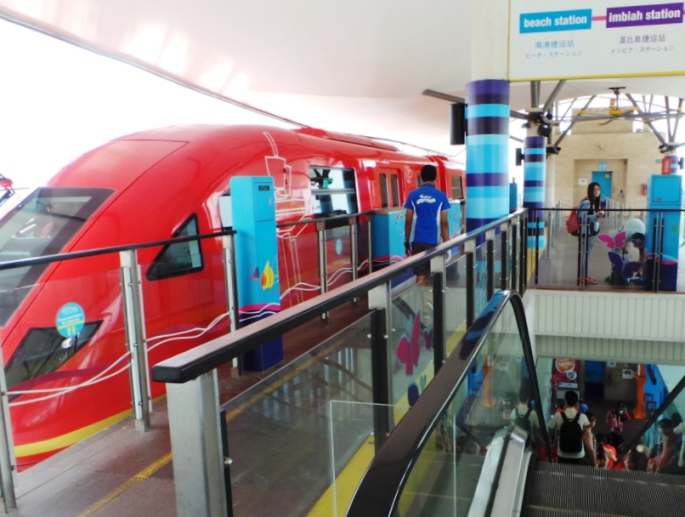
Sentosa Express

There are basically four ways to reach Sentosa Island, the cable car from Mount Faber or Harbourside, the Sentosa Express light rail from VivoCity, the footbridge from near VivoCity, or a taxi from anywhere within Singapore.

Sentosa Island (19)

The Sentosa Express light rail station is on the 3rd floor of the VivoCity shopping mall beside the large food court. You need to buy a ticket which currently costs S$4 round trip. The train operates every 5-8 minutes from 7 a.m. to 11:45 p.m. daily. Once on the island you can walk to many of the attractions but there are also three bus routes and one beach tram route to help you reach some of the more distant attractions.

Sentosa cable car

Sentosa Island (125)

The cable car is the most exciting way to reach Sentosa. It begins at The Jewel Box on Mount Faber which houses a retail shop, the cable car station and five different restaurants and bars. This was constructed with the cable car in 1974. There is also a cable car station in HarbourFront Tower 2 near VivoCity. The current cable car cost is $26 (Adult) and $15 (Child) and while this seems high there is no disputing the fabulous view you get on the ride across to the island.

Beaches

Beach Station is the end of the Sentosa Express light rail system and is a transfer hub for the bus and beach tram services. The beach stretches both east and west from here and you can walk in either direction.

Tanjong Beach and Palawan Beach are to the east. Tanjong Beach is popular for its tranquillity and solitude. The sand is clear, the water at times less so. The Tanjong Beach Club offers seafood from around the globe, tropical fruit cocktails, beach volleyball, a pool and entertainment at night.

sensational Sentosa

Family-friendly Palawan Beach has good sand and interesting shops and eateries. There are wading pools and water fountains for kids to cool off in, an aviary and the Animal & Bird Encounters show.  A suspension bridge links to the Southernmost Point of Continental Asia, a small islet with a viewing deck at the top of the towers which are located there.

Long Siloso Beach stretches to the west of Beach Station. This is claimed to be Singapore’s hippest beach, and on weekends it is alive with people day and night. There are bars, several shopping options, and bistros and restaurants.

Sentosa Island (56)

This is also where you can access the 450 metre Zip-line which travels 75 metres above ground level at speeds of up to 60 km/h, across the jungle, the beach, and the sea.

Merlion Plaza

Merlion Plaza has the Imbiah Sentosa Express station and the centre-point here is a 37-metre tall replica of the Merlion complete with viewing galleries and a souvenir shop. An admission fee applies. This forms a north-south axis through the island. The northern end leads to the Festive Terrace while in the south a winding walkway leads to the beach.

Sentosa Island (176)

Escalators connect to the Imbiah Lookout area where there are several food outlets including Starbucks, The Arches, and Tastes of Singapore.

Images of Singapore

I think Images of Singapore is one of the better attractions in this area. It is an historical museum with exhibits showing the history of Singapore using multi-media displays, multi-screen theatre presentations and wax models. There are numerous exhibitions covering Malay rule, the British period, the Japanese occupation, and early independence under Singapore’s first Prime Minister Lee Kuan Yew.

Sentosa Island (120)

Madame Tussauds Singapore will open late 2014 and will include a boat ride known as ‘The Spirit of Singapore’, featuring iconic local landmarks. The ride will connect the new wax museum to the existing ‘Images of Singapore’ attraction in the same building.

Resorts World Singapore

Resorts World Sentosa has added a number of further attractions to the island. Marine Life Park is claimed to be the world’s largest oceanarium. It consists of several major attractions: S.E.A. Aquarium, the innovative Maritime Experiential Museum where you can experience Singapore’s past as a trading port, Dolphin Island, and Adventure Cove Waterpark.

Then there is the Trick Eye Museum which refers to an art technique that turns two-dimensional paintings into three-dimensional images through the use of optical illusions.

Sentosa Island (209)

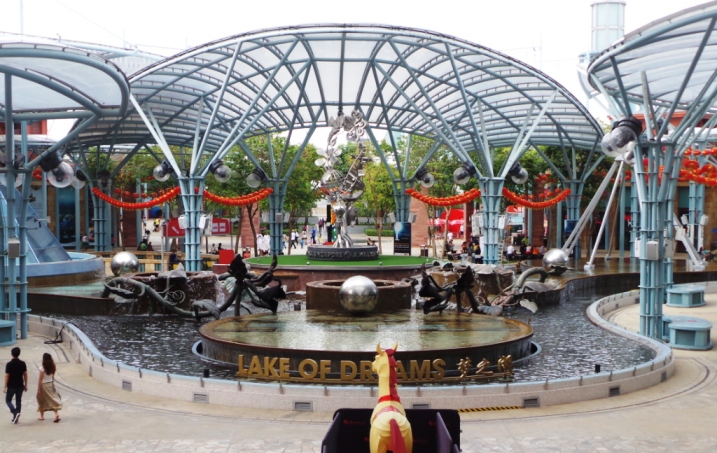
There are two free shows that you should see. Lake of Dreams is a spectacular choreographed display of fire, water and light with a musical score. It is presented every night at 9.30 p.m. at Festive Walk. Crane Dance is produced each night at 9.00 p.m. at the Waterfront.

Universal Studios Singapore

This has become sensational Sentosa biggest attraction. There are seven zones around a lagoon all with roller coasters or other movie-themed attractions. You can purchase your day passes online and save time queuing when you arrive at the park. A one day pass costs S$74 for adults and S$54 for children.

Sentosa Island (229)

On weekends the park can get quite crowded so arriving early is a smart move. Normal operating hours are 10 a.m. to 7 p.m. but they do vary throughout the year.

Other attractions

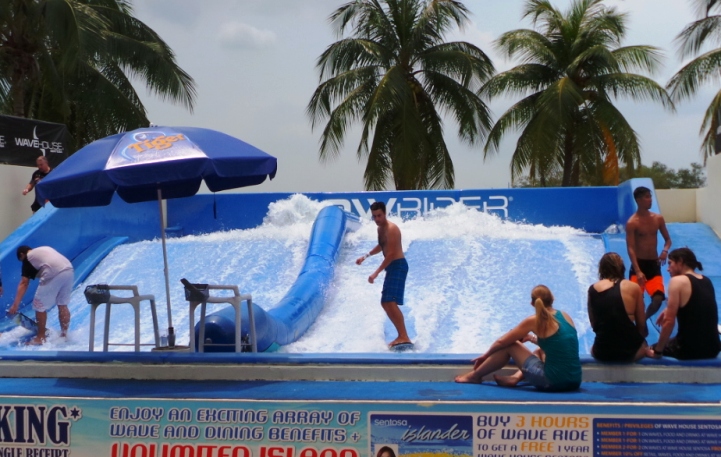
There is much more to Sentosa. Some of the other attractions are Underwater World and Dolphin Lagoon, Fort Siloso, Wavehouse Sentosa, The Tiger Sky Tower, The Butterfly Park and Insect Kingdom, Sentosa Nature Discovery and Nature Walk, Sentosa 4D Adventureland, Skyline Luge Sentosa, and iFly.

Sentosa Island (48)

Wings of Time features dancing water fountains, enhanced pyrotechnic effects, and a live cast. You view the performance from a large open-air viewing gallery. The 25-minute show runs twice nightly every evening at a cost of S$18.

Len Rutledge is the author of Experience Singapore, an ebook available from Amazon at http://www.amazon.com/dp/B00NBJD2XY

Exploring Muscat

It is hot outside. Very hot! I have never experienced 48 degrees Celsius before and I don’t like it. My wife and I are in Muscat the capital of Oman, an Arab state on the southeast coast of the Arabian Peninsula. Despite the heat we are out and about sightseeing because the weather forecast is for this weather to last another two or three months.

Muscat is a spread-out city of mainly low-level white buildings. The port-district with its waterfront road and harbour forms the north-eastern periphery of the city. This is probably the most interesting area for visitors although most of the better accommodation is elsewhere. It is where you find most of the following attractions.

Qasr Al Alam Royal Palace

Muscat

The Qasr Al Alam Palace is the ceremonial palace of His Majesty Sultan Qaboos, ruler of Oman. It was built by Imam Sultan bin Ahmed over 200 years ago and the current Sultan is a direct descendent. The gold and blue palace  was rebuilt as a royal residence in 1972. Visitors are not allowed inside  even though the Sultan normally lives elsewhere in Oman but you are allowed to take photographs from the outside. The Palace is used for official functions and receiving distinguished visitors.

Fort al-Jalal

al-Jalal Fort

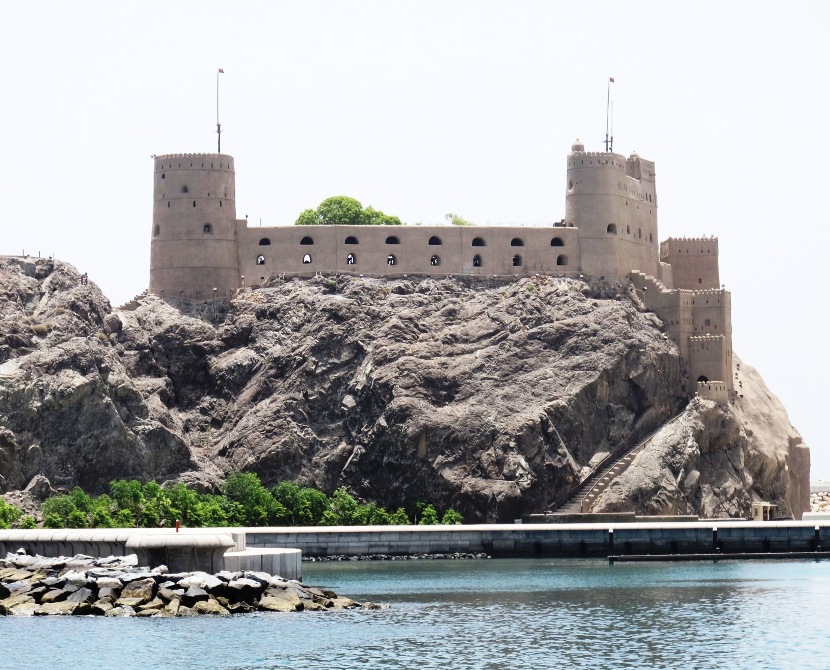
This is a fort in the harbor of the old city. It was built by the Portuguese in the 1580’s to protect the harbor after Muscat had twice been sacked by foreign forces. Until the 1970s it was used as Oman’s main prison, then was restored in 1983 and converted into a private museum of Omani cultural history, that is accessible only to dignitaries. The fort consists of two towers connected by a wall punctuated by holes for cannons. The building is completely isolated and cannot be accessed from its rocky façade; instead there is a small bridge and stairway

Al-Mirani Fort

Al-Mirani Fort

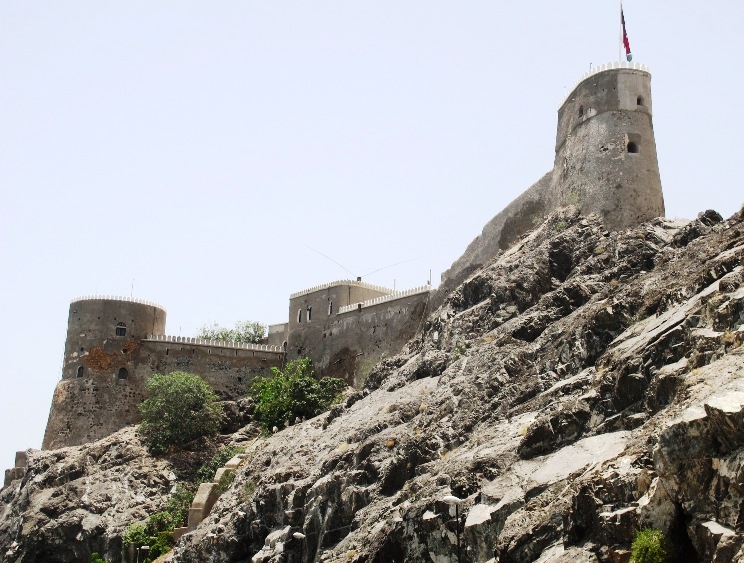
This was built at the same time as Al-Jalali Fort. Looking down over Muscat’s Old Town from its cliff top perch, it is one of Oman’s most striking landmarks, guarding the entrance to Muscat Bay. Unfortunately it is not open to the public but at night the spotlighted citadel appears like a fairy-tale castle. It can be reached by climbing a flight of stairs carved into the rock. There are two circular towers at the ends of the fort and another tower, almost semi-circular in shape, which rises above the rest of the fort and dominates the surrounding landscape.
Mutrah Fort

Mutrah Fort

Overlooking the town is this imposing fort which merges into the cliff on which it sits. The fort was built by the Portuguese during their occupation in the 1580’s.If you are adventurous it is possible to scale the steps that wind up the side of the cliff edge and from the top there are some great views.

Mutrah Corniche

Looking towards the Corniche

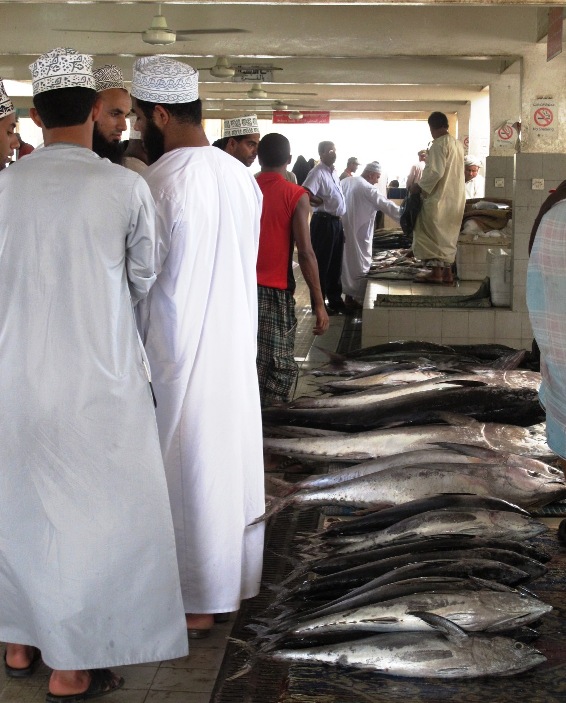
With its promenade, markets, cafés and restaurants, this is one of the highlights of the city. The Corniche stretches for three kilometres overlooking the port and clear blue sea. There are gardens and fountains along its length, while at the western end there is a fruit and vegetable market, a fish market and a fishing dhow port.

Towards the east you can see the Mutrah Fort raised high upon the rocks, explore a maze of narrow streets and traditional souks, or visit the Bait Al Baranda Museum.

Fish market

Fish market

The main fish hall is full of traders in traditional dress selling everything from shell fish to gigantic tuna. The sellers are very friendly and happy to answer questions and they generally allow photos if you ask first. You can see the boats coming in, the fish spread out on benches and in tubs, and people buying  fish for their families.

Mutrah Souq

Market

One of the oldest markets in Oman, dating back about two hundred years is also one of its most interesting. You don’t get a good impression  from the outside, as it is hidden behind other development and stretches from a gate facing the Sea of Oman and Mutrah Corniche, to another gate in the city’s old quarter, but inside it is marvellous.

Mutrah Souq is a modern interpretation of old Eastern markets, with narrow winding roofed alleys and central plazas filled with activity. The souq has many shops selling jewellery, traditional Omani handicrafts, clothes and several cafes selling Omani food at reasonable prices. Some shops accept credit cards.

Sultan Qaboos Grand Mosque

Inside the mosque

This is the third largest mosque in the world and non-Muslims may visit from 8AM to 11AM every day except Friday. Ladies are expected to keep their heads, ankles and wrists covered while visiting the mosque. This is the only attraction in this post which is not in or near the old city.

The whole complex is stunning. Highlights are the gigantic Swarovski crystal chandelier, the enormous hand-made Persian carpet which took 600 women three years to make, and the marble panelling.

Elsewhere in the city sandy Qurum beach is one of Muscat’s most popular beaches and is a good place for a swim or just to relax under the palm trees on a sun-lounger. It is an open public beach with coffee shops and cafes close by for refreshments.

Asian Istanbul

Words: Len Rutledge   Pictures: Phensri Rutledge

Istanbul sprawls between Europe and Asia and this has a profound effect on the city. The experiences here are like no-where else on earth. Where else does the haunting, age-old invocation to worship from a hundred minarets mix easily with clanging tram bells, western rap music and the noise of thousands of hawkers?

Don’t be fooled by the outward appearance of a modern Western city. It is still very much a Middle East Muslim city so non-Muslim visitors should be aware of the customs and traditions associated with that culture and religion particularly when visiting mosques.

You probably see this best of all in the Asian side of the city. This is the least visited part of Istanbul but I strongly recommend that all visitors should go there. There are few grand tourist attractions here but the whole area is different and more conservative compared to much of the European shore.

Getting There

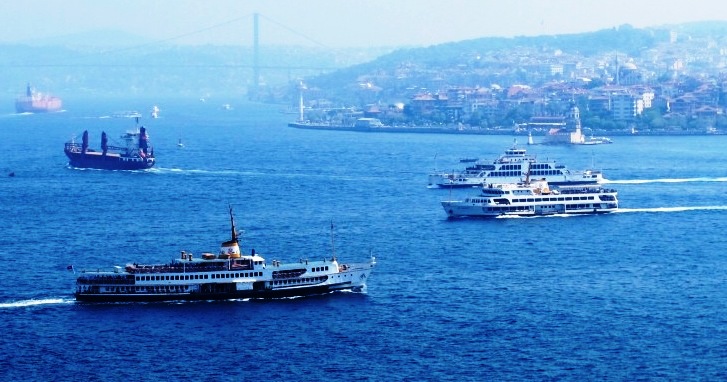
The best way to start exploring the Asian side of Istanbul is by taking a ferry to Kadıköy or Üsküdar. Riding the yellow-striped vapur (local ferry) is a nice experience. I never tire of watching the scene from the back of the boat with a glass of hot tea and Turkish style bagel in hand. There are the seagulls, the call to prayer coming from a distant minaret, and the whistle of other boats to listen to, and just being out on the water produces a feeling of peace.

Chapter 7 ferries

An alternate way is to take the train through the new undersea tunnel which links Europe and Asia. A 14 km section between Kazlıçeşme station on the European side and the Ayrılıkçeşme station on the Asian side went into service in October 2013 as p[art of a major transformation of the suburban railway system.

Kadıköy

Kadıköy is a lively place with a local feel. There are several alternative ways to go once you leave the ferry. One option is to turn right, then start walking the board walk. Thislines the entire neighbourhood, is several kilometres long, and it has some neat bazaars, antique shops, and restaurants along its length.

If you happen to be in town on a Tuesday, then you should head to the famous Tuesday market. Other days you can visit the dailyKadıköy market. It’s a different experience, but not less enjoyable. You will then see the beautifully restored Sureya Opera House with its Neo-classical facade.

Kadıköy is also the site of the 1828 vast, forbidding Selimiye Army Barracks, the site of the Crimean-War-era military hospital and the fascinatingFlorence Nightingale Museum.

Bağdat Caddesi

Undoubtedly the most famous street on the Asian side is Bağdat Caddesi, a brand-name shopping destination. If you thought of Asian Istanbul being behind the times, come here and be amazed. It easily ranks with London, Paris and New York for sophisticated shopping. Bağdat Street is kilometres long and has every shop imaginable. It is especially popular with Istanbul’s rich young people, and they come here to shop, sip a café latte and talk. Along its length are shopping malls, department stores, both local and international cuisine restaurants, cafes and pubs. Stores are open seven days a week.

Üsküdar

This was a Greek colony in the 7th century B.C., and today it is a popular, conservative middle-class area with many mosques, fountains, waterside mansions and palaces. The central business district, which lies adjacent to the harbour, is known for its reasonably priced clothing and shoe stores as well as its many antique shops.

Chapter 4 Uskudar

During Ottoman times, the main Square in Üsküdar was the departure point for the imperial caravan as it set out on its annual pilgrimage to Mecca. The solid marble Ahmet III Fountain in the square was built by the Sultan in 1728 and it displays calligraphic verses written by Ahmet III himself.

The promenade, which stretches from the harbour to Harem, is an especially popular place to enjoy a steaming tea or a fresh fish meal because of its wonderful views across the water to Old Istanbul.

This is also the point from which a shuttle boat goes across to the Maiden Tower. This was first mentioned 2400 years ago but it has been reconstructed and renovated many times since then. It is now open to the public as a bar, cafe and restaurant and it has undoubtedly one of the greatest views in Istanbul. Some readers will remember that the tower appeared in a 1990s James Bond movie.

North along the Bosphorus

A succession of small villages lines the shore. Once you go under the First Bosphorus Bridge which connects Europe and Asia they seem to become prettier. Çengelköyhas huge oak trees with branches shading the waterside cafes and restaurants near the boat landing. The quaint fishing village is dotted with waterfront tea gardens while stately Ottoman era mansions rise up on the hill above.

Kanlica, a pretty village famous throughout Istanbul for its delicious yoghurt sweetened with a variety of toppings including fruit preserve, honey and icing sugar. Kanlica has a scattering of tea gardens along the shoreline and these are a popular place to watch the passing boats or admire the graceful waterfront mansions.

Beykoz is something of a tranquil haven with stunning natural scenery and somewhat dilapidated charm. The area has been settled for a long time and has repeatedly been fought over. Beykoz centre today, however, has a quiet village atmosphere with several Ottoman-era fountains, a few historical buildings and nice eateries.

Grand Palaces

The Asian shore is home to many of the grandest private homes in Istanbul and there are also some palaces opened as museums or hotels.

Beylerbeyi Palace was constructed between 1861 and 1865 and although it’s smaller and less sumptuously decorated than some of the city’s other palaces, it has a lovely position on the Bosphorus. The building has 26 rooms over three floors and there are spectacular Bohemian crystal chandeliers, hand knotted Hereke carpets and Sèvres vases. There is an impressive staircase leading up to the Palace with a pool and fountain and there are terraced gardens with two marble bathing pavilions and the pretty former stables of the Sultan.

Chapter 4 Küçüksu Palace

Küçüksu Palace, a small Rococo summerpalace (1857) over four floors which was used by sultans for short stays. This is another location which has appeared in a James Bond movie. The interior is lavish with Bohemian crystal chandeliers, antique furniture, mahogany floors and lavish carpets. There is a cafe in the grounds with good views of the water.

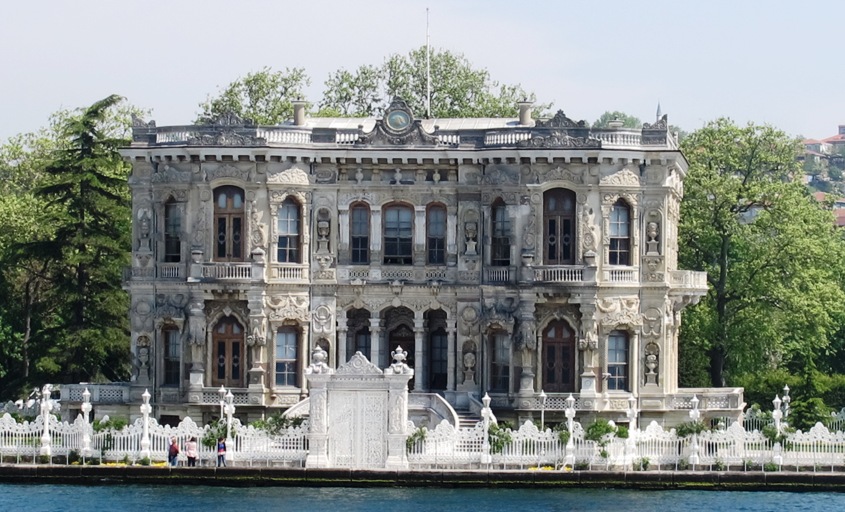
The Khedive Palace, a former residence of the Egyptian Governor high up the hill within a green park, is now a famous city landmark and restaurant, noted for its Sunday brunch. It is a beautiful example of ‘art-nouveau’ architecture and has a stunning marble fountain at its entrance. There is a cafe outside as well and the view and flowers are excellent.

Len Rutledge is the author of Experience Istanbul available as an e-book from Amazon

Historic Istanbul

Istanbul has been a ‘world city’ for millenniums and there is no better place to start than where it all began. Historians tell us that there was a Mycenaean settlement here from around the 13th century BC then Byzas the Megarian founded a Greek settlement here in the 7th century BC and this led to the name Byzantium. The town became an important centre of trade over the next thousand years and in the 4th century AD, Constantine chose it as the site for the new capital of the Roman Empire. Thus Constantinople was born.

Constantinople grew to become a great city, protected by water on three sides and by a great wall on the other. Grand buildings were built and the city remained safe until the beginning of the 13th century when the Christian crusaders sacked and destroyed much of it. The Byzantines finally regained control but the city fell to an Ottoman siege in 1453. The name Istanbul was used in Turkish alongside the original Constantinople, during the period of Ottoman rule. This period saw a rebuilding of the city with new palaces and many mosques and these are today some of the great attractions in the Old City.

Hagia Sophia

This is a magnificent building completed in 537. This was the greatest Christian church in the world until 1453, when it was converted into a mosque. In 1935 it became a museum. It is a place that everyone ‘must visit’ when in Istanbul as it is probably the city’s greatest historic site. It is the interior with its huge dome that visitors find so magnificent. The dome is supported by 40 massive ribs which are held by hidden columns. The effect is stunning and no rival was attempted anywhere in the world for the next thousand years.

Chapter 2 Hagia Sophia

Most of the millions of gold mosaic tiles which covered the church’s interior have recently been restored and the result is something quite spectacular. There are several Islamic touches from the buildings time as a mosque. Most noticeable are the large 19th-century medallions inscribed with gilt Arabic letters with the names of Allah, Mohammed, Ali and Abu Bakr.

Blue Mosque

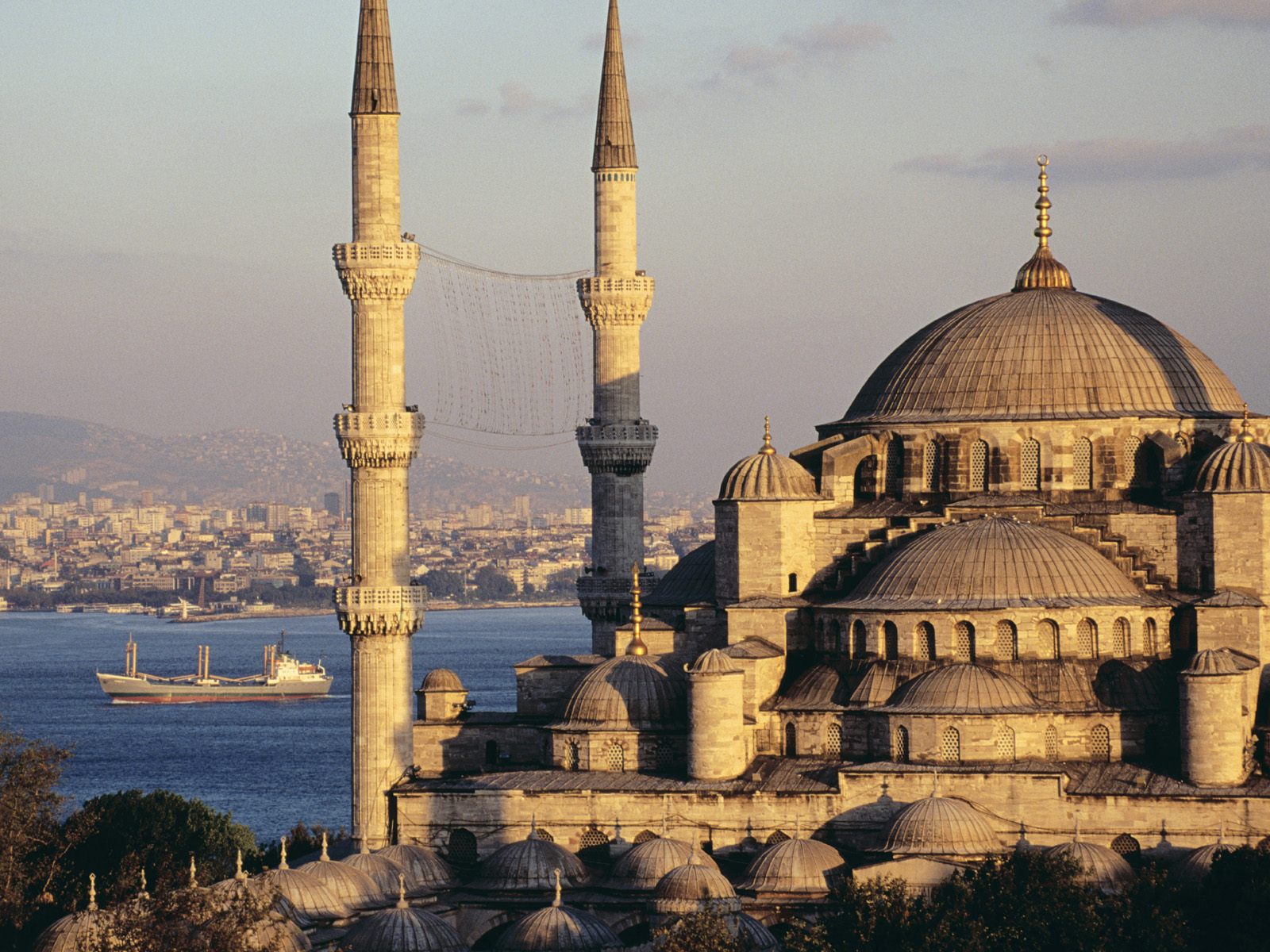
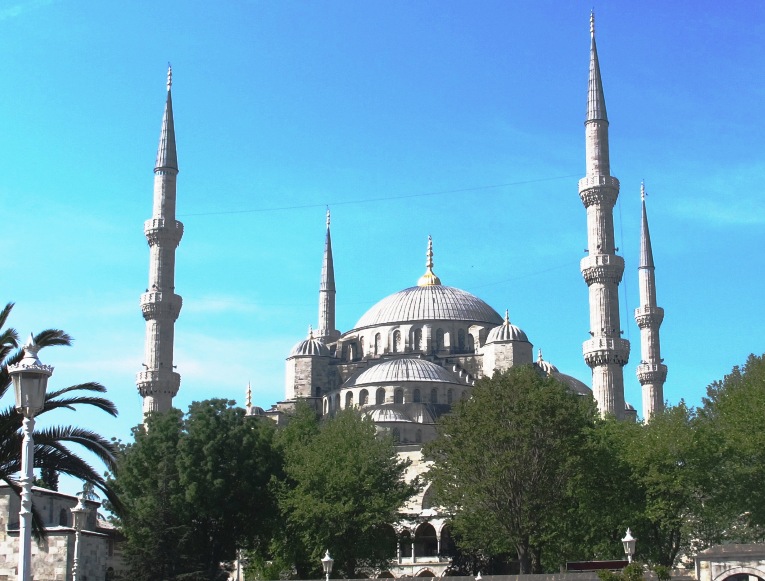
The Sultan Ahmet Camii was built in the 17th century by Sultan Ahmet I and he planned to build something that would surpass the Hagia Sophia. With the instantly recognised exterior and its six minarets he has achieved that but the interior falls far short. The domes billow upward as we enter into the huge courtyard which is the same size as the mosque itself and is surrounded by a portico with thirty small domes. From here the full grandeur of the exterior is revealed.

Chapter 1 Blue Mosque

The interior space is huge but somewhat dark and the four huge pillars which support the dome seem oversized and almost overpowering. The mosque derives its popular name from the twenty thousand or so blue Iznik tiles that adorn its upper interior but many areas are difficult to see properly. The lower walls and arches are covered with arabesque stencilling.

Basilica Cistern

This 1500 year old underground water reservoir is a wonderful escape from the outside heat and we linger here. It was first used to store water for the palace and surrounding buildings but apparently hasn’t been used for this purpose for the past 1000 years. Now the structure has been restored and opened as a unique attraction.

p23

The cistern is huge and the roof is supported by 336 columns arranged in rows. We had been told about two columns supported on upside-down Medusa heads and we find them at the far left-hand corner of the reservoir at the end of one of the raised wooden walkways. There is still a small amount of water in the reservoir and there are carp swimming around. The lighting in nightclub colours throughout the reservoir is very attractive and we end our visit in the candlelit café, where soft lighting and classical music contributes to the overall atmosphere of the place.

Topkapi Palace

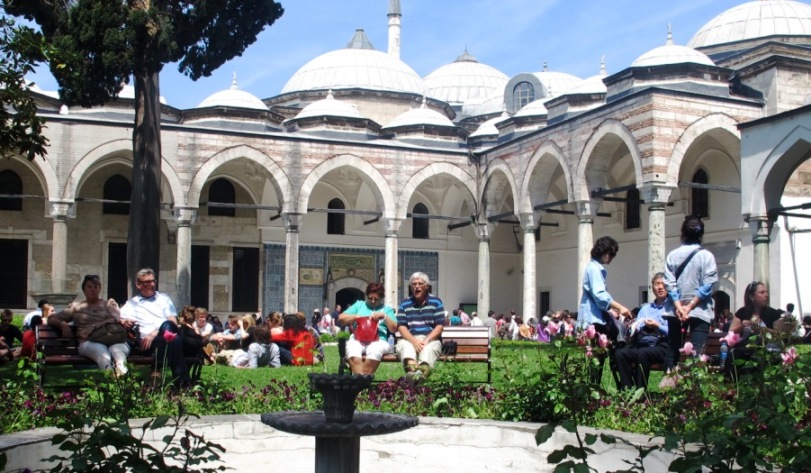
This was the home of the sultan from the 15th to the 19th centuries. The complex is huge and you can’t see it all in less than half a day. The palace is a series of pavilions built around four courtyards. The Imperial Gate behind the Hagia Sophia leads to the first courtyard. This is open to everyone and it is here that we buy tickets for other areas. This courtyard houses the Byzantine Aya Irini, a former Eastern Orthodox church, and an entrance to the Imperial Mint.

Chapter 2 Topkapi Palace

Middle Gate leads to the Second Court where there are some important buildings such as the Palace kitchens, Imperial Council Chamber and Inner Treasury. All these have displays or things worth seeing. This court also provides access to the Harem which some say is the highlight of their palace visit. The sultan was allowed four wives and as many concubines as he could support and you can see a small section of their quarters including some of the dormitories, a bedchamber with a large indoor swimming pool, a charming small hamam, library and a dining room.

Grand Bazaar

The famous Grand Bazaar at first appears chaotic but actually there is some order to it. This has been the heart of the Old City for centuries and you must visit even if you don’t want to shop. There are over 4000 shops, 3000 different traders, several kilometres of covered lanes, and mosques, banks, restaurants and workshops. Construction started in 1456 and repairs, expansion, and reconstruction have continued to the present day.

Chapter 2 Grand Bazaar

There are many opinions about the Grand Bazaar but a visit can be very enjoyable. Some say it is a tourist trap while others swear that many locals shop here all the time. Probably both are correct. Spend some time looking at the array of goods, or searching out the little cafes that hideaway among the shops. The architecture, colour and the tea men who run around with small glasses of hot tea are fascinating.

Valens Aqueduct

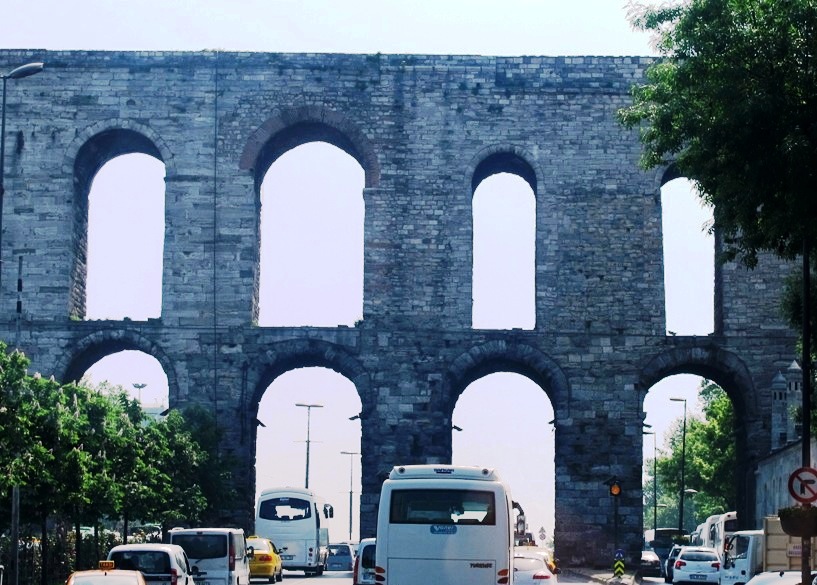
Chapter 2 Valens

Probably nothing says that Istanbul was once a Roman city better than this. Only a small section of the original now remains but it is still an impressive sight. This was part of the major water supply system for Constantinople which at one time formed a 250 km network of water supply canals and aqueducts. The surviving section is just under a kilometre long as it crosses the small valley between Istanbul University and the Fatih Mosque. The most impressive view is where the wide Atatürk Bulvarı road passes under its arches but we are fascinated by the remains further to the east where it is incorporated into some old buildings.

Len Rutledge is the author of Experience Istanbul available as e-book from amazon at http://www.amazon.com/dp/B00IR1X5K6

Inspiring Inle Lake

Words: Len Rutledge   Pictures: Phensri Rutledge

Everyone visiting Inle Lake in Myanmar’s hilly north-east has an image in their mind of an Intha fisherman rowing with one leg at the stern of a flat-bottomed canoe, past a backdrop of mist-shrouded mountains. Fortunately most leave having seen their dream. With its stilted villages built over the water, ancient stupa complexes and a backdrop of green hills, Inle is the top attraction of Shan State and it has become one of Myanmar’s most visited tourist areas. There are flights from Yangon, Mandalay and Bagan to little Heho airport which at times seems overwhelmed by the volume of travellers.

Nyaung Shwe

This is the largest town near the lake but many visitors prefer to stay at one of the small hotels, guest houses or resorts around the lake. Even if you do this, don’t overlook the town. The busy Mingalar Market is in the northern part of the town and this sells a range of goods, mainly in the morning.

Inlay Lake893

A little way outside the town, is the teakwood Shwe Yawnghwe Monastery. The monastery has an ordination hall with unique oval windows and this has become a tourist attraction because of the opportunity to photograph young monks standing behind these.

Getting Around

Getting around

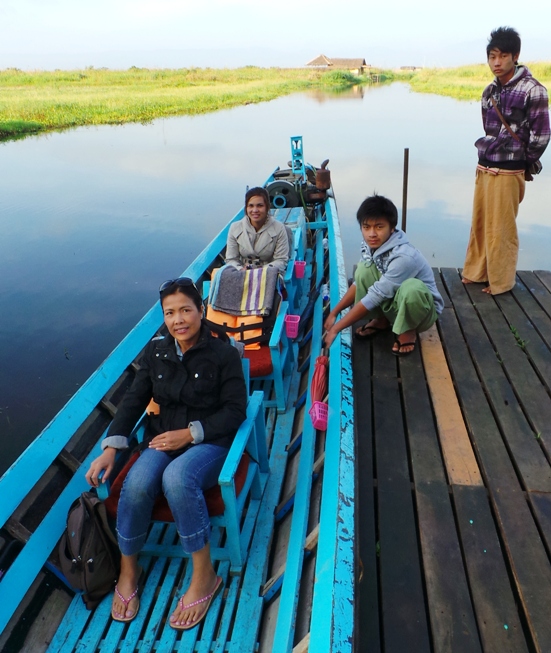
To reach most of the lakeside accommodation you need to transfer to a long-tail boat in Nyaung Shwe for a ride first down a wide canal, and then across Inle Lake itself. You will be pleased to find that the high-powered boats for tourists have padded seats, umbrellas and life jackets. The locals are not so lucky and we saw many boats that seemed well overloaded.

Floating gardens

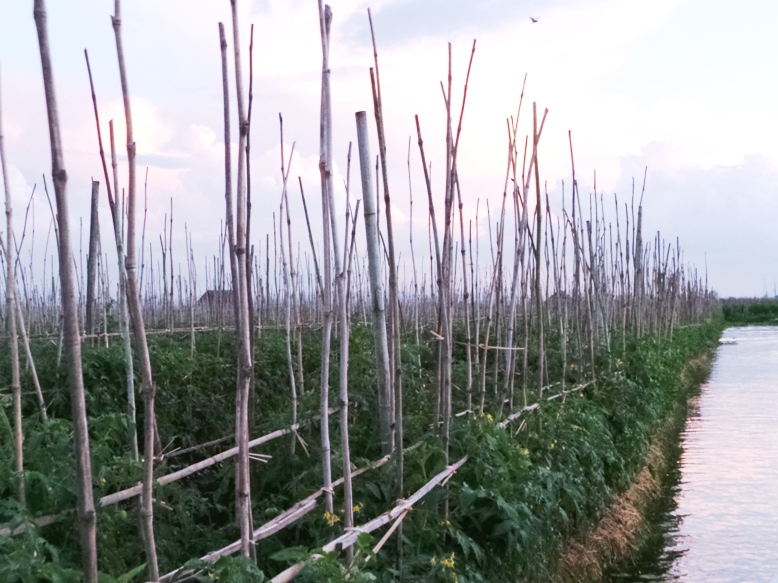
These are created by collecting weeds from the surface and lashing them together to form metre-thick floating strips. These are then anchored to the bed of the lake with bamboo poles, and heaped with mud scooped from the bottom. This means that they can be used regardless of fluctuating water levels. Crops – including cauliflower, tomatoes, cucumbers, cabbage, peas, beans and aubergine – are grown year-round.

Floating gardens

We’d seen some of the small wooden boats so piled up with weeds from the lake that they were sitting barely above the water and we’d seen groups of people in their boats working together to collect these weeds and now we knew why.

Phaung Daw Oo Pagoda

Phaung-Daw-Oo-Pagoda

The pagoda has been constructed in the traditional and elaborate Myanmar style of architecture even though it is over the water. At the centre of the monastery building is a golden stupa topped with an ornamental umbrella-shape. The interior walls of the temple are decorated with murals depicting Buddhist stories. In the central shrine in the main hall there are five small lumpy gold objects that were once recognised as Buddhas. Devotees have been placing so much gold leaf on them for so long, that the original forms are no longer recognizable.

One-leg rowers

One-leg rowers

The smooth lake, the blue sky, the small wooden boats with their huge basket nets, the rowers standing tall, leg and oar moving as one, make for a thrilling encounter. The rowers are men who stand in the stern of their boats with one leg wrapped around a single oar moving it steadily back and forth in an easy rhythmic practiced motion. Theories as to why this method of rowing evolved range from it providing both hands free for handling the fishing nets, to needing to stand to be able to see the reeds and weeds in the water ahead.

Local markets

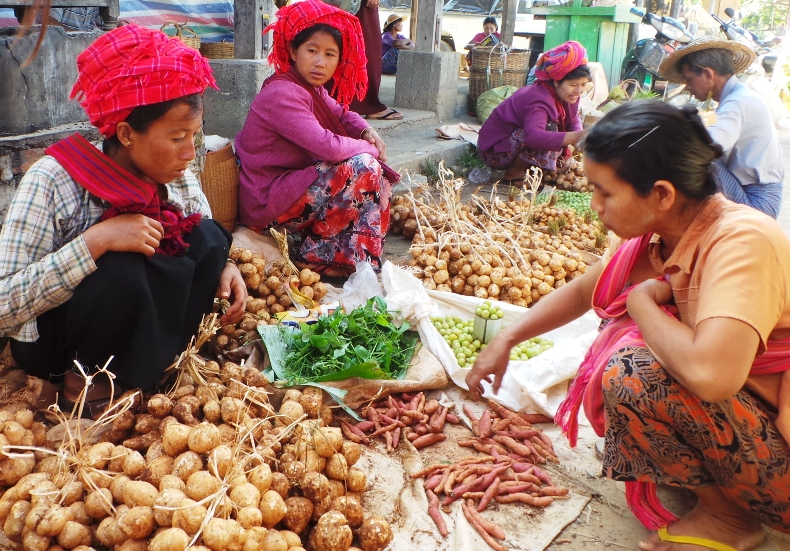
The markets in the Inle Lake area move each day from one of five locations to the next, ranging from Nyaung Shwe at the north end of the lake to Nam Pan towards the south end. Farmers come from all around to sell their produce, traders come to buy in bulk, and families come to do their regular household shopping. It is colourful and there is a strong sense of community but it rapidly gets crowded – mainly with tourists.

Market

One of the interesting aspects of the market is seeing women of the Pa-O ethnic group, the second most numerous tribe in the region. These women wear dark plain coloured skirts (lungyis) with long sleeveless shirts, cropped long-sleeved black jacketsand distinctive brightly coloured turbans.

Nga Hpe Chaung monastery

Nga Hpe Chaung monastery

It was built in the 1850’s on teak columns in the middle of the lake. It is a handsome building housing many beautiful Buddhist artifacts, and quite a few monks. Awhile back the head abbot and some of the monks trained several cats to jump through hoops, so it became known as the ‘jumping cat’ monastery to foreign backpackers. The trained cats are no more so you will just have to put up with the idyllic setting, its collection of old Buddhas from around Myanmar, and its peace and tranquillity.

In Dein

A narrow canal wound its way from the lake, initially through reed beds but later through dense jungle until finally the village emerged around a bend. It was a perfect rural scene with water buffaloes wallowing while women from the local village washed clothes nearby.

In Dein

We alighted at a small jetty and were immediately besieged by the locals who peddle their bamboo hats, “Welcome to Inle” T-shirts and Shan-style bags from little stalls. The highlight in town is a breathtaking complex of 1,094 16th century stupas, the main In Dein pagoda and the surrounding ruins which cover the dome of a hill. You reach here up a long roof-covered passage where there are hundreds of vendors. The top provides a sweeping view of the lake and surrounding farmlands.

Len Rutledge is the author of Experience Myanmar available as an e-book at http://www.amazon.com/dp/B00HPQHC5I

The delights of Yangon, Myanmar

Words: Len Rutledge   Pictures: Phensri Rutledge

Yangon, the largest city in Myanmar, is green and cool with lush tropical trees, shady parks and beautiful lakes. As it rapidly develops it has also acquired traffic problems, poverty and signs of international commerce. On first sight it is a typical Asian city, but you quickly realise that it is less modern than its Asian peers and it has its own calm culture.

The city right now feels like a frontier town in transition. The locals still dress in traditional longyi and only a small percentage own a mobile phone, yet shiny new apartment blocks are springing up between the peeling colonial facades, traffic jams have become common in some areas, and pizza and donut shops are appearing.

Yangon can be enjoyed by just walking its streets. The sights, smells and sounds will be strange to most visitors. You will see women with a yellow-white paste on their faces, vendors selling betel nut, and ancient buses and taxis blowing exhaust fumes over everything. The city, however, does have its ‘not-to-be-missed’ attractions and here are some suggestions.

Shwedagon Pagoda

Shwedagon Pagoda

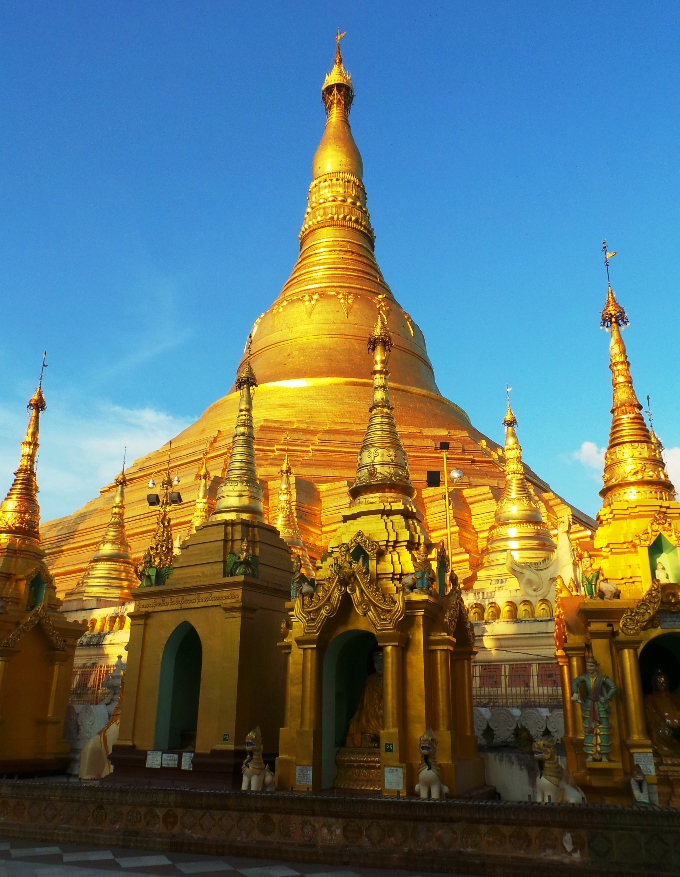
Few religious monuments in the world are as impressive as Shwedagon Pagoda, with its gigantic 99m golden stupa. The pagoda can be visited at any time during the day but early evening is best, when the sunset light has a transformative effect on the gold-encrusted stupa and the many subsidiary shrines. The pagoda is covered with hundreds of gold plates and the top of the stupa is encrusted with diamonds and rubies and other precious gems, and a 72 carat diamond at the very top. The whole compound is huge and glorious, with an astonishing array of carvings, statues, parks and gardens, ponds and devotional spaces.

Colonial buildings

Colonial buildings

Quite a number of old public buildings built in the time of the British occupation still remain although many are presently empty and are rotting away. For many visitors they are one of the major attractions of the city and it is hoped that most or all can be saved and recycled in the near future. The Yangon City Hall, next to Sule Pagoda, is one that is being used and it appears to be in reasonable condition. The old Supreme Court (1910) to the south-east is painted in red and yellow but it is looking rather sad. A short distance to the south is the famous Strand Hotel which was constructed in 1901 and was among the best hotels in Asia when it opened. Perhaps the most impressive building of all is the old Ministers’ office, which occupies a whole city block.

Kandawgyi Lake

Kandawgyi Lake

This is a very attractive artificial lake, located east of the Shwedagon Pagoda, which is surrounded by the Kandawgyi Nature Park, and the Yangon Zoological Gardens. The lake and the surrounds provide a quiet, quite beautiful environment and great photographic opportunities. There are long wooden walkways built over the lake which provide nice views. There are several lakeside restaurants serving local food at reasonable prices which are very popular with locals.

Chinatown

This is probably the busiest area of Yangon. It is centred on Latha Road in the western part of downtown but it spreads across several blocks in each direction. The shops, with their bright neon lights and garish advertising, are a seething mass of people during both daytime and evening, and restaurants abound. It is an extremely important commercial centre especially for gold, jewellery, electronics, mobile phones, consumer goods and groceries.

Chinatown

19th Street is packed with restaurants and roadside barbeque vendors selling all manner of dishes. Aging buses run on the east-west streets while pedestrians and vendors cram the north-south streets seeking and selling fruit, vegetables, fried snacks and more.

Reclining Buddha

Reclining Buddha

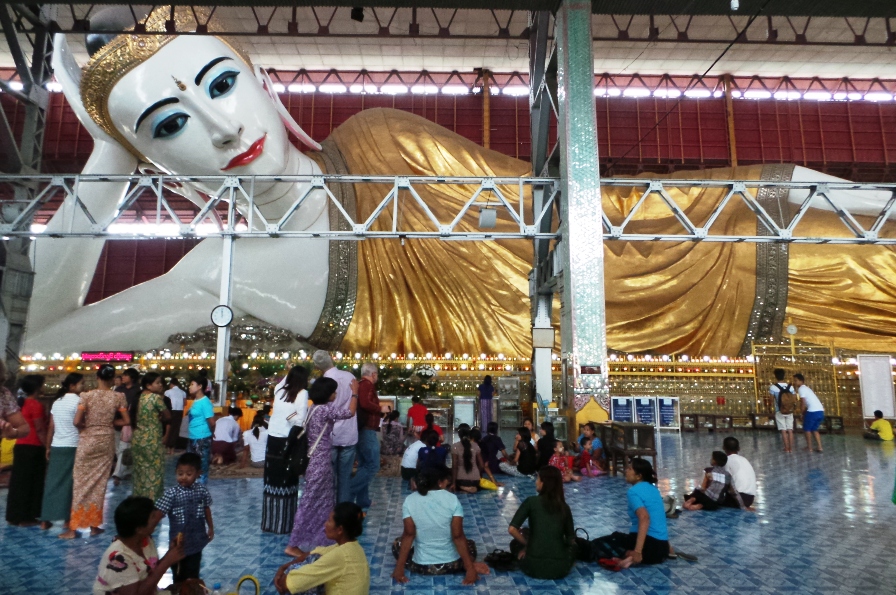
The 72 m reclining Buddha image in the Chaukhtatgyi Pagoda is one of the biggest reclining Buddha images in Myanmar. Originally built in 1907, it was demolished and rebuilt in the 1960s. The Buddha image is wearing a golden robe and has a white face, red lips, blue eye shadow, and red finger nails. The soles of the feet contain 108 segments in red and gold. Buddhist people burn incense sticks and offer flowers to the Buddha then pray to the shrine belonging to the day of their birth.

Circular railway

Circle train

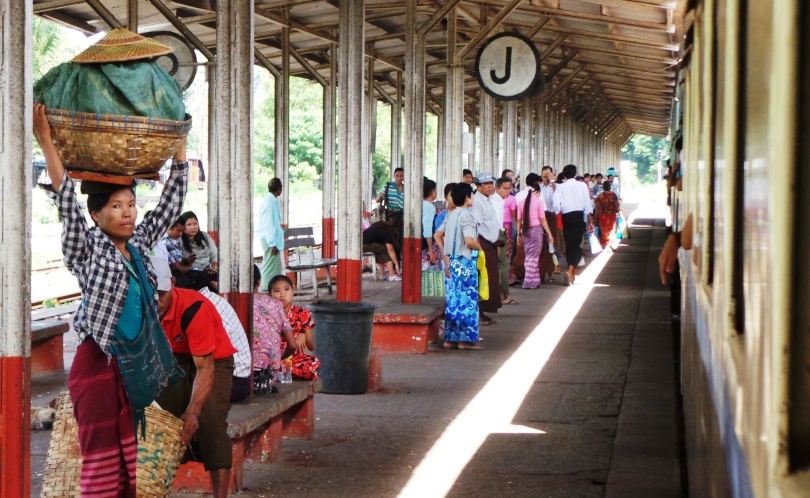
There is a very slow circle train which travels around Yangon and takes about 2.5 hours to complete the trip. Trains go in both directions approximately every hour. Most have wooden seats and no air-conditioning and visitors are encouraged to use one particular carriage which is slightly more comfortable than the others. Locals are also allowed to use this car provided they have few parcels. The rest of the train becomes very crowded but this can provide an insight into local life.

Downtown streets

Street activity

The city’s street life always makes an impression on me. I find the street-side stalls, where diners tuck into bowls of steaming noodles; the ancient, overloaded, buses jostling for space at junctions with trishaws, trucks and taxis; and the open-air markets, where traders squat beside piles of fresh produce, to be quite fascinating. You can stop for refreshments in a traditional Burmese teahouse before enjoying the priceless treasures at the impressive National Museum and it can be fun to join the crowds milling around Bogyoke Aung San market or the various ferry jetties.

Len Rutledge is the author of Experience Myanmar, available as an e-book at http://www.amazon.com/dp/B00HPQHC5I