Category Archives: Asia

The amazing Thai capital

Bangkok has great attractions, lovely people, some of the world’s best shopping, and a whole cultural experience to enjoy. For me these far outweigh the problems of pollution, overcrowding, horrendous traffic and lack of green spaces seen in all megacities. Just look at a few aspects of the city.

Palaces and Wats (temples).

The Grand Palace must be one of the great architectural complexes in the world. From certain angles, this represents all that is best about Thailand and Thai culture. It is a sight guaranteed to impress the most blasé traveller. The whole complex just assaults the senses from all sides.

Grand Palace-4

Wat Po is the oldest and largest temple in Bangkok and is often called Thailand’s first university. The main attraction is the gigantic 46-metre long reclining Buddha, entirely covered in gold leaf but there is much more to see.

There are over 400 wats in Bangkok and Wat Arun (Temple of the Dawn) is one of my favourites. It sits beside the Chao Phraya River and is particularly spectacular in the early morning.
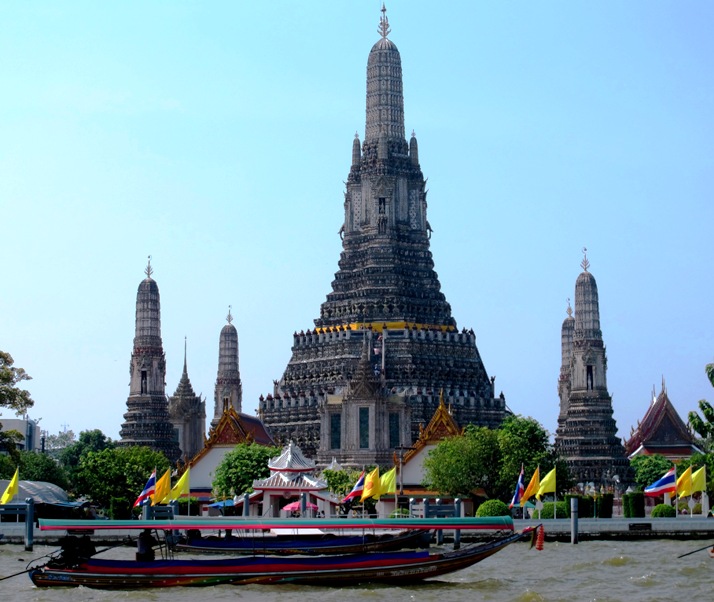
Wat Aroon-1

Don’t miss a visit to Vimanmek Palace which is billed as the world’s largest golden teak building. Also worth visiting is Suan Pakkad Palace, where five traditional Thai houses overlooking a lovely garden display a large collection of Thai arts and antiques.

Food.

Thai food has become one of the most popular cuisines in the world. If you enjoy it in your home country, you will love it in Bangkok. Contrary to popular opinion, Thai food is not always hot. In fact some of the dishes I most enjoy are those where the subtle flavours of the herbs and spices slowly fill the mouth for a special experience.

I love sitting on a rickety stool on a street footpath watching the passing throng just as much as I do sitting in a fine-dining restaurant. A meal on the footpath will cost less than $2 while in the restaurant it may be $30.

The food courts in the shopping malls are also fun. You can wander around and select from stalls selling all sorts of food. If there are several of you, a gourmet meal to share can be easily assembled.

C and C

For a different experience, visit Cabbages and Condoms in Sukhumvit Soi 14. This is run by Thailand’s Population and Community Development Association which believes in getting the safe sex message out to all customers. The food is good and the setting sublime despite its popularity with tourists.

Shopping.

Bangkok has Asia’s best shopping. The combination of markets, thousands of small retailers, huge department stores and gigantic malls offers variety seen in few cities around the world. Add wonderful Thai handicrafts, world famous Thai silk, smart fashion and great prices and it is hard to beat.

Outdoor market

I recommend you start at Chatuchak Weekend Market perhaps the largest weekend market in the world. On a typical weekend, more than 200,000 visitors come here to sift through the goods on offer. You will be amazed at the sheer variety of merchandise.

If you are looking for an up-market shopping experience, one of the huge central city megamalls is the answer. Those around Siam Square have long been favourites of locals and visitors but several new malls have opened recently which challenge this area.

The Cultural Experience.

Walk down the side streets and you will find a wonderful city. You will see life on the streets, spectacular little temples, street eateries, and Thais going about their normal business. It’s available to every visitor and it’s free.

Take a ferry along the river and see a different side of the city. For less than a dollar, you can go several kilometres, calling in on floating piers, weaving in and out of cross-river traffic and enjoying a cool breeze on the face.

IMG_0127

There are also plenty of deeper experiences. I recently discovered the Wat Mahadhatu Meditation School. You can learn meditation from the monks by turning up to the daily classes.

Thai massage is something that many non-Thais find fascinating. I usually manage at least one massage in Bangkok but enthusiasts can enrol in the Wat Po Massage School and learn all the finer points of this art form from the experts.

www.LenRutledge.com

All photographs by Phensri Rutledge.

Impressive New Delhi

The noise from honking horns, market sellers and mosques and temples is relentless. The smells from flowers, incense, food and open sewers are overwhelming. The colour from saris, spices and sparkling jewellery is intense. Welcome to Delhi, India’s grand capital.

New Delhi is a city of enormous contrasts where poverty sits beside wealth, beauty intermingles with filth, and structure and chaos compete for supremacy. It will dazzle all your senses and cause you heart-ache at the same time.

It can be challenging and charming, overwhelming and stunningly beautiful. The eager friendliness of the people is endearing, and the food is unforgettable but there is likely to be unexpected glitches no matter how much you plan.

New Delhi has some wonderful sights with the following just a sample.

The Red Fort

This was the centre of Mughal India, functioning as both a military fort and palace, at a time when the emperors would ride out into the streets of Old Delhi on elephants in a magnificent display of pomp and power.

Red Fort (3)

Red Fort is protected by a massive 18m-high wall and inside there is some outstanding architecture, shaded pathways, and beautiful gardens. A visit here will last several hours if you want to see all areas.

The Jama Masjid

The largest mosque in India has a courtyard capable of holding 25,000 devotees. It was begun in 1644 and ended up being the final architectural extravagance of Shah Jahan, the Mughal emperor who built the Tāj Mahal and the Red Fort.

Mosque

This is a highly decorative mosque with three gates, four towers and two 40m-high minarets with distinctive strips of red sandstone and white marble. Three black and white marble domes surmount the prayer hall.

One of the main attractions is to climb one of its minarets to the highest level and get a great 360 degrees aerial view of the mosque and the city. The view is worth the climb.

Crafts Museum

The government-run Crafts Museum holds an amazing collection of rare and distinctive craft pieces covering painting, embroidery, textiles, and various crafts of clay, stone and wood.

Craft Museum (7)

The museum also houses a village complex spread over two hectares, with 15 structures representing village dwellings, courtyards and shrines from different states of India, with items of day-to-day life displayed.

The entire village complex is a remnant of a temporary exhibition on the theme of rural India, held in 1972. Several traditional craftsmen can be seen working here and they also sell the crafts they create. There is a shop and a very popular cafe.

Humayan’s Tomb

Further to the south is the tomb of the Mughal Emperor Humayun built in 1569-70. The tomb is a UNESCO World Heritage Site and has undergone extensive restoration in recent years and was spotlessly clean on my last visit. It is a delightful spot. The pathway from the western entrance passes several smaller structures including Isa Khan’s tomb that even pre-dates the main tomb itself.

Humayun's tomb-2

The tomb was commissioned by Humayun’s first wife Bega Begum and was designed by a Persian architect. It was the first structure to use red sandstone on such a large scale. The tomb’s architecture and the attached garden are the best examples in Delhi of the early Mughal style of tomb and it set a precedent for subsequent monumental Mughal buildings.

Qutb Minar

Still further south, the Qutb complex, is even older and it contains many ancient monuments and buildings. It is the said to be the second most visited place in India. This is located in Lalkot, later called Qila Rai Pithora, the first of the seven cities of Delhi, established by a Tomar Rajput ruler.

The original complex contained many ancient Hindu and Jain temples but most were destroyed for material during the construction of the Qubbat-ul-Islam Mosque. This was the first mosque built in Delhi after the Islamic conquest of India and it is now known as the Quwwat-ul-Islam mosque. The mosque consists of a courtyard, cloisters, and a prayer hall.

New Delhi (25)

The best-known structure in the complex is the Qutb Minar, built over many years from 1202. The tapered Qutb Minar is 72.5 metres high and has five distinct storeys. There are 379 steps to the top but there is no access to the public. It is listed as a UNESCO World Heritage Site.

Lotus temple

The Bahá’í Lotus temple was completed in 1986. It is set among lush green landscaped gardens and has won numerous architectural awards. Its unusual lotus shape has made it a major attraction. It was named “The most visited religious building in the world” by Guinness World Records in 2001 and is said to receive more visitors than the Taj Mahal.

Lotus Temple

The temple has 27 free-standing marble clad “petals” arranged in clusters of three to form nine sides. The nine doors of the Lotus Temple open onto a central hall that is capable of holding up to 2,500 people. Light and water are used in place of the thousands of statues and carvings to be found in other temples. At sunset it is a dramatic sight as the white marble is stunning.

You can preview Len’s latest book Experience India’s Gold Triangle

The Thailand Bucket List

Thailand is a great destination, consisting of a little bit of something for everyone, regardless of whether they are a luxury traveler or adventurist. Whatever you thought of it, it is bound to exceed your expectations: Thailand is a country similar in size to Spain, and with its 66 million inhabitants, it is one of the 20 most populated countries in the world. We are going to try and write a bucket list worthy of this cultural giant, but it may seem a bit short and incomplete, and we apologize in advance. One would have to write a several novels in order to fit in all the amazing things you could do in Thailand.

Thailand
The Grand Palace

First things first, The Grand Palace. It was built in 1782 and has been home to the King of Thailand and his royal court for almost 150 years. This magnificent structure tells the tale of an indigenous culture, the only one never to be colonized by the Europeans, developed in the heart of the Malaysian peninsula – it is just as fascinating today as was in its earliest stages. It is truly a monument to the architecture and craftsmanship of the Thai. Its great walls hold the war ministry, state departments, and even the mint. Administrative centers of the country that are open to the public are a rarity, and it would be a shame to miss out on such a beautiful one.

Floating Market

One of the first things tourists do when they visiting other countries and cultures is hit the markets to see the local goods and try their hand at bartering. What makes this practice even more fun in Thailand is the fact that some markets float on the rivers. These curious floating markets consist of boats piled with tropical fruit and vegetables, fresh coconut juice and a colorful palette of local food. A spectacle that you would probably never find again in the world, and an attraction for all senses, Thailand’s floating markets are the definite crème de la crème of the country.

James Bond Island

The next on our list are the Phi Phi Islands. They are some of the most beautiful islands in the entire south-eastern Asia, and naturally, Thailand’s big tourist spot. Staying in the Phi Phi Islands might be too dramatic for most people, with the amount of traffic they get, but for the most relaxing, yet involved and gorgeous holiday, move to an amazing place somewhere on the mainland. Phuket is a good choice, with the ferryboat ride from there to the Phi Phis being 90 minutes of heaven. Getting to your destination, you will immediately start experiencing the perfection of life inside a postcard. It definitely is worth paying a visit.

Thailand is an exotic location near the equator, with beautiful weather, pristine beaches, and a sunny disposition. Everything is strange and spicy in this country, from the exquisite cuisine that has made its rounds in the world’s most prestige restaurants to the pleasant cultural shock all visitors are bound to discover. With bright colors, flowers, buildings and people, what is there not to love in this heaven on earth?

Melaka : The World Heritage Site to be Your Holiday Destination

Melaka is a state in Malaysia. It is well-known for its historic sites. The capital of this state is Melaka City. The city center, known for its historical, has been listed as a UNESCO World Heritage Site since July 7th 2008. This state represents one Malaysia as the culture vary. It is also known as the patriotic symbol of Malay since many Malays born here. Melaka was founded by Iskandar Shah, the last king of Singapura. He found Melaka as a good port. This state is led by a Governor (Yang di-Pertua Negeri).

melaka city

Melaka covers an area of 1,664 km2 and it is divided into three districts: Central Melaka, Alor Gajah, and Jasin. The population of Melaka in 2010 is 66.1% Muslim, , 5.7% Hindu, 24.2% Buddhist , 3.0% Christian, 0.2% Taoist, 0.6% follower of other religions, and 0.2% non-religious. As the influence of colonialism era of Dutch and the descendants of Portugese, there are many historical places showing the culture of Portugese. They are Fort of Famosa, St. Peter’s Church, St. Paul Church, and Christ Church. It is a great place to have a holiday.

When you decide to visit Melaka, do not forget to see the historical places, as well as the delicious food offered. They are:

Fort of Famosa
Fort of Famosa is a fort which was built in 1511 by the Portuguese. Famosa means famous in Portuguese. This fort has been controlled by Portugal in1511-1641, Netherlands in 1641-1795, and Britain in 1795-1807. During Dutch invasion, this fort had much damage. This fort is the oldest building in Asia. The small gate named Porta de Santiago is the only part remaining. For you who like to have a historical experience, going to this fort is a great choice.

Jonker’s Walk Night Market
Hunting food is always fun at night. The cold air and the beautiful view of the lights will make it more romantic. You can enjoy food in Jonker’s Walk Night Market in Melaka. The food will satisfy your tounge with its finest meal.

Beside the food, you can also enjoy attraction shown. When you see a kungfu movie with throwing knives and eating fire scene, you can see it also here. The slogan is “Malaysia Boleh” which means Malaysia can do, you can get all the exciting things.

Morten Village
Another attraction given in Melaka is Morten Village. It is located in the middle of historic city. People call it “a living museum” with its many historical sites which is still used by the people. It has 85 homes and 52 Melaka traditional dwellings. It is always fun to visit Morten Village with the unique houses.

Spicy Food
Melaka is famous for its spicy food. You can try to have Chicken Spicy Food, Claypot Spicy Food, and many more. The uniqueness of the food here is the red sauce which is so spice. The food is eaten together with rice, staple food of Asian. For the side dish, you can have anything you want, from seafood, eggs, or meat. Usually it is put in the spicy sauce.

For you who do not like spicy food, you can have another food for your meal. But, one in a time, tasting this food is fine. You will not regret tasting the delicious food offered here. The foodstalls and restaurants are easy to reach along the way in Melaka. Malaka is waiting for you. So, are you ready to go there?

Singapore’s sensational Sentosa

Words: Len Rutledge  Pictures: Phensri Rutledge

Sentosa is a very popular island just south of the main Singapore island. It is visited by some five million people a year. It was first developed about 40 years ago but was often a disappointment to visitors. Now it is coming into its own and I suggest that it is a ‘must-visit’ place to see for all Singapore visitors. There are now sufficient offerings of interest to adults and children to keep everyone amused for a day or two.

Sentosa Express

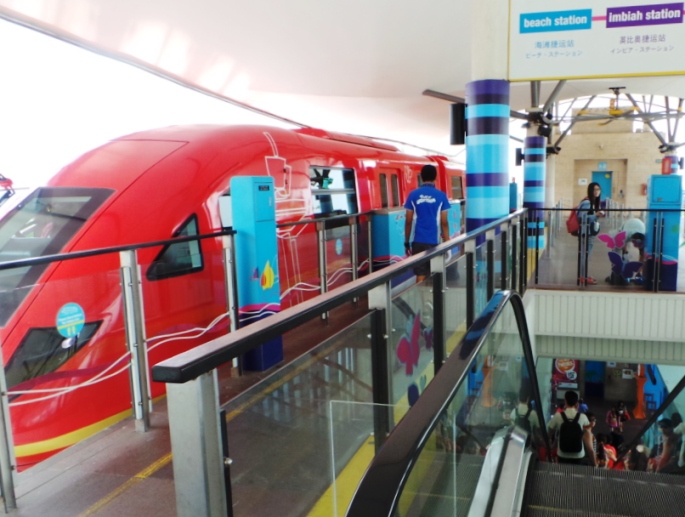
There are basically four ways to reach Sentosa Island, the cable car from Mount Faber or Harbourside, the Sentosa Express light rail from VivoCity, the footbridge from near VivoCity, or a taxi from anywhere within Singapore.

Sentosa Island (19)

The Sentosa Express light rail station is on the 3rd floor of the VivoCity shopping mall beside the large food court. You need to buy a ticket which currently costs S$4 round trip. The train operates every 5-8 minutes from 7 a.m. to 11:45 p.m. daily. Once on the island you can walk to many of the attractions but there are also three bus routes and one beach tram route to help you reach some of the more distant attractions.

Sentosa cable car

Sentosa Island (125)

The cable car is the most exciting way to reach Sentosa. It begins at The Jewel Box on Mount Faber which houses a retail shop, the cable car station and five different restaurants and bars. This was constructed with the cable car in 1974. There is also a cable car station in HarbourFront Tower 2 near VivoCity. The current cable car cost is $26 (Adult) and $15 (Child) and while this seems high there is no disputing the fabulous view you get on the ride across to the island.

Beaches

Beach Station is the end of the Sentosa Express light rail system and is a transfer hub for the bus and beach tram services. The beach stretches both east and west from here and you can walk in either direction.

Tanjong Beach and Palawan Beach are to the east. Tanjong Beach is popular for its tranquillity and solitude. The sand is clear, the water at times less so. The Tanjong Beach Club offers seafood from around the globe, tropical fruit cocktails, beach volleyball, a pool and entertainment at night.

sensational Sentosa

Family-friendly Palawan Beach has good sand and interesting shops and eateries. There are wading pools and water fountains for kids to cool off in, an aviary and the Animal & Bird Encounters show.  A suspension bridge links to the Southernmost Point of Continental Asia, a small islet with a viewing deck at the top of the towers which are located there.

Long Siloso Beach stretches to the west of Beach Station. This is claimed to be Singapore’s hippest beach, and on weekends it is alive with people day and night. There are bars, several shopping options, and bistros and restaurants.

Sentosa Island (56)

This is also where you can access the 450 metre Zip-line which travels 75 metres above ground level at speeds of up to 60 km/h, across the jungle, the beach, and the sea.

Merlion Plaza

Merlion Plaza has the Imbiah Sentosa Express station and the centre-point here is a 37-metre tall replica of the Merlion complete with viewing galleries and a souvenir shop. An admission fee applies. This forms a north-south axis through the island. The northern end leads to the Festive Terrace while in the south a winding walkway leads to the beach.

Sentosa Island (176)

Escalators connect to the Imbiah Lookout area where there are several food outlets including Starbucks, The Arches, and Tastes of Singapore.

Images of Singapore

I think Images of Singapore is one of the better attractions in this area. It is an historical museum with exhibits showing the history of Singapore using multi-media displays, multi-screen theatre presentations and wax models. There are numerous exhibitions covering Malay rule, the British period, the Japanese occupation, and early independence under Singapore’s first Prime Minister Lee Kuan Yew.

Sentosa Island (120)

Madame Tussauds Singapore will open late 2014 and will include a boat ride known as ‘The Spirit of Singapore’, featuring iconic local landmarks. The ride will connect the new wax museum to the existing ‘Images of Singapore’ attraction in the same building.

Resorts World Singapore

Resorts World Sentosa has added a number of further attractions to the island. Marine Life Park is claimed to be the world’s largest oceanarium. It consists of several major attractions: S.E.A. Aquarium, the innovative Maritime Experiential Museum where you can experience Singapore’s past as a trading port, Dolphin Island, and Adventure Cove Waterpark.

Then there is the Trick Eye Museum which refers to an art technique that turns two-dimensional paintings into three-dimensional images through the use of optical illusions.

Sentosa Island (209)

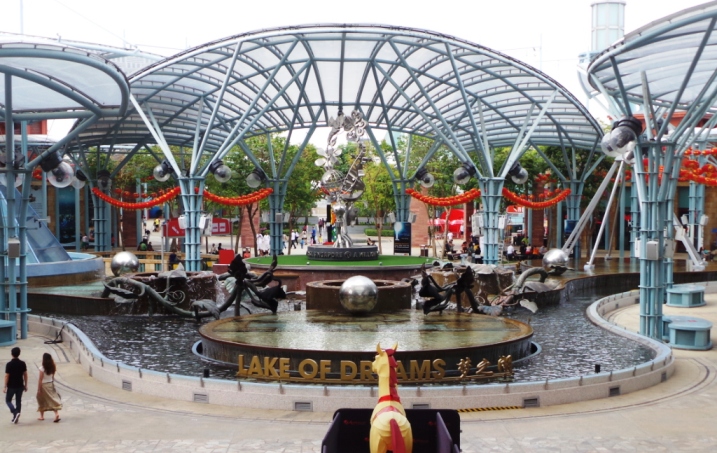
There are two free shows that you should see. Lake of Dreams is a spectacular choreographed display of fire, water and light with a musical score. It is presented every night at 9.30 p.m. at Festive Walk. Crane Dance is produced each night at 9.00 p.m. at the Waterfront.

Universal Studios Singapore

This has become sensational Sentosa biggest attraction. There are seven zones around a lagoon all with roller coasters or other movie-themed attractions. You can purchase your day passes online and save time queuing when you arrive at the park. A one day pass costs S$74 for adults and S$54 for children.

Sentosa Island (229)

On weekends the park can get quite crowded so arriving early is a smart move. Normal operating hours are 10 a.m. to 7 p.m. but they do vary throughout the year.

Other attractions

There is much more to Sentosa. Some of the other attractions are Underwater World and Dolphin Lagoon, Fort Siloso, Wavehouse Sentosa, The Tiger Sky Tower, The Butterfly Park and Insect Kingdom, Sentosa Nature Discovery and Nature Walk, Sentosa 4D Adventureland, Skyline Luge Sentosa, and iFly.

Sentosa Island (48)

Wings of Time features dancing water fountains, enhanced pyrotechnic effects, and a live cast. You view the performance from a large open-air viewing gallery. The 25-minute show runs twice nightly every evening at a cost of S$18.

Len Rutledge is the author of Experience Singapore, an ebook available from Amazon at http://www.amazon.com/dp/B00NBJD2XY

Wizarding World of Harry Potter in USS Osaka Japan

Many and many people being a fan of J.K Rowling for her adventure series of Harry Potter. The great imagination of her has lived up the characters with all the environment on it. Having all the books in a movie, people adore the work and feel Harry Potter as alive. They want to be in an adventure in a movie. Since, Universal Studio created a place, alike to the movie, so that many people will feel the adventure. One out of four Universal Studios was built in Osaka Japan.

Harry Potter

What is it look like?
Opened on June 18th 2010, the studio offers dark ride in The Wizarding World of Harry Potter. It is a themed park taking the environments from J.K. Rowling’s book, Harry Potter. It gives the magical exciting feeling for people to see it. Hogwart castle, the famous building in Harry Potter was built here.

Feeling for living in Hogwart castle will not complete without riding a scenic dark ride. It uses KUKA robocoaster technology. Riding it will take you to flight around Hogwart castle. It will take you spin around and turn to see Quidditch match, Dementors, and Whomping Willow. Do not be afraid of the safety since it is completely safe.

To enter it, you have to queue first and then enter the back door. As in the movie, Hogwart castle is full of fun magical items. You can see it here, like Mirror of Erised, sorting hat and talking portraits. You can also see classes like you see in the movie. For instance, the Defence Against the Dark Arts classroom, the Griffindor room, and Ravenclaw room. You can also see Dumbledore’s office and some characters in Harry Potter showing tricks.

After seeing the rooms and the classrooms, you can go on to the ride.

http://www.youtube.com/watch?v=juG18_VahLc

Ride in Hogwart Castle

You will be welcomed by Hermione Granger who asks you to say “Observatory”. It is supposed to transport you into your desire location. The ride will take you to Floo Network, Astronomy Tower, and then go to Observatory. Then the ride will take you up to see Quidditch match. Hagrid will appear as you travel under the bridge, asking whether you see the dragon. You will find the thrilling adventure when the dragon pursuits you and when you get down, as if falling out in the bridge floor, the dragon will breathe fire to you. Of course, it is a false fire.

The ride does not stop here. It will take you to Forbidden Forest. Then it goes to the Quidditch pitch. As the rides goes, the thrilling music will come up accompanying the thrilling adventure. When the Dementors come, the ride will take you to Chamber of Secrets through a hole. Dementors will be gone by the spell of “Patronus” from Harry Potter and you can go back to your place.

Are You interested?
For its all excitment, it can be your choice to spend your holiday. Besides, the weather and food in Osaka is great. If you are a fan of Harry Potter, this will be an unforgetable experience for you. For its all excitment, it is a regret to miss. Besides, the weather and food in Osaka is great. But before entering The Wizarding World of Harry Potter, you need to choose the seat as the requirement is minimum 120 cm tall. For you who have large size of body, do not need to worry because there is a modified seat for larger size. So, are you ready entering the world of magic in Osaka Japan?

Exploring Muscat

It is hot outside. Very hot! I have never experienced 48 degrees Celsius before and I don’t like it. My wife and I are in Muscat the capital of Oman, an Arab state on the southeast coast of the Arabian Peninsula. Despite the heat we are out and about sightseeing because the weather forecast is for this weather to last another two or three months.

Muscat is a spread-out city of mainly low-level white buildings. The port-district with its waterfront road and harbour forms the north-eastern periphery of the city. This is probably the most interesting area for visitors although most of the better accommodation is elsewhere. It is where you find most of the following attractions.

Qasr Al Alam Royal Palace

Muscat

The Qasr Al Alam Palace is the ceremonial palace of His Majesty Sultan Qaboos, ruler of Oman. It was built by Imam Sultan bin Ahmed over 200 years ago and the current Sultan is a direct descendent. The gold and blue palace  was rebuilt as a royal residence in 1972. Visitors are not allowed inside  even though the Sultan normally lives elsewhere in Oman but you are allowed to take photographs from the outside. The Palace is used for official functions and receiving distinguished visitors.

Fort al-Jalal

al-Jalal Fort

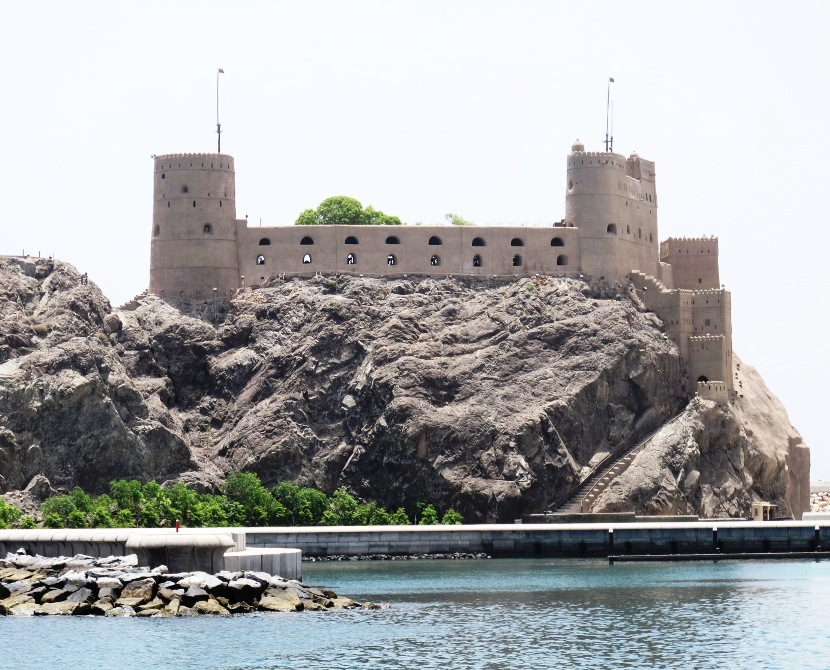
This is a fort in the harbor of the old city. It was built by the Portuguese in the 1580’s to protect the harbor after Muscat had twice been sacked by foreign forces. Until the 1970s it was used as Oman’s main prison, then was restored in 1983 and converted into a private museum of Omani cultural history, that is accessible only to dignitaries. The fort consists of two towers connected by a wall punctuated by holes for cannons. The building is completely isolated and cannot be accessed from its rocky façade; instead there is a small bridge and stairway

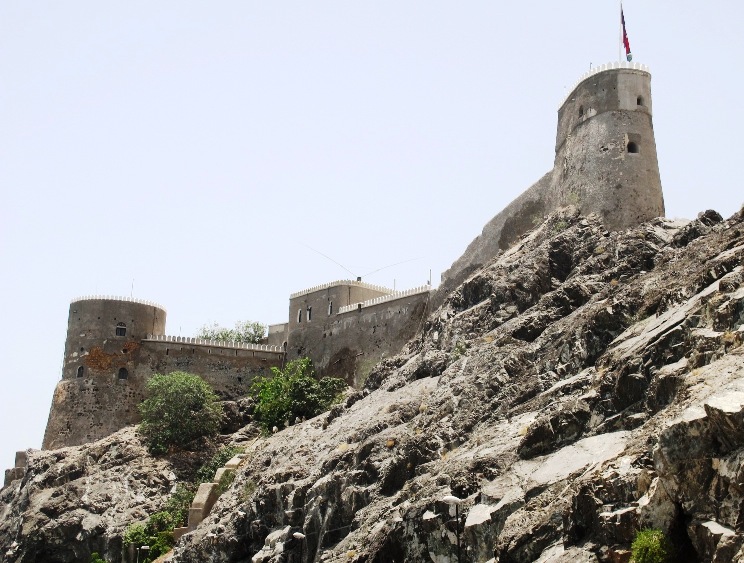
Al-Mirani Fort

Al-Mirani Fort

This was built at the same time as Al-Jalali Fort. Looking down over Muscat’s Old Town from its cliff top perch, it is one of Oman’s most striking landmarks, guarding the entrance to Muscat Bay. Unfortunately it is not open to the public but at night the spotlighted citadel appears like a fairy-tale castle. It can be reached by climbing a flight of stairs carved into the rock. There are two circular towers at the ends of the fort and another tower, almost semi-circular in shape, which rises above the rest of the fort and dominates the surrounding landscape.

Mutrah Fort

Mutrah Fort

Overlooking the town is this imposing fort which merges into the cliff on which it sits. The fort was built by the Portuguese during their occupation in the 1580’s.If you are adventurous it is possible to scale the steps that wind up the side of the cliff edge and from the top there are some great views.

Mutrah Corniche

Looking towards the Corniche

With its promenade, markets, cafés and restaurants, this is one of the highlights of the city. The Corniche stretches for three kilometres overlooking the port and clear blue sea. There are gardens and fountains along its length, while at the western end there is a fruit and vegetable market, a fish market and a fishing dhow port.

Towards the east you can see the Mutrah Fort raised high upon the rocks, explore a maze of narrow streets and traditional souks, or visit the Bait Al Baranda Museum.

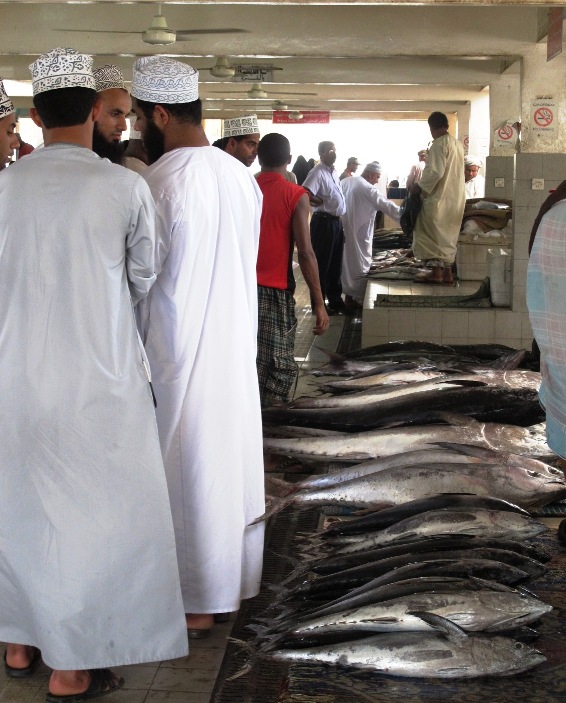
Fish market

Fish market

The main fish hall is full of traders in traditional dress selling everything from shell fish to gigantic tuna. The sellers are very friendly and happy to answer questions and they generally allow photos if you ask first. You can see the boats coming in, the fish spread out on benches and in tubs, and people buying  fish for their families.

Mutrah Souq

Market

One of the oldest markets in Oman, dating back about two hundred years is also one of its most interesting. You don’t get a good impression  from the outside, as it is hidden behind other development and stretches from a gate facing the Sea of Oman and Mutrah Corniche, to another gate in the city’s old quarter, but inside it is marvellous.

Mutrah Souq is a modern interpretation of old Eastern markets, with narrow winding roofed alleys and central plazas filled with activity. The souq has many shops selling jewellery, traditional Omani handicrafts, clothes and several cafes selling Omani food at reasonable prices. Some shops accept credit cards.

Sultan Qaboos Grand Mosque

Inside the mosque

This is the third largest mosque in the world and non-Muslims may visit from 8AM to 11AM every day except Friday. Ladies are expected to keep their heads, ankles and wrists covered while visiting the mosque. This is the only attraction in this post which is not in or near the old city.

The whole complex is stunning. Highlights are the gigantic Swarovski crystal chandelier, the enormous hand-made Persian carpet which took 600 women three years to make, and the marble panelling.

Elsewhere in the city sandy Qurum beach is one of Muscat’s most popular beaches and is a good place for a swim or just to relax under the palm trees on a sun-lounger. It is an open public beach with coffee shops and cafes close by for refreshments.

Tourist Destination in Hauz Khas Village, New Delhi, India

With its vibrant culture, New Delhi offers wide range of tourist destinations to visit. Hauz Khas is one of its prominent tourist destinations, where people from around the world love to spend their holiday. Hauz Khas offers the most vibrant culture of India, where you can enjoy both rural and urban environments, surrounded by attractive places.

There is no better place in New Delhi to enjoy the country’s excitement of shopping and sightseeing than Hauz Khas Complex. Both the urban part, and Hauz Khaz Enclave, Market and the rural area or the Hauz Khas Village have their own history and attractive hotspot for holiday destination.

Modern Side of Hauz Khas Village

When the designer Bina Ramani opened the first boutique in 1988, Hauz Khas developed its status as the national capital of ethnic city, leading to the opening of hundreds of boutiques and shops afterwards. The tight alleyways of the village are crammed with shops selling Indian traditional clothing, handicrafts, Indian carpets, handmade furniture, and designer clothing lines. Antique shops are also available for visitors who like to stock up their collection with ancient saris, salwar, and vintage accessories from the ethnic shops. It is also interesting to see many LGBT activists set up their shops and communities in this area.

Hauz Khas Village also offers endless entertainment options for tourist to spend their days and nights. The music venue like Downstairs At Zo gives you different atmosphere, as it is located underground with restaurant attached to it. This site often held performance and occasional parties. Enjoy teatime and Indian cuisines at the restaurants and café available. A cozy afternoon will be perfect by having tea or in ultimate relaxed atmosphere, or have a taste at Indian traditional cuisine, rasam and other dishes in restaurants you find along the streets.

Rural Side of Hauz Khas Village

Both urban and rural areas coexist in the harmony of vibrant culture of Hauz Khas Village. One of the most favorable sites in Hauz Khas Village is the Deer Park, which was previously a farmland, located near Safdarjang Enclave. Tourists can enjoy their time visiting beautiful meadow and well-maintained trees in this area. It is also popular place to see spotted deer. In addition, you can also spot guinea pigs, rabbits, and various kinds of birds by having a tour in the Deer Park.

The road to Hauz Khas Village is dominated by ancient stone monuments, characterized by ancient Muslim Royals tombs in the village. Just like the name implies, Hauz (means lake) and Khas (means royal), Hauz Khas also characterized by the reservoir built by Alaudin Khilji as water sources.

In Hauz Khas Village, there is also Firuz Shahi Madrasa built in 14th century, a form of Islamic learning institute and considered as the most complete and largest Islamic seminary education at that time. Across the reservoir, there are also six pavilions in the garden, built with various shapes and sizes. Muslim tombs and mosque that available in Hauz Khas Village make Islamic nuances can be deeply felt in this area.

China Terracotta Warriors, the Splendor of First Dynasty

Everyone who is interested in ancient culture must be familiar with China Terracotta Warriors, a colossal archaeological finding that consists of around seven thousands of life sized warriors, horses, chariots and other objects such as pots, plates and bowls. First unearthed by farmers accidentally in year 1974, the finding soon became object of interest of all archeologists from all over the world. Terracotta Warriors are relics of the very first dynasty in China, the Qin, created under the commission of Emperor Qin Shi Huang when he was thirteen years old, as guardians of his mausoleum.

Secretary-General visit the Terra Cotta Museum

The whole project took around eleven years to complete, and now, it becomes a popular attraction for all Chinese and ancient culture enthusiasts from all over the world. You can order tour package to visit the site, which is located Xian, Shaanxi Province, near the site of Qin Shi Huang’s tomb.

What to See at the Site
If you go to Qin Terracotta Warriors and Horse Museum, whether alone or with tour group, you will see three large pits called Number 1, Number 2 and Number 3 Pit, which signify the order of their findings and excavations, covering an area as wide as 16,300 square meters. Here are things you will see:

  • Number 1 Pit: the largest pit that contains common column soldiers with lines of horse chariots. Each of the soldier and horse chariot is very detailed, and you can even see clear facial expression on each soldier statue.
  • Number 2 Pit: this pit contains thousand warriors and wooden chariots.
  • Number 3 Pit: this pit contains warriors with higher ranks, a chariot and four war horses, and judging from the positions and details, were most likely the command center of the entire terracotta army.

Besides what you can see in these three pits, there is also exhibition hall where you can see individual relics and findings which have been exclusively selected. There is also Qin Shi Huang Mausoleum, which is surrounded by large park formerly known as Lishan Garden. In this area, you can also see other beautiful and interesting relics from the first emperor in China, including other museums.

Popular Activities at Tour Package to Xian
Many tour packages to Terracotta Warrior site offer double trips to the museum and mausoleum, and if the tour itinerary is longer, you probably will be taken to the nearest tourists attractions such as City Hall and Small Wild Goose Pagoda (which is actually the relic of Tang Dynasty, but also beautiful). However, the site is also a popular object for more cost efficient one day tour, but of course that depends on the policy of your selected travel company.

This magnificent finding has landed Xian’s name in the international list of must-visit place in China, including a list in UNESCO. The details and intricacy of each relic, including the warriors’ garbs and facial expressions, show magnificent feat of human’s artistic ability and devotion. This is truly a must visit spot you totally have to put in your itinerary in China.

Abashiri, the Icy Wonder of Hokkaido

Trip Hokkaido

Hokkaido is probably not the most developed area in Japan, but for many people, that is the main attractiveness. As consequences, the island of Hokkaido is always colder than Japan’s other main islands, and its natural beauty is considered the most intact. Many people love going to Hokkaido as an escapade from hotter and more humid weather, as well as crowded urban jungles. People usually come to Hokkaido in between June and September, where the snow is great to play ski, snowboarding and such. However, if you really look for serious snow, you must come to Abashiri, a city in the eastern Hokkaido coast.

The Drifting Ice of Okhotsk Sea
Okhotsk Sea is the only part of Japan where you can actually ryuhyo, or Abashiri drifting ice. The drifting ice is clearly visible during winter, and usually starts to disappear near spring, around the late of March. The view is spectacular; plates of drifting ice on grey sea under cloudy sky give impression that you are in North Polar, not in Japan. You can use a sightseeing boat to see the drifting ice in the middle of the sea, where the view is more spectacular.

Aurora Sightseeing Boats is the most famous boating company that provides boats to see drifting ice, and so popular it can run its boats five times a day during peak season. Each trip lasts an hour and passenger must pay 3,300 Yen per entry. However, since this tour is so popular, you must order the ticket in advance, usually by online.

Is boating not your cup of tea? Try seeing the drifting ice from Ryuhyo Norokko Train that has retro feeling, or from one of many sightseeing facilities available on the seaside roads. You can use binocular and look at beautiful sea while warming your feet with available feet warmer (very popular in Japan).

Abashiri Prison and Other Tourism Delights
If you want something more educational, visit Abashiri Prison Museum, which once housed around 1,000 prisoners. The prison was built in unique five sided building, and became famous after director Ishii Teruo featured the building in his popular yakuza movies in the sixties. You can take a guided tour around the prison to see display case and prison interior, getting explanations about how prisoners did daily routine. The ticket is around 1,040 Yen, but you can get discount if you order online ticket. You can get unique lunch experience by eating ‘Prison Set’ menu, which is the same menu the prisoners once ate. The menu consists of barley rice, fried mackerel, daikon or Japanese vegetables, noodle salad and miso soup.

However, the prison menu is not the only culinary delights here. You can also enjoy Abashiri Zangi Rice Bowl, which is basically a bowl of rice mixed with seaweed, chicken or salmon from Okhotsk Sea, wasabi and Japanese vegetables. The most famous version is served in a unique cinema themed restaurant near the train station. Another delight is chan yaki, a grilled dish made from Okhotsk salmon, sliced into fillet and eaten with Japanese vegetables.