Category Archives: Asia

Singkawang Chinatown, a Place where Culture Blends

singkawang

West Kalimantan or Borneo is a province where Chinese descendant population is the majority. Statistically, Chinese ethnics comprise more than 30% of the entire population, and Malay is number two with 26%. Therefore, it is not surprising if you can find a large Chinatown here, and Singkawang Chinatown is one of the largest areas in West Kalimantan.

Like many areas in West Kalimantan, Chinese culture is very prominent especially during Chinese celebrations, and various ethnics join the festive atmosphere when Chinese celebrations come. Otherwise, Chinatown is also a popular spot for locals and tourists to shop for various things, including cooking spices and tools, Chinese sweet treats and foods, traditional medicines, clothes, accessories and many more.

singkawang cultural

If you visit West Kalimantan, going to the Singkawang Chinatown is the best way to blend with the locals and experience the atmosphere of Chinese traditional market that does not change much since many years ago. Do not worry, as long as you take time to learn some Indonesian, you can communicate with the sellers here (although you may also hear some Pontianak Malay, Khek and Tiociu languages being thrown around you).

Culinary Feasts in Chinatown

Although there are so many things to see in Singkawang Chinatown, the best thing to try is of course the food. Here, you can find various street side vendors and peddlers selling Chinese foods; some authentic, and some are modified so they can be accepted by non-Chinese tongues. The prices are of course much cheaper than those dishes at fancy Chinese restaurants in Jakarta, and you get bonus of warm, lively interactions with locals.

Here are some much-recommended dishes to look for in Singkawang Chinatown:

  • Bakcang

This is a favorite among Chinese and other ethnics alike in West Kalimantan. This food is steamed sticky rice mixed with chicken, dried prawn, peanuts and salted watercress. The flavor is rich and tasty, and the sticky texture from the sticky rice is both interesting and fulfilling.

bakcang

  • Jan

This is a kind of sweet, thick soup filled with gelatinous white and red balls made of starch flour. Jan is a favorite snack among various ethnics in and around the Chinatown, and kids especially love this.

jan

  • Gwek Pia

This is a type of traditional Chinese cake that is also locally known as Kue Bulan (Moon Cake). The cake is made of mung bean and slightly hard, and it is often served during special occasions such as Chinese New Year.

moon cakes

  • Kwetiaw

This is a type of Chinese noodle with thin, wide strands made of flour and egg. There are several variations of this dish, such as fried kwetiaw, kwetiaw with broth, and kwetiaw siram (cooked kwetiaw poured with thick, viscous broth). The dish is served with vegetables, chicken, prawn or anything you can think of, and this is a popular lunch and dinner dish.

kwetiaw
Also, do not forget to try refreshing drink made of Lidah Buaya (‘Crocodile Tongue’ or Aloe Vera). This drink is refreshing, healthy and made of one of West Kalimantan’s popular farm commodities.

aloe vera drink


Singkawang Chinatown is clearly a must-visit spot in West Kalimantan.


Semarang, the Venice of Java

Indonesia is a country with rich cultural and historical background, and each city in this tropical country has unique historical and cultural background that is worth visiting. Semarang City is a seemingly metropolitan city with modern buildings business and trade sectors and its own share of urban problems. However, despite these common factors of a modern city, Semarang keeps a long story that shapes its characteristics.

Semarang Historical Background

Semarang is the capital city of Central Java, one of provinces in Java Island. Semarang originated from a coastal area called Pragota, which originated from 8th Century A.D. At that time, Semarang was already a part of a kingdom called Mataram Kuno (Old Mataram), and famous for its port. This port once became the place where Admiral Cheng Ho from China docked his ship in his famous long voyage in year 1405. You can still see the traces of his coming from temple and mosque, called Klenteng Sam Po Kong. These buildings are still used by locals and visited by tourists who are interested with Semarang City history.

The name ‘Semarang’ came from a tree called Asem Arang, which grew in Pragota hills that was, at that time, began to show signs of fertility after years of bad soil condition. Before and after Indonesia’s Independence in August 1945, Semarang became a battlefield between Indonesian soldiers and Dutch as well as Japanese soldiers. Most populations in Semarang are from ethnic Javanese, but there are also populations of other ethnic groups including Chinese. The majority of people here are Muslims.

Semarang Appeals

Semarang is a city with a lot of local appeals. The name Venice of Java was given because Semarang City has large rivers that run in the middle of the city, just like Venice (the nickname was actually from the Dutch; originally it was ‘Venetie van Java’). Semarang also has other interesting nicknames that signify its main appeals and unique characteristics.

For example, the city is usually called ‘Kota Lumpia’ by locals (The City of Lumpia, a kind of spring roll), which is a popular food in this city. You can easily find lumpia anywhere, from street side vendors to restaurants and even café. This food is also a proof of merged culture between Java and China. Semarang City also has a lot of tourist attractions with their own unique appeals, such as:

  • Historical spots, like MURI Museum that displays various records in Indonesia, Museum Jamu Nyonya Meneer that displays rich Indonesian traditional herbal drink culture, Candi Tugu (Tugu Temple) and many more.
  • Natural attractions, like Maron, Marina and Tirang Beaches, Tirangcawang Island and Kreo Cave.
  • Religious buildings that have rich historical and cultural backgrounds, such as Masjid Agung (‘The Grand Mosque), Masjid Baiturrahman, Sam Po Kong Temple, Gereja Katedral Semarang (Semarang Church Cathedral) and many more.
  • Famous shopping places, like Pasar Johar (Johar Market), Java Mall and Citra Land Mall

Despite its look as metropolitan city, Semarang City is a place with deep and historical background; visit this city next time you visit Indonesia and get lost amidst the vibrant Venice of Java.

Hunting for Delicious Foods at Gurney Drive Penang

Street stalls that sell street side foods always become attractions for culinary lovers anywhere they go, and in Malaysia, the most recommended spot to taste the best street side foods is Gurney Drive in Penang area. Also known in local language as Persiaran Gurney, this area of food stalls is located in front of the beach. You can eat here while enjoying the view of beach and high-rise buildings that are mostly condominiums and bungalows.

Gurney Drive is actually an affluent neighborhood; buildings that dominate this area are luxury apartments, condominiums, and seaside bungalows. There are also two famous plazas: Gurney Plaza and Gurney Paragon. There are skyscrapers that make an impressive background behind the whole area. However, while this area is identical with affluence, the most popular attraction among locals and tourists is still the street food stalls area.

Gurney Drive Street Food Stalls

Under the imposing shadows of high-rise buildings, luxury residential buildings and skyscrapers, there are lines of street food stalls that deliver taste of Asia. Called by locals as Pusat Penjaja Tanjung Gurney, the area is located on a spot between Gurney Plaza and Sunrise Tower. Although Gurney Plaza is populated by visitors, there are so many plaza visitors who also choose to eat at one of food stalls at this area. Although the price of foods here have been risen since the first time this area operated in 1970s, Gurney Drive food stall area is still considered a cheap place to enjoy local taste.

At Gurney Drive, you can find various dishes, sweet treats and beverages that originate from various areas in Asia such as Malaysia, Indonesia, China, Singapore, India and Hong Kong. This is because Malaysia is also home for many immigrants from those areas, and they bring along their rich cuisines, adding the varieties of foods you can find in Malaysia.

What You Can Eat

Many foods sold at Gurney Drive have a rich taste, especially because people in Asia love foods with prominent spices. There are some popular recommendations of foods that you must try at Gurney Drive:

  • Hokkien Char Noodle (Hokkien Char Mee), a type of yellow noodle that is served with soy sauce, vegetables, pork, fish cake and fried pork fat. Sometimes, Hokkien Noodle is served with prawn and other seafood.
  • Java Noodle (Java Mee), a type of noodle dish from Java Island, Indonesia. It usually consists of yellow noodle cooked with yellow, rich broth, sprinkled with cabbage, shredded chicken, egg and fried red onions. There is also the fried version called Mee Goreng (literally “fried noodle”).
  • Satay, a type of meat dish that is usually chopped into small cuts, put in the skewers and roasted on charcoals with soy sauce and some spices. The traditional companion for this dish is rice, rice cake, cucumber slices, tomatoes and chili paste.
  • Char Koay Teow, a popular Malaysia-Singapore dish made of fried noodle, chives, prawns or other seafood, chili, bean sprouts and soy sauce.

Do not forget to visit Gurney Drive next time you visit Malaysia and enjoy delightful local taste.

The Vibrant Shilin Night Market in Taiwan

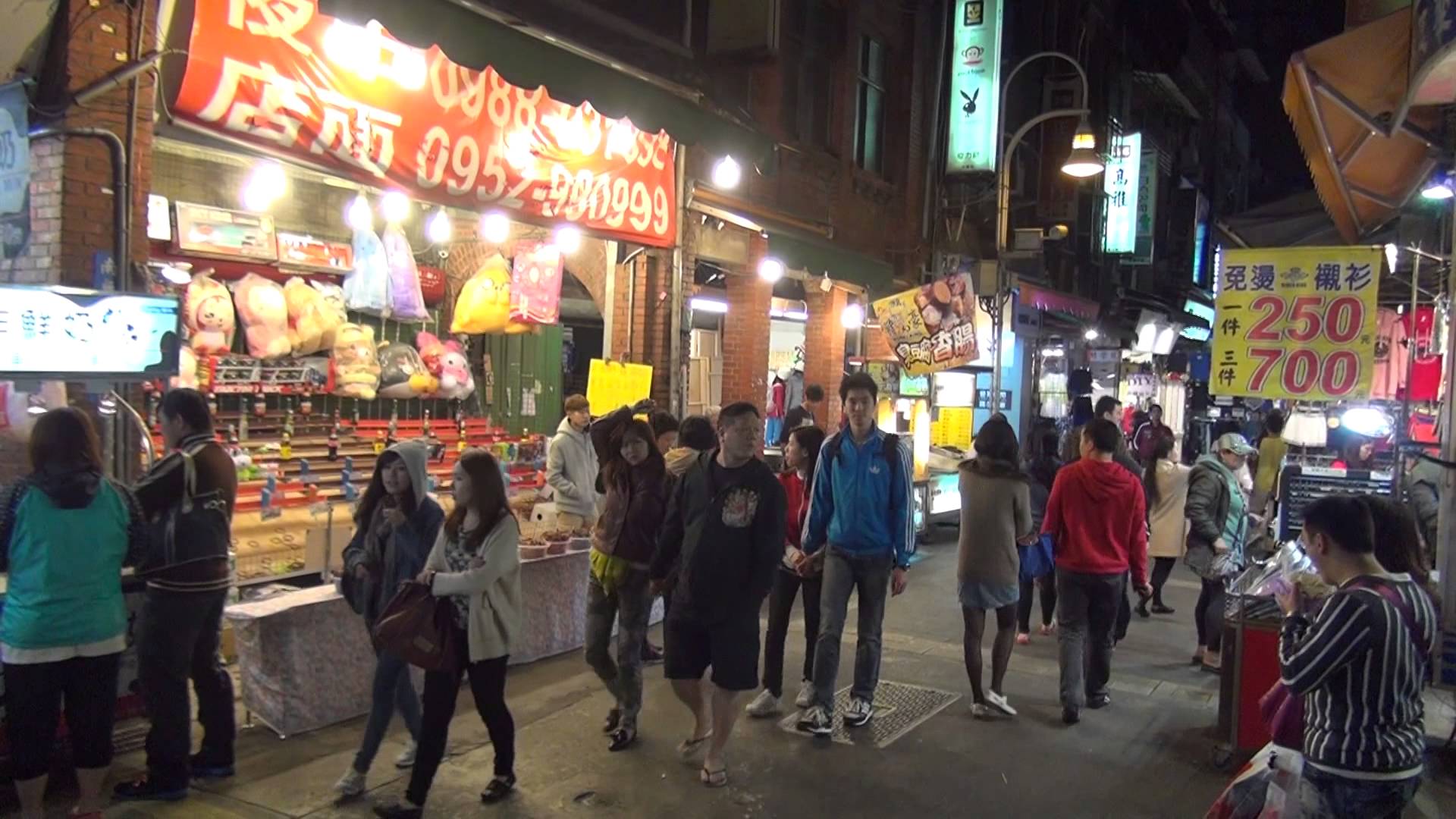
Everyone in Taiwan knows that if you want to see the most vibrant night view, you must go to Shilin Night Market. Shilin Market Taiwan is also one of the most famous tourist destinations in Taiwan, and it is much recommended for travelers who visit this country. Located in the district with the same name, this colorful place is also the biggest night market in Taipei, Taiwan’s capital city.

This market has everything, from food stalls to clothing and jewelry, from bars to video arcades, and from street side snacks to toys. This is also a favorite place for students to hang out with friends, because the market usually opens around 4 PM, after school is over. This is also a favorite place for locals to buy fresh goods for dinner, or hang out during weekend.

History of Shilin Market

Shilin Market Taiwan has been operating since 1909. It was used as a place for trading agricultural and farm products between Shilin District and other areas such as Dadaocheng and Banka. The humble market soon grew into bigger market that sold a lot more things and invited more customers. Gradually, the market turned into a trading, culinary and entertainment center. More vendor owners and merchants started business here. So many were they that the market finally turned into night market (it was previously a regular day market).

Eventually, Shilin Night Market became so crowded that it began to face fire risks as well as sanitation problems. Finally, the government relocated all food vendors; now, food vendors are located near to Metro Jiantan Station. Meanwhile, the old structure that previously housed food vendors were demolished and renovated. The project finished in 2011, and Shilin Market became its current look.

What You Find at Shilin Night Market

Just like its old days, Shilin Market Taiwan sells a lot of things and houses hundreds of vendors, including food stalls. There are about 540 food stalls at the food court, and there is a second structure above the non-food sections. It becomes a parking lot. This is a good place to really see the vibrant nightlife of Taiwan and see the lively interaction between locals and tourists. You can find almost everything, clothes, jewelry, souvenirs, accessories, bootlegged DVDs and imitation products of original European and America brands, video game arcades, bars, karaoke bars, nightclubs, toys and many more. However, the most famous place to visit at this night market is probably the food stalls.

Shilin Market Taiwan sells a lot of foods, but the favorite menus are usually traditional Chinese buns and their fried variations, fried steak (usually made of chicken), milk tea with ‘pearls’ (sweet gelatin balls), and oyster omelet. There are also popular Japanese fried foods, such as many types of tempura, and sweet treats such as peanut candy and jelly.

As a popular tourist destination, Shilin Market Taiwan is located in a very strategic spot and it can be reached from different areas using public transportation called The Red Line by locals (officially known as Taipei Rapid Transit System) that ends at Jiantan Station, located near the market. You can also use bus with particular numbers, such as 216 to 218, 224, 277 and 280.

Save up to $525 when you book your flight and hotel together at Expedia.com!

12 Japanese Most Iconic Foods

Japanese food is a world of its own. It is beautiful to look at, made with great skills and sense of beauty, and has unique flavor. Japanese food is so popular in many countries in the world, and you can find Japanese food almost everywhere. Are you fancy yourself as a food lover? Let’s check if you recognize all of these 12 iconic Japanese foods.

Oden
Oden is a type of street food you can find during autumn and winter, because its ingredients are stewed and served with hot broth. Ingredients of oden can consist of fish cakes, thick omelet, carrot, chicken, radish, dumplings and many more.

Sushi
You must know that this is a fish dish, usually eaten with rice. However, sushi has a lot of variations. There is maki-zushi (rolled sushi wrapped in seaweed and filled with fish and vegetables), nigiri sushi (handmade sushi with rectangular sticky rice and different toppings), temaki (sushi rolled in ice cream cone shaped seaweed) and many more.

Mochi
Mochi is a type of rice cake that can be either sweet or savory. Sweet mochi is eaten with sugar or soy powder, and unsweetened mocha becomes topping for savory dish such as udon (noodle dish).

Anpan and Melon Pan
Anpan and melon pan are two famous breads in Japan. Anpan is a traditional sweet bun that dates back from the Meiji Era, filled with red bean paste. Melon pan is called ‘melon’ because the shape is like half melon, not because it has melon in it.

Ramen and Udon
Ramen and udon are two popular noodle dishes in Japan. Ramen has soy sauce or meat broth with pork and egg as common toppings, while udon has thick shape and usually topped with tempura or fried tofu.

Tempura
Tempura is a term of deep fried meat, vegetables, chicken or seafood that is covered with batter. They are fried in vegetable oil and eaten with dipping sauce.

Sukiyaki and Shabu-shabu
Sukiyaki and shabu-shabu are popular winter dishes served in hot pot style, and consist of thin slices of meat and vegetables. They are usually eaten with rice and accompanied by sake or beer.

Okonomiyaki
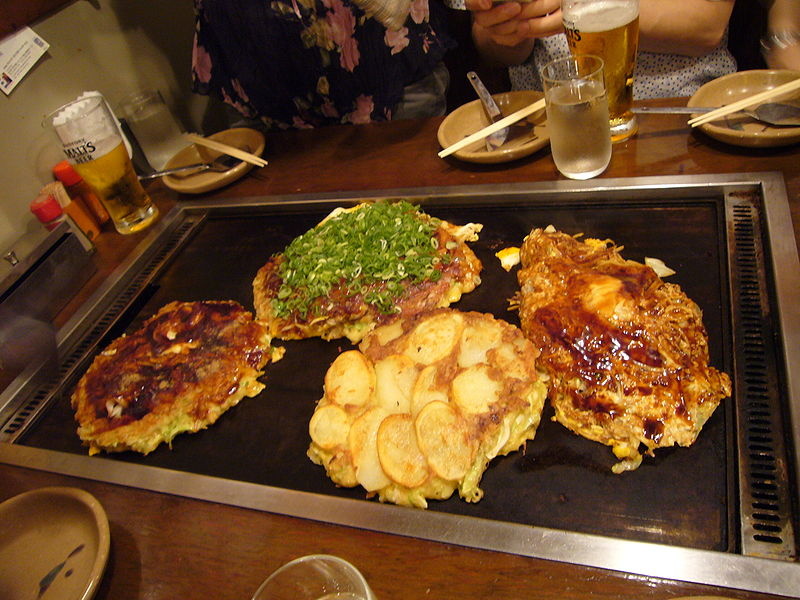
Okonomiyaki is an Osaka dish that is often cooked as method to use leftovers, but it is popular outside Japan as ‘Japanese pancake’ although it is more like savory dish than cake. The batter is made of egg and flour, and the topping consists of shredded cabbage, chicken, seafood or anything you want.

Gyoza
Gyoza is a type of dumpling originated from China, but the Japanese version has more garlic in it and the wrapping is thinner. It is filled with chicken, beef or pork, and eaten with soy sauce.

Miso
Miso is a famous soup that is made of miso paste (a kind of soy paste), seaweed and fish stock, with fillings such as tofu, vegetables and onion. It is often served for daily meals and very healthy.

Teriyaki
Teriyaki is a term for meat or fish dish that is cooked in sweet and savory sauce. The sauce is made of sugar, soy sauce, honey and mirin.

Oshiruko
Oshiruko is often called dessert soup, because it is sweet but look like thick soup. It is made of red bean and eaten hot with mochi or dumpling. It is often served during winter or as New Year dish.

There are still many signature dishes in Japan, but these 12 foods can be considered as the most iconic ones, both in and outside Japan.

Singapore Iconic Menu to Try in One Day

Singapore is not only famous as a shopping and entertainment center, but also a food paradise. A melting pot of Malay, Chinese and Indian ethnicities, Singapore has rich food culture. It has been in the list of recommended countries to have culinary adventure in many travel magazines and websites for a long time. This time, let us show you 5 iconic Singaporean food and beverages (including really nice cocktail) that you can enjoy in a day, from morning until the evening.

Singaporean Breakfast Set

In a country rich in food culture, even a simple breakfast holds certain appeals. Singaporeans have many different breakfast variations, but one of the simplest and most favorite breakfast dishes is the Singaporean Breakfast Set. This seems like your typical toast and egg breakfast, but with some twists. The toasts are eaten with kaya spread, a type of creamy and sweet jam made of eggs, pandanus leaf and coconut. The eggs are soft boiled, and they come with a steaming cup of coffee or milk tea. Locals often break the toasts and eat the pieces by dipping them into the egg yolks, after adding soy sauce.
Some places recommended by Singaporean is Ya Kun, Killeney, ToastBox and Wang Cafe as these establishments have opened branches all over Singapore. In our opinion, the best Kaya Toast is from Killeney Kopitiam. It costs S$1.60 for the normal kaya toast and S$1.80 if you want it served on French loaf which is their main branch located at 67 Killiney Road, Singapore.

Laksa

Laksa is a Malayan noodle dish with coconut base broth, and places recommended by Singaporean is 328 Katong laksa located at 53 East Coast Road, singapore. This laksa dish is a variation of Malayan laksa called laksa lemak (‘lemak’ is a term given for its coconut milk based broth), which is slightly creamy but spicy. This noodle dish is unique because the noodles are cut into shorter pieces, so you can eat the dish with only spoon instead of struggling with long noodle strings, forks or chopsticks.

Chicken Rice

If you want something healthier and more fulfilling, try Nasi Ayam or Chicken Rice. This dish shares similarities with many other rice dishes in other Asian countries such as Malaysia and China (the famous inspiration is Hainan Chicken Rice). If you cannot handle hot dishes, this is the safer choice. The best place to enjoy this food is at Tian Tian Chicken Rice, one of the most famous chicken rice stalls in Singapore. Located at 443 Joo Chiat Road  Singapore. It even gained the approval of Anthony Bourdain when he was in Singapore.

Chili Crab with Mantou Bread

Chili crab is another iconic Singaporean dishes, and its dubbed down version often appears in various Asian themed restaurants around the world. However, nothing beats the kicking spices in the crab’s sauce. Chili crab was invented by Cher Yam Tian and her husband, Lim Choon Ngee, in around 1950’s. Since then, chili crab becomes a kind of national dish.

The crab is served steaming hot with generous amount of thick red sauce, which is sweet, sour and spicy. The original chili crab has delicious sauce that many people refuse to waste it away. Mantou or Chinese fried bread is often served with chili crab, so people can enjoy the sauce by dipping bread on it. The best place to try Singaporean chilli crab is at No Signboard Seafood. Try the signature Chilli Crab and Black pepper crab here. Located at 414 Geylang Road, Singapore.

Singaporean Sling

Finally, close your day by enjoying Singaporean Sling, an Asian cocktail first made around 1915 by a bartender named Ngiam Tong Boon. This cocktail consist of gin and brandy as the main alcohol, then mixed grenadine, cherry brandy, lemon or lime juice, pineapple juice, Benedictine and Cointreau. This is a type of straight up cocktail, means you drink it as soon as it is poured from the shaker, without ice.

The taste of this cocktail is described as rich, fresh and light, with foamy surface and fragrant smell from the fresh fruit juices and garnish. This is truly the perfect drink to end your culinary adventure in Singapore from morning to evening.

Experience the very best of India on Royal Rajasthan on wheels

Rajasthan is the most famous tourist destination in India and extremely popular among world travelers. A vibrant land most synonymous with its colorfully dressed people with men in their turbans and women in their sarees, a trip to Rajasthan is a visual treat. Ruled by Rajput princes whose heroism and bravery are often romanticized in the folklores. It is a great tourist destination with stunning palaces, majestic forts and serene lakes which adds to the charming desert settings. When it comes to offering choices, Rajasthan can stun people with its variety and please even the most fussy traveler. Get a taste of the regal aura of this fabled land by traveling like a Maharaja on Royal Rajasthan on wheels which offers an elegant ride to the most fascinating destinations in Rajasthan.

The journey is designed to give you a taste of royal living which you will notice as soon as you enter this luxury train. You will not only be impressed by the plush interiors which are designed keeping in mind the style and grandeur of royalties. A traditional welcome with tikka and garland awaits you at the railway station. A music band will give you a royal salute and you will be pampered throughout the journey. The train has total 13 coaches each named after a famous palace of Rajasthan and creates same cultural ethos in their interiors. There are also two restaurants for the delight of the visitors. The menu includes Thai, Chinese, Mexican and continental along with authentic Indian cuisine. The luxury train of Royal Rajasthan on wheels is equipped with world-class amenities like lounge saloon, rejuvenation center and souvenir shop. You can enjoy yourselves at leisure and play games or just enjoy the panoramic view outside and savor each of them.

The itinerary of the luxury train is tastefully created to provide an insightful and enjoyable tour experience. You explore not only the rich wildlife if the region but also marvel at the spectacular architecture of some of the most ancient temples and remarkable forts offering you the very best of Rajasthan. The train journey includes destinations like Jaipur, Jodhpur, Udaipur, Chittorgarh and Agra. Varanasi and Khajuraho has also been included in the itinerary recently. Khajuraho is the spectacular rock cut temples and also a UNESCO world heritage site white Varanasi is the spiritual center for Hindus and one of the oldest living city in the world. Luxury trains in India have come a long way after the introduction of first luxury train, Palace on wheels and 1982. Royal Rajasthan on wheels recreates the romance and splendor of royalties of the bygone era and brings out the colors of amazing land of Rajasthan.

#For the latest travel news & tips, follow Travelfore on Twitter @travelfore