Category Archives: Editor’s Picks

Unique New Year Celebrations around the World

New Year is a very special moment when we leave the past year and enter the new era full of hope and good expectations. Many countries celebrate this by holding unique New Year celebrations in their own ways, which can be more than just lighting up fireworks and partying until you drop. Here are some unique ways, by which people around the world celebrate the coming of New Year.

The New Year Grapes

People in Madrid usually flock around Casa de Correos at Puerta de Sol Plaza, to wait for the big clock there to announce New Year’s Eve. Everyone there carries grapes. Once the clock chimes 12 times, they will put the grape one by one into their mouths with each chime. This tradition is also done in Mexico and other areas in Spain.

new year grapes

Burn the Hateful Figures

If you have any dream of setting public figures you hate on fire, you must go to Ecuador. Here, they have unique New Year celebrations, in which they make hateful public figure shapes from paper, cardboard boxes, discarded clothes and hay, and lit them on fire. They can be politicians people do not like or corruptors. There is also a parade of men wearing women’s clothes, who act in an exaggerated way and even wail in funny way. People will then give them some money afterward.
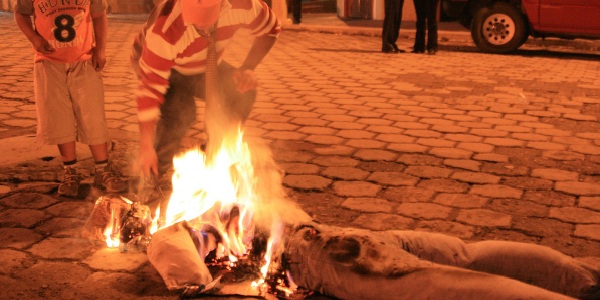
ecuador new year

Breaking the Plates in Denmark

In Denmark, when someone throws plates to your front door during New Year’s Eve, do not call the police. Breaking plates on someone’s door during New Year’s Eve is considered a good luck, and people usually only do this tradition on the house of someone they know. So if you have huge pile of broken plates on your door, be happy because many people love you.
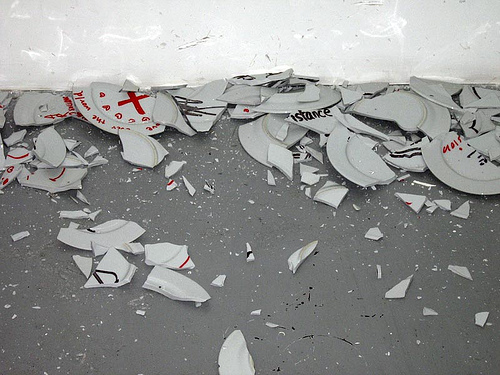
denmark new year tradition

Circles, Circles Everywhere

Circles are considered good shapes in Philippine, because they symbolize money, prosperity and wealth. Therefore, during New Year celebration, many families will decorate their houses with circular ornaments, wear clothes with a lot of circles (like polka dots), and serve round dishes and cakes. They will also walk around the house when midnight strikes and rattle coins.
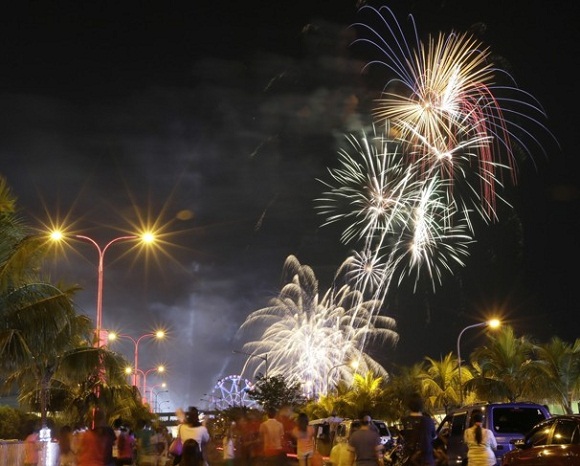
philippines new year

Lead Divination

This is a unique New Year celebration famous in various Scandinavian countries as well as German and Austria. Kids and youths alike will gather around a water basin and drop some liquid lead onto the water surface. Any shape formed signifies something related to the future of the person who drops the lead. They use it to find out who are their future husbands or wives, what they will do or experience next year, and so on.
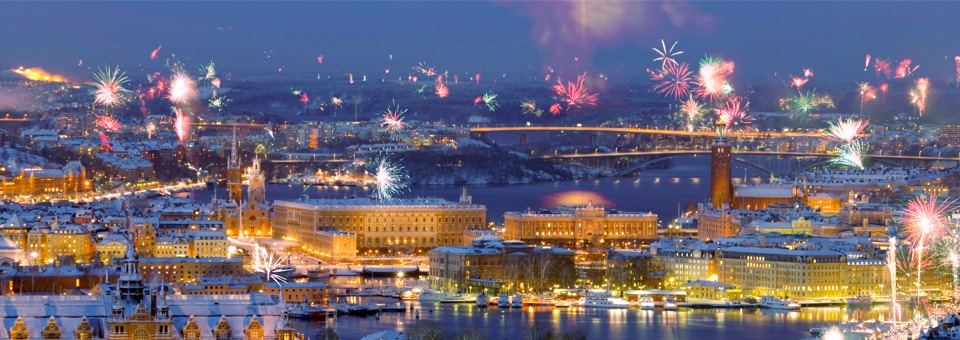
scandinavian new year

Walking around with Suitcases

The Latin Americans have unique traditions of carrying suitcases around their neighborhoods in New Year’s Eve, and often all members of the family will go out together carrying big suitcases. Granted, the suitcases are empty, but it still makes a quite hilarious view. This symbolizes hope that the person will be able to do a travel to exciting places that he or she always dreams of.
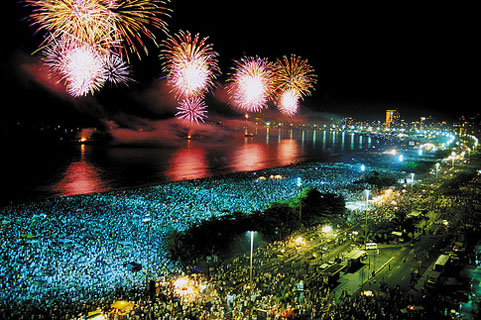
latin american new year

These unique New Year celebrations clearly show how rich the cultures around the world are, and we must appreciate them.
Indonesian Unique Christmas Traditions You Must Know

Modern Christmas traditions in Indonesia are similar to traditions in many countries. There are sermon, presents, family gatherings and Christmas dishes. However, Indonesia’s rich culture also contributes to some unique Christmas traditions in various areas. Here are some unique Christmas traditions in Indonesia that show heavy traditional influences.

The Nativity ‘Wayang’ Story

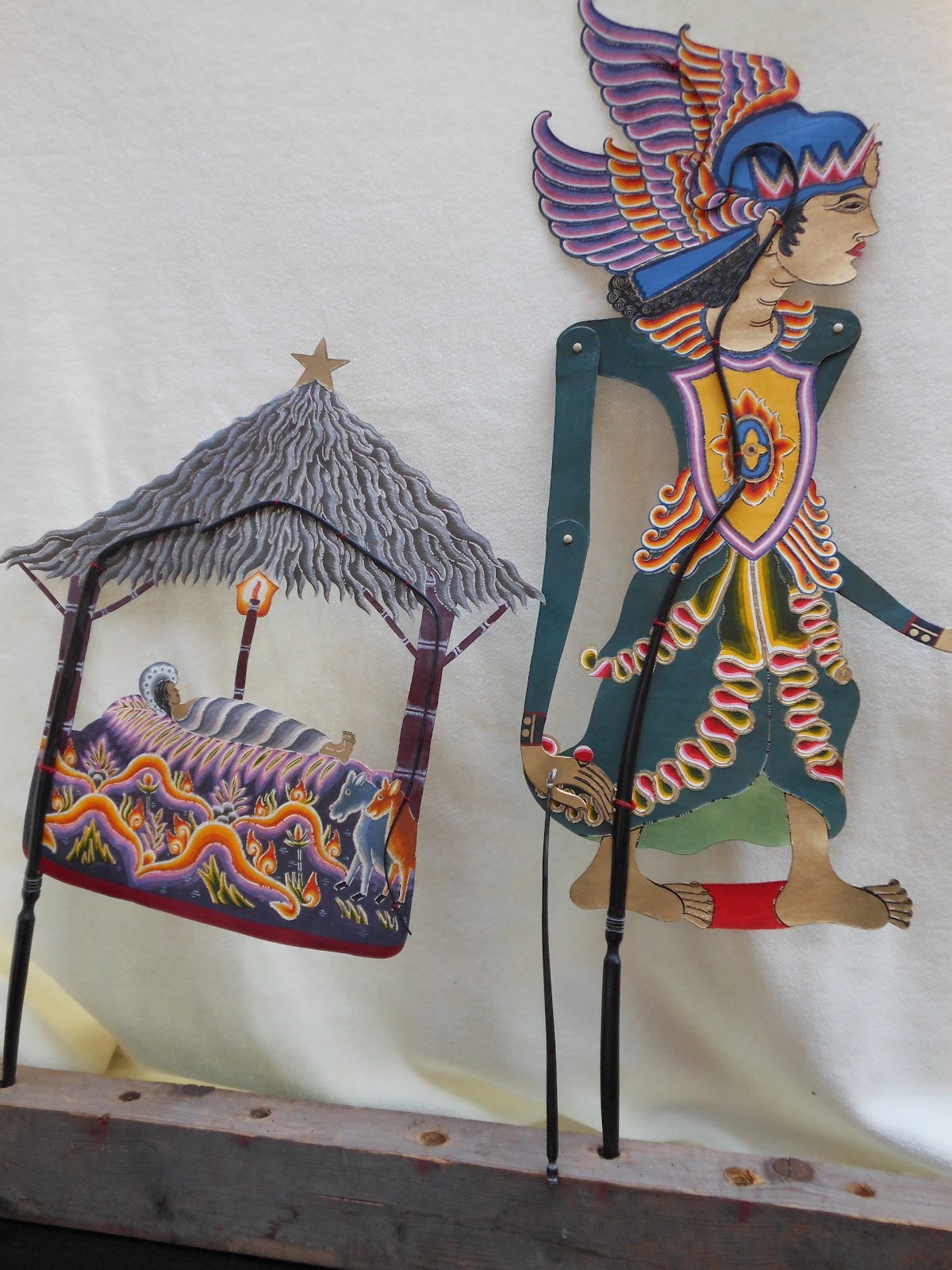
Wayang kulit, or Javanese shadow puppet, is used by the priest in Yogyakarta to retell the Nativity Story during Christmas sermon. The priest himself wears unique garb; his robe is combined with elements of traditional Yogyakarta garbs such as traditional head cover called ‘blangkon’ and batik. The language he uses is usually ‘kromo inggil’ or refined Javanese.

wayang

Stone Pig Roast

In Papua province, villagers will hold spectacular Christmas meal by roasting pigs, tubers and vegetables together in a makeshift oven from big stones that they put on the ground. The pigs and tubers are placed on banana leaves, and they are covered with stones to roast. This unique Christmas tradition in Indonesia will not make you see Christmas dinner the same way again.

pig roast

Marbinda and Marhobas

For Batak people in North Sumatra, Christmas is the time to do Marbinda, or cattle slaughtering. The cattle are bought by joined money of several people who know each other, and they usually start saving money for this purpose week before Christmas. When Christmas morning comes, they start doing the Marhobas (this is the name of the slaughtering activity). The meat will be distributed for celebration purpose.

marhobas

The Rabo-rabo Music

In Kampung Tugu area in Jakarta, there is a unique Christmas tradition called Rabo-rabo. This is conducted after Christmas sermon, in which people will play some traditional, upbeat music while walking around the neighborhood. At each house the musicians visit, people are expected to come out and join the group, and that happens until the last house is visited. Back home, family members will gather and slab some white powder on each other’s faces, as a symbol of purification. And then, the celebration continues with Christmas meal.

Manado Kunci Taon Parade

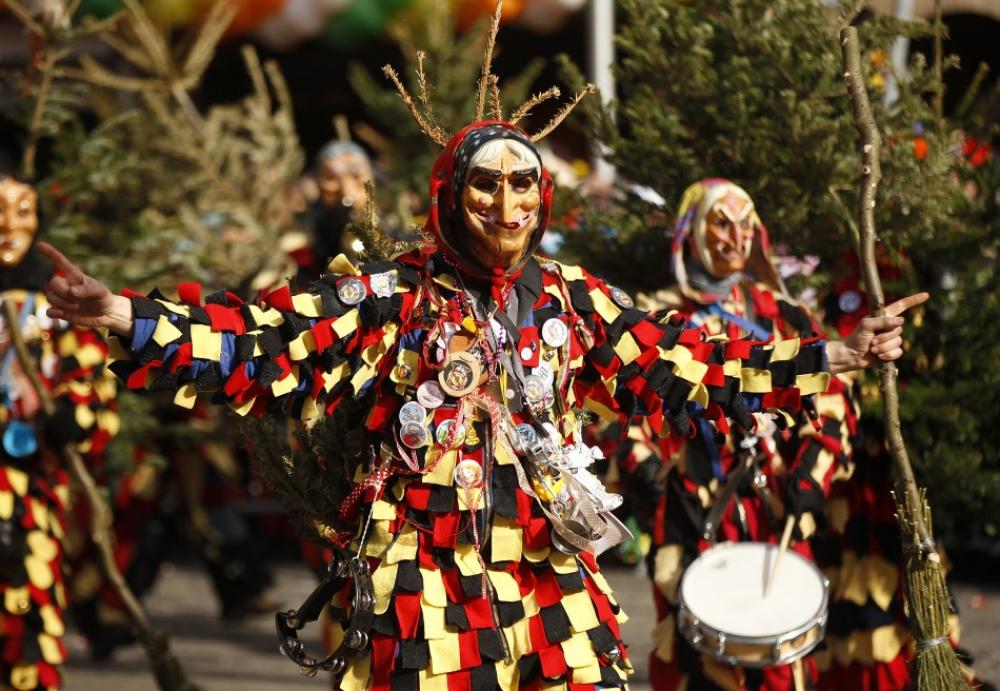
Kunci Taon parade in Manado, North Sulawesi, is another unique Christmas tradition in Indonesia that puts a new look on your usual Christmas parade. In this parade, people do not use typical Christmas garbs and decorations. Instead, they put on some garish, funny and weird costumes. The parade is held on the first week of January, but this is still considered as a part of Christmas tradition.

This parade is a closing part of the entire Christmas ritual in Manado, which usually starts from the 1st December. During those weeks, people go to sermon, pray, visit family members and pray for the dead relatives and friends at the cemeteries.

Bamboo Cannons in East Nusa Tenggara

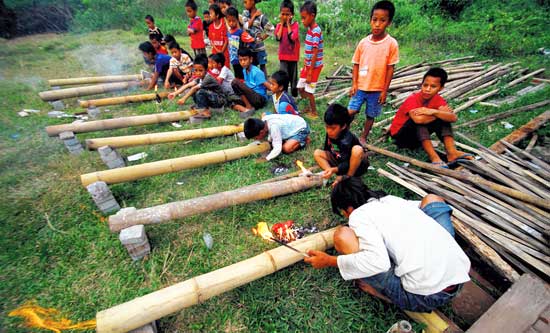
Kids and youths in Flores, East Nusa Tenggara, are delighted whenever Christmas is near, because on 24th December, they are allowed to stay up all night and play with friends. And instead of puny fireworks, they use traditional bamboo cannons to make some sounds. On Christmas morning, the sermon and celebration will start as usual (probably with some more bamboo cannons).
These unique Christmas traditions in Indonesia are definitely unlike anything you have ever seen. They prove Indonesia’s rich culture.

bamboo canon

Singkawang Chinatown, a Place where Culture Blends

singkawang

West Kalimantan or Borneo is a province where Chinese descendant population is the majority. Statistically, Chinese ethnics comprise more than 30% of the entire population, and Malay is number two with 26%. Therefore, it is not surprising if you can find a large Chinatown here, and Singkawang Chinatown is one of the largest areas in West Kalimantan.

Like many areas in West Kalimantan, Chinese culture is very prominent especially during Chinese celebrations, and various ethnics join the festive atmosphere when Chinese celebrations come. Otherwise, Chinatown is also a popular spot for locals and tourists to shop for various things, including cooking spices and tools, Chinese sweet treats and foods, traditional medicines, clothes, accessories and many more.

singkawang cultural

If you visit West Kalimantan, going to the Singkawang Chinatown is the best way to blend with the locals and experience the atmosphere of Chinese traditional market that does not change much since many years ago. Do not worry, as long as you take time to learn some Indonesian, you can communicate with the sellers here (although you may also hear some Pontianak Malay, Khek and Tiociu languages being thrown around you).

Culinary Feasts in Chinatown

Although there are so many things to see in Singkawang Chinatown, the best thing to try is of course the food. Here, you can find various street side vendors and peddlers selling Chinese foods; some authentic, and some are modified so they can be accepted by non-Chinese tongues. The prices are of course much cheaper than those dishes at fancy Chinese restaurants in Jakarta, and you get bonus of warm, lively interactions with locals.

Here are some much-recommended dishes to look for in Singkawang Chinatown:

  • Bakcang

This is a favorite among Chinese and other ethnics alike in West Kalimantan. This food is steamed sticky rice mixed with chicken, dried prawn, peanuts and salted watercress. The flavor is rich and tasty, and the sticky texture from the sticky rice is both interesting and fulfilling.

bakcang

  • Jan

This is a kind of sweet, thick soup filled with gelatinous white and red balls made of starch flour. Jan is a favorite snack among various ethnics in and around the Chinatown, and kids especially love this.

jan

  • Gwek Pia

This is a type of traditional Chinese cake that is also locally known as Kue Bulan (Moon Cake). The cake is made of mung bean and slightly hard, and it is often served during special occasions such as Chinese New Year.

moon cakes

  • Kwetiaw

This is a type of Chinese noodle with thin, wide strands made of flour and egg. There are several variations of this dish, such as fried kwetiaw, kwetiaw with broth, and kwetiaw siram (cooked kwetiaw poured with thick, viscous broth). The dish is served with vegetables, chicken, prawn or anything you can think of, and this is a popular lunch and dinner dish.

kwetiaw
Also, do not forget to try refreshing drink made of Lidah Buaya (‘Crocodile Tongue’ or Aloe Vera). This drink is refreshing, healthy and made of one of West Kalimantan’s popular farm commodities.

aloe vera drink


Singkawang Chinatown is clearly a must-visit spot in West Kalimantan.


Semarang, the Venice of Java

Indonesia is a country with rich cultural and historical background, and each city in this tropical country has unique historical and cultural background that is worth visiting. Semarang City is a seemingly metropolitan city with modern buildings business and trade sectors and its own share of urban problems. However, despite these common factors of a modern city, Semarang keeps a long story that shapes its characteristics.

Semarang Historical Background

Semarang is the capital city of Central Java, one of provinces in Java Island. Semarang originated from a coastal area called Pragota, which originated from 8th Century A.D. At that time, Semarang was already a part of a kingdom called Mataram Kuno (Old Mataram), and famous for its port. This port once became the place where Admiral Cheng Ho from China docked his ship in his famous long voyage in year 1405. You can still see the traces of his coming from temple and mosque, called Klenteng Sam Po Kong. These buildings are still used by locals and visited by tourists who are interested with Semarang City history.

The name ‘Semarang’ came from a tree called Asem Arang, which grew in Pragota hills that was, at that time, began to show signs of fertility after years of bad soil condition. Before and after Indonesia’s Independence in August 1945, Semarang became a battlefield between Indonesian soldiers and Dutch as well as Japanese soldiers. Most populations in Semarang are from ethnic Javanese, but there are also populations of other ethnic groups including Chinese. The majority of people here are Muslims.

Semarang Appeals

Semarang is a city with a lot of local appeals. The name Venice of Java was given because Semarang City has large rivers that run in the middle of the city, just like Venice (the nickname was actually from the Dutch; originally it was ‘Venetie van Java’). Semarang also has other interesting nicknames that signify its main appeals and unique characteristics.

For example, the city is usually called ‘Kota Lumpia’ by locals (The City of Lumpia, a kind of spring roll), which is a popular food in this city. You can easily find lumpia anywhere, from street side vendors to restaurants and even café. This food is also a proof of merged culture between Java and China. Semarang City also has a lot of tourist attractions with their own unique appeals, such as:

  • Historical spots, like MURI Museum that displays various records in Indonesia, Museum Jamu Nyonya Meneer that displays rich Indonesian traditional herbal drink culture, Candi Tugu (Tugu Temple) and many more.
  • Natural attractions, like Maron, Marina and Tirang Beaches, Tirangcawang Island and Kreo Cave.
  • Religious buildings that have rich historical and cultural backgrounds, such as Masjid Agung (‘The Grand Mosque), Masjid Baiturrahman, Sam Po Kong Temple, Gereja Katedral Semarang (Semarang Church Cathedral) and many more.
  • Famous shopping places, like Pasar Johar (Johar Market), Java Mall and Citra Land Mall

Despite its look as metropolitan city, Semarang City is a place with deep and historical background; visit this city next time you visit Indonesia and get lost amidst the vibrant Venice of Java.

Challenge Your Deepest Fear at Scary Tourist Attractions

Do you love scary attractions? Forget going to the movie for watching horror movies or visiting haunted houses; there are scary tourist attractions in various places in the world, offering real life horrors to people who are not satisfied with scenic, calm and peaceful tourist destinations. These places are embodiments of all your deepest fears, and they are certainly not just horror movie settings!

These places have various origins, from dark history to mythical beliefs. Unlike horror movie settings, these places have real life horror stories, and the stories behind them are often scarier than even the scariest horror movies. While some of these places are not exactly tourist spots (more like tourist traps because there are no facilities), they still attract a lot of people to come and see the places.

Who knows? Maybe if you visit, you can see unexpected things. At least, you can satisfy your curiosity and adrenaline rush that cannot be satisfied with just watching horror movies.

Some Recommended Scary Tourist Attractions

Here are some of the most recommended places to visit as scary tourist attractions:

Mansford Reformatory
If you are among the fans of 1994 successful movie The Shawshank Redemption, you must know Mansfield Reformatory. The prison, which is called Shawshank in the movie, was a place with an incredibly dark history. Started as a place to institutionalize troubled youths, the place later became a maximum-security prison for men who did heinous crimes. This prison has a Gothic feel and now it is opened for tourists. Many people see mysterious figures or hear strange whispers when as they between its halls.

French Catacombs
Located under the romantic Paris city, these long lines of catacombs are famous scary tourist attractions that reveal the dark history of Europe. This is where skulls and bones of plague victims are displayed (not buried). The lines of skulls and bones, often put in elaborate displays, create an extremely scary atmosphere.

Amsterdam Torture Museum
Although this is a well-arranged tourist attraction, Amsterdam Torture Museum has creepier atmosphere than its name. Torture Museum, as you might have guessed, contains relics of famous torture tools and contraptions to hurt and torment people with every way imaginable. You can also see pictures and plaques that depict the torture methods implied using these tools. Some famous tools are spiked coffin called Iron Maiden, thumb cracker, Judas Chair (a ‘chair with sharp iron tip), the famous guillotine and many more.

Winchester House
Even the sunny state California has its own scary tourist attraction that hid dark past. Winchester House in San Jose is a weird house that has thousands of labyrinths thanks to oddly built doors and windows. Entering these labyrinths create certain spooky feeling, especially when you know that the reason the house was built in this way is to appease spirits that were believed to plague the house occupants.

There are many other scary tourist attractions in other areas in the world, but you may want to visit these famous spots first, and see if you can stay for more than one hour!

Hunting for Delicious Foods at Gurney Drive Penang

Street stalls that sell street side foods always become attractions for culinary lovers anywhere they go, and in Malaysia, the most recommended spot to taste the best street side foods is Gurney Drive in Penang area. Also known in local language as Persiaran Gurney, this area of food stalls is located in front of the beach. You can eat here while enjoying the view of beach and high-rise buildings that are mostly condominiums and bungalows.

Gurney Drive is actually an affluent neighborhood; buildings that dominate this area are luxury apartments, condominiums, and seaside bungalows. There are also two famous plazas: Gurney Plaza and Gurney Paragon. There are skyscrapers that make an impressive background behind the whole area. However, while this area is identical with affluence, the most popular attraction among locals and tourists is still the street food stalls area.

Gurney Drive Street Food Stalls

Under the imposing shadows of high-rise buildings, luxury residential buildings and skyscrapers, there are lines of street food stalls that deliver taste of Asia. Called by locals as Pusat Penjaja Tanjung Gurney, the area is located on a spot between Gurney Plaza and Sunrise Tower. Although Gurney Plaza is populated by visitors, there are so many plaza visitors who also choose to eat at one of food stalls at this area. Although the price of foods here have been risen since the first time this area operated in 1970s, Gurney Drive food stall area is still considered a cheap place to enjoy local taste.

At Gurney Drive, you can find various dishes, sweet treats and beverages that originate from various areas in Asia such as Malaysia, Indonesia, China, Singapore, India and Hong Kong. This is because Malaysia is also home for many immigrants from those areas, and they bring along their rich cuisines, adding the varieties of foods you can find in Malaysia.

What You Can Eat

Many foods sold at Gurney Drive have a rich taste, especially because people in Asia love foods with prominent spices. There are some popular recommendations of foods that you must try at Gurney Drive:

  • Hokkien Char Noodle (Hokkien Char Mee), a type of yellow noodle that is served with soy sauce, vegetables, pork, fish cake and fried pork fat. Sometimes, Hokkien Noodle is served with prawn and other seafood.
  • Java Noodle (Java Mee), a type of noodle dish from Java Island, Indonesia. It usually consists of yellow noodle cooked with yellow, rich broth, sprinkled with cabbage, shredded chicken, egg and fried red onions. There is also the fried version called Mee Goreng (literally “fried noodle”).
  • Satay, a type of meat dish that is usually chopped into small cuts, put in the skewers and roasted on charcoals with soy sauce and some spices. The traditional companion for this dish is rice, rice cake, cucumber slices, tomatoes and chili paste.
  • Char Koay Teow, a popular Malaysia-Singapore dish made of fried noodle, chives, prawns or other seafood, chili, bean sprouts and soy sauce.

Do not forget to visit Gurney Drive next time you visit Malaysia and enjoy delightful local taste.

The Vibrant Shilin Night Market in Taiwan

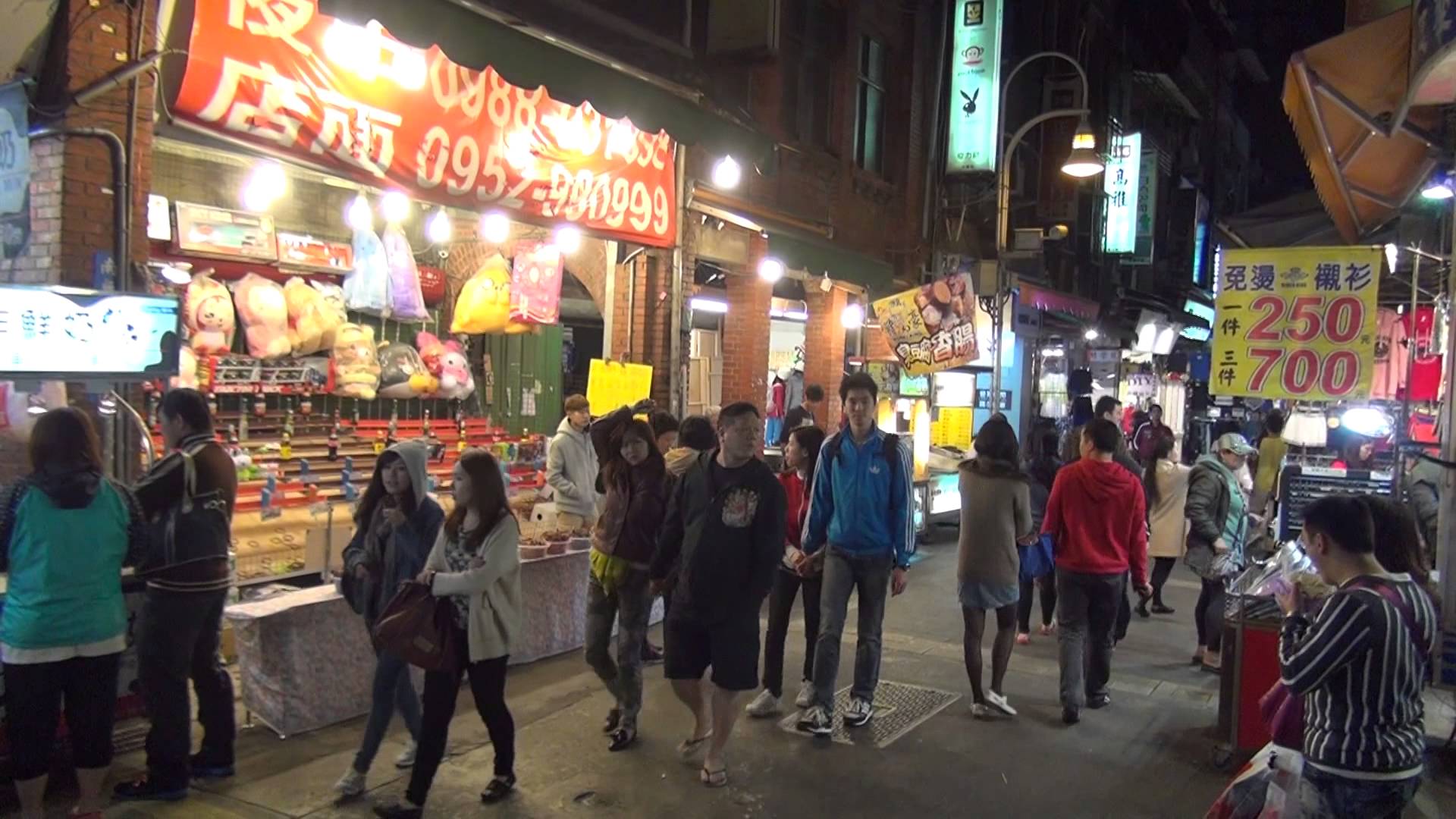
Everyone in Taiwan knows that if you want to see the most vibrant night view, you must go to Shilin Night Market. Shilin Market Taiwan is also one of the most famous tourist destinations in Taiwan, and it is much recommended for travelers who visit this country. Located in the district with the same name, this colorful place is also the biggest night market in Taipei, Taiwan’s capital city.

This market has everything, from food stalls to clothing and jewelry, from bars to video arcades, and from street side snacks to toys. This is also a favorite place for students to hang out with friends, because the market usually opens around 4 PM, after school is over. This is also a favorite place for locals to buy fresh goods for dinner, or hang out during weekend.

History of Shilin Market

Shilin Market Taiwan has been operating since 1909. It was used as a place for trading agricultural and farm products between Shilin District and other areas such as Dadaocheng and Banka. The humble market soon grew into bigger market that sold a lot more things and invited more customers. Gradually, the market turned into a trading, culinary and entertainment center. More vendor owners and merchants started business here. So many were they that the market finally turned into night market (it was previously a regular day market).

Eventually, Shilin Night Market became so crowded that it began to face fire risks as well as sanitation problems. Finally, the government relocated all food vendors; now, food vendors are located near to Metro Jiantan Station. Meanwhile, the old structure that previously housed food vendors were demolished and renovated. The project finished in 2011, and Shilin Market became its current look.

What You Find at Shilin Night Market

Just like its old days, Shilin Market Taiwan sells a lot of things and houses hundreds of vendors, including food stalls. There are about 540 food stalls at the food court, and there is a second structure above the non-food sections. It becomes a parking lot. This is a good place to really see the vibrant nightlife of Taiwan and see the lively interaction between locals and tourists. You can find almost everything, clothes, jewelry, souvenirs, accessories, bootlegged DVDs and imitation products of original European and America brands, video game arcades, bars, karaoke bars, nightclubs, toys and many more. However, the most famous place to visit at this night market is probably the food stalls.

Shilin Market Taiwan sells a lot of foods, but the favorite menus are usually traditional Chinese buns and their fried variations, fried steak (usually made of chicken), milk tea with ‘pearls’ (sweet gelatin balls), and oyster omelet. There are also popular Japanese fried foods, such as many types of tempura, and sweet treats such as peanut candy and jelly.

As a popular tourist destination, Shilin Market Taiwan is located in a very strategic spot and it can be reached from different areas using public transportation called The Red Line by locals (officially known as Taipei Rapid Transit System) that ends at Jiantan Station, located near the market. You can also use bus with particular numbers, such as 216 to 218, 224, 277 and 280.

Save up to $525 when you book your flight and hotel together at Expedia.com!

Water Fun Activities With A Twist

When it comes to having fun, most people will talk about travel and leisure. Chances are that one will think about enjoying a swim, or just basking by the beach. However, it is important to know that there are many other water fun activities that you can try out. All you need is a large water mass and an open mind to explore the numerous possibilities. This is because, as we are going to see, there is a water sporting activity for every individual.

Kayaking

This is one of the oldest large water body sports known to man. The kayak is designed such that an individual can fit in a cockpit while paddling with a double bladed paddle. Some kayaks are known to have more than one cockpit. This sport is suitable for lakes, and rivers. One can also use a kayak to explore the sea where the water is calm. The modern day kayak has various adjustments. In the recent past, there has been an introduction of an inflatable kayak, a kayak that has revolutionized the kayaking experience.
Photo credit: ConanTheLibrarian via photopin cc

Rafting

If you are looking for a challenging water fun activity, then rafting is the best water fun activity. The sport is particularly popular among individual looking for a thrill. The modern raft is an inflatable boat that can accommodate at least four passengers. The rafters propel their raft using a single bladed paddle. White water rafting, which is a type of rafting, incorporates rafting on particularly rough waters thathave rapids. This is one fun sport that will surely have your body rushing with adrenalin.

Barefoot Skiing

Barefoot skiing is a sport where an individual is pulled behind a speeding boat, gliding over the surface of a large water body barefoot. This is also another thrill oriented water sport. The fact that it requires one to be pulled at higher speeds than those using water skis makes it even more wild and fun.

Photo credit: Blake Rea via photopin cc

Boat racing

This a general water fun activity that incorporates various types of boats. The general idea is to have individuals or teams compete over a stretch of a large water body such as a a lake or sea. The competitors may opt to use canoes, drag boats, or yachts among others. The easiest among these is to use the boats with outboard motors. Since this is meant to be fun, most people do not follow any strict rules making it even more unpredictable and exciting.

Kite Surfing

Also known as kite boarding, this is a sport that incorporates an individual using a controllable kite to propel him/herself over a large water body. The individual may do this over a lake, sea, or ocean. Kite surfing is a sport that is physically intensive as it requires a certain level of gymnastics to accomplish some of the moves performed. The Kite surfer has a small surf board that he uses to glide over the water surface.

Photo credit: TexasEagle via photopin cc

Yachting

The yacht has come to be associated with leisure, which is an important part of any water fun activity. Yachting involves the use of a fast moving boated to sail or move over a large water body. A yacht is mostly fitted with a sailing mechanism or an outboard motor that makes it easy to move around. If one is looking for a calm and serene water fun activity, then yachting is the sport of choice. Before you set your sails make a good preparation.

These are just few ideas you can experience, there is also diving, Stand Up Paddling (SUP), surfing…

What is your favorite water activity?

Tips for Using Frequent Flyer Miles for Family Travel

Do you know what you’re missing in your Frequent Flyer Miles for Family Travel? We all know by now it may be a little difficult finding more than one award ticket on the same journey, if you’re watching to cash-in frequent flyer miles for your family travel.

Obviously, the well-mentioned ad will tell you that getting the rewards you need, when you need them, is one of the most important features of a frequent flyer program. From Family Pooling to a membership pause for Parental Leave, you can take advantage of the great Frequent Flyer Miles for Family Travel.

Well then, how about trying to make things a little less difficult, shall we?

Number one tip is endeavour to book as far ahead as possible; and yes, many carriers do not release their entire award inventory many months out, but ten or eleven months ahead is a predictable time. At times it works in well with a program that allows one-way bookings, which in turn, makes for each leg being booked the day it is available.

Knowing your family school’s holiday schedule, you would be in a position long in advance to influence the inflexibility for awards that work for you and yours!

Another tip is that because few travellers realise how airlines price multiple award tickets, carriers release seats with a limited number of seats in an award class. So initially, you could search for the minimum number of award seats that you must have, and then narrow that down by increasing the number of successive searches. You may then perhaps have to divide your reservations between paid and award seats.

Why not consider splitting itineraries? Putting it plainly, most times the vacation is about the destination, not the journey. If there are just not enough award seats truly available, have each parent travel with some of the children. In that instance, you have a good way of scoring lower-level award seats for some of your travel schedule.

Another point would be to consider using a change in itineraries to optimise flights. Some carriers will have low-mileage award seats available when a timetable change affects travellers, thereby making them rebook their award tickets on the new itineraries. Try booking you family on separate journeys or on a less-pleasant one, perhaps? And if the carrier changes their schedules (which does happen more than you think), you could then combine your reservations. Don’t forget, there are programs that allow pooling of points or miles between family members also.

Make sure you are taking advantage of all the bonuses. There is the most lucrative credit card sign-up bonus, where you and your spouse/partner apply, and the Spend Bonus category where you earn extra points on what you spend. If there is a retention bonus in your program for keeping a credit card, you can look for some snail-mail incentive offers you could receive.

The most important tip would be to endeavour to be a little flexible with dates and routes. And if you’re willing to fly during off-peak times, you have every chance of being in luck!

10 Unique Indonesian Foods You Must Try

When visiting Indonesia, do not skip the opportunities to try its original foods. Indonesia is a country rich in cultural heritages, including traditional foods. Each of 33 provinces in Indonesia has its own specific food, but many of them have spread to other provinces and become famous in many areas. Forget fancy fine dining; it is time for you to hit simple local restaurants or cheap food stalls to get these unique foods.

Sate Buntal
Sate (satay) buntal is one of Bali’s unique dishes besides betutu chicken and suckling pig. The word ‘buntal’ refers to the sate shape, which is not in small pieces of meat like the usual sate. Instead, sate buntal is made of finely chopped fish meat with spices, which are formed into one large lump orb bulge (‘buntalan’) using hands. The meat then attached on bamboo skewers and grilled.

Gudeg Kendhil
Gudeg is actually a famous and common dish in Yogyakarta Province in the center of Java; this is a rice dish eaten with stewed jackfruit, egg, chicken, sweet-savory spice and fried shaved coconut. However, Gudeg Kendhil is cooked in a clay pot (kendhil) and has hearty taste.

Mie Aceh
Mie Aceh (Aceh Noodle) is a spicy noodle dish from Aceh province in western Indonesia. The dish uses egg noodles with thick broth, served with beef, goat meat, crab, squid or prawn. There is also fried noodle version, but most people love Mie Aceh with broth.

Mie Bangka
Mie Bangka (Bangka Noodle) is almost similar with Mie Aceh. It is also made from egg noodle. However, the broth is lighter, served with various seafood dishes.

Gulai Patin
Gulai is a term for dish that is cooked with yellow coconut milk broth (the yellow color is from turmeric). Patin is a freshwater fish with soft meat that is very abundant in Jambi province. Gulai patin is usually cooked with coconut milk broth, but more traditional version uses fermented durian fruit flesh.

Ayam Taliwang
Ayam Taliwang (Taliwang chicken) is a chicken dish from Lombok, West Nusa Tenggara. This dish is a set of fried or grilled spiced chicken served with white rice, fresh vegetable salad and chili paste. Usually, this dish served with really hot spice.

Tinutuan/ Manado Porridge

This is a porridge dish from North Sulawesi. Tinutuan has become a staple food in many provinces, mainly because this dish is light and healthy. Tinutuan is rice porridge without any strong flavor, mixed with green vegetables and corn. To complement its light flavor, Tinutuan is often served with salted dried fish, boiled corn, and chili paste. This is also a popular dish for breakfast.

Gohu Ikan
Gohu Ikan is a dish from Ternate, Maluku province, which is well known as ‘Ternate sashimi.’ This is because Gohu ikan is a raw tuna fish mixed with very strong and sharp spices, such as chili, red onion, garlic, lime and many more.

Rujak Cingur
This East Java dish is made of cow’s snout or tongue, mixed with cucumber, young mango flesh, soy cake, pineapple, bean sprout and long beans. It is eaten with special spice made of prawn paste, palm sugar, chili, salt and fried onion.

Catemak Jagung
Catemak Jagung (corn catemak) is a type of dessert porridge made of corn, pumpkin and green bean, which is very popular in East Nusa Tenggara. Although this is dessert, the porridge is rather savory than sweet.